


Researcher Spotlight
Researcher Spotlight: Federico Mario Aletti, MD
The University of Texas MD Anderson Cancer Center
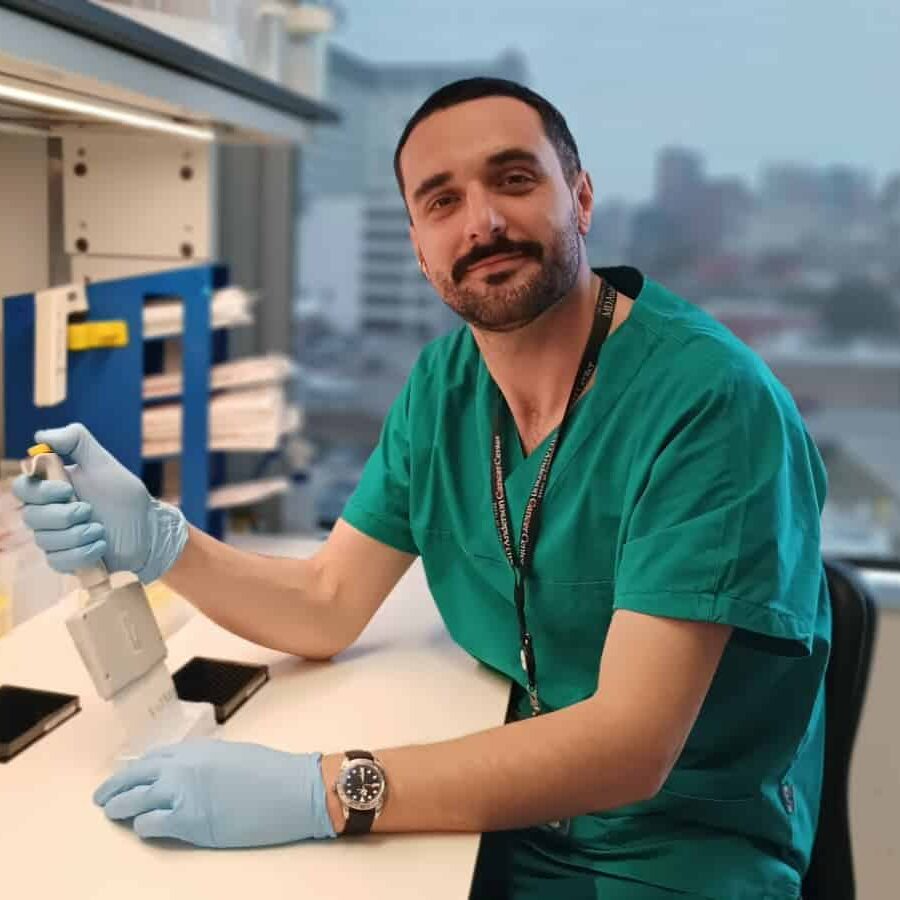
Lymphoma treatment options have improved dramatically in recent years, leading to deep and durable remissions for many patients. However, during his time as a resident at San Raffaele Hospital at the Università Vita-Salute San Raffaele in Milan, Italy, Dr. Aletti realized that this progress did not extend to all of his patients. “As I cared for individuals with T-cell lymphomas, I was struck by how limited the available treatment options remained and how often conventional chemotherapy failed to provide meaningful benefit,” he explains. “Sitting with patients and families facing aggressive disease with few alternatives was one of the most challenging experiences of my training and left a lasting impression on me.”
Through his Foundation-supported research, Dr. Aletti aims to develop a novel immunotherapy to help improve outcomes for patients with aggressive T-cell lymphomas. His work is focused on the construction of a chimeric antigen receptor (CAR) T-cell therapy directed against a novel target (KIR3DL2) on the surface of lymphoma cells, with an emphasis on improving the selectivity of treatment and reducing off-target effects. “My goal is to bring an innovative, safe, and highly effective therapy closer to patients who urgently need new treatment options,” he says.
Dr. Aletti hopes to build on this research to develop a robust research program that is fully integrated into his clinical practice. “For me, clinical care and research are not separate paths but complementary and equally essential components of meaningful progress,” he explains. “High-quality translational research must originate from real clinical needs, just as advances in patient care depend on rigorous and innovative science.”
“I aim to continuously deepen both my clinical and scientific expertise, to remain closely connected to patients and their experiences, and to foster a research environment where creativity drives the development of new therapeutic strategies,” he continues. “My ultimate goal is for these elements to converge in the delivery of high-quality, patient-centered care, ensuring that scientific innovation translates into tangible benefits for individuals affected by lymphoma.”