
Understanding Cellular Therapy
Contact the Lymphoma Resource Center
Lymphoma Research Foundation Clinical Trials Information Service
The Foundation provides a Clinical Trials Information Service (CTIS) to increase awareness about trials being conducted at cancer treatment centers nationwide.
- Upon request, our trained staff can conduct a customized search for potential lymphoma treatment trials in a patient’s area.
- They are also available to answer questions and provide support to patients, care partners and healthcare professionals in any language.
- Trial search results can be mailed or emailed so that they may be discussed with the patient’s treating healthcare team and loved ones.
- Individuals interested in having a trial search conducted for them can contact the Lymphoma Resource Center at (800) 500-9976 or [email protected] or complete a trial request form on our website at lymphoma.org/ctis.
When and How:
Monday – Friday 9:30 am – 7:30 pm Eastern Standard Time
Call Toll-Free:
800-500-9976
Email:
[email protected]

Understanding Cellular Therapy
This guide is an educational resource compiled by the Lymphoma Research Foundation to provide general information on cellular therapy. This booklet is not intended to replace individualized medical care or the advice of a patient’s doctor. Patients are strongly encouraged to talk to their doctors for complete information on how their disease should be diagnosed, treated, and followed.
Before starting treatment, patients should discuss the potential benefits and side effects of cancer therapies with their physician.
Contact the Lymphoma Research Foundation
Lymphoma Resource Center: (800) 500-9976
Email: [email protected]
Website: lymphoma.org
This patient guide is supported through unrestricted educational grants from:




© 2026 Lymphoma Research Foundation.
Information contained herein is the property of the Lymphoma Research Foundation. Any portion may be reprinted or reproduced provided that the Foundation is acknowledged to be the source and the Foundation’s website (lymphoma.org) is included in the citation.
Acknowledgements
The Lymphoma Research Foundation wishes to acknowledge those individuals listed below who have given generously of their time and expertise. We thank them for their contributions, editorial input, and professional knowledge, which have truly enhanced this publication. The review committee guided the content and development of this publication. Without their dedication and efforts, this publication would not have been possible. We hope those in the lymphoma and chronic lymphocytic leukemia community will now be better informed and have a better understanding of the steps and considerations for a cellular therapy because of the gracious efforts of those involved in the planning and execution of this guide.
Review Committee
*Jeremy Abramson, MD, FACP, Massachusetts General Hospital/Harvard Medicine
Pamela Blair Allen, MD, MSc, Winship Cancer Institute of Emory University
Veronika Bachanova, MD, PhD, University of Minnesota
Patrick Connor Johnson, MD, Massachusetts General Hospital/ Harvard Medicine
*Alex Herrera, MD, City of Hope
Caron A. Jacobson, MD, Dana Farber Cancer Institute/ Harvard Medicine
*Ann S. LaCasce, MD, MMSc, Dana Farber Cancer Institute/ Harvard Medicine
Praveen Ramakrishnan, MD, PhD, UT Southwestern Medical Center
Craig S. Sauter, MD, Cleveland Clinic
Tycel Phillips, MD, City of Hope
*Member of the Foundation Scientific Advisory Board (SAB), which is comprised of 45 world-renowned lymphoma experts who seek out the most innovative and promising research projects for support.
Lymphoma Research Foundation Reviewers
Gina Aracena, Director of Support Services and Patient Education
Victor Gonzalez, Senior Director of Strategic Partnerships Izumi Nakano, Associate Director of Support Services
Sarah Quinlan, Chief Program Officer
Introduction
There are many factors for patients and their loved ones to consider when deciding whether or not cellular therapy as part of lymphoma treatment is the appropriate treatment decision for them.
This booklet is designed to help patients with lymphoma and their care partners become familiar with cellular therapy and to become active participants in their health care decision-making. The booklet is divided into several sections, describing cellular therapy in general (Part 1), chimeric antigen receptor (CAR) T cell therapy (Parts 2-4), stem cell transplantation (Part 5-7), and clinical trials (Part 8), as well as the care partner’s role and other considerations (Parts 9 and 10).
Our goal is to provide information and helpful tips that can assist patients on their journey. In addition to this resource, information is available online at the Lymphoma Research Foundation’s website at lymphoma.org. The Foundation’s Helpline can also provide additional information and copies of the Foundation educational and support publications. For Helpline assistance, call (800) 500-9976 or email [email protected].
Part 1: What is Cellular Therapy?
Chapter 1: Types of Cellular Therapy
What is Cellular Therapy?
Cellular therapy is the introduction of healthy human cells into the patient’s body to replace or repair damaged tissue and/or cells. Cell therapy dates back to the 19th century. Some current day cellular therapies have already existed for years – bone marrow transplants, used in lymphoma treatment, have been used since the 1960’s. Several cellular therapies have been approved in recent years, but most are still in the stages of early development, as each therapy must undergo stringent testing before being made available for patient use. Cellular therapies have the potential to be used for many different medical conditions including a weakened immune system, autoimmune diseases, and various types of cancers. Cellular therapy can also range across different cell types, mechanisms of action, and routes of administration. This guide will focus on two types of cellular therapy – stem cell transplantation and CAR T-cell therapy.
Stem Cell Transplantation
There are three types of stem cell transplantation that differ based on the source of the stem cells: autologous, allogeneic and syngeneic.
In an autologous stem cell transplant, patients are their own donor. Autologous stem cell transplantation is used in patients with cancers that are responding to chemotherapy.
In an allogeneic stem cell transplant, the donor is another person who is genetically similar to the patient; this person is often a brother or sister. Donor stem cells may also come from the patient’s child, the patient’s parent, an unrelated person, or donated umbilical cord blood.
In a syngeneic stem cell transplant, the donor is the patient’s identical twin.
A stem cell transplant adds new stem cells back into the body after chemotherapy with or without radiation, replacing the cells that were destroyed and restoring the bone marrow’s ability to make new blood cells. The ability to transplant the patient’s own stem cells (autologous stem cell transplant) allows doctors to use higher doses of chemotherapy than the body would normally tolerate, increasing the probability of treatment success.
In deciding if transplantation is a good option, doctors consider the patient’s health status, age, medical history, cancer stage, and responses to previous therapy. For more information on stem cell transplants, view parts 5, 6, and 7 of this guide.
CAR T Cell Therapy
An innovative type of immunotherapy, called CAR T cell therapy, uses patients’ own immune cells to treat their cancer. There are many types of immune cells. The ones utilized for this particular type of immunotherapy are called T lymphocytes or T cells.
Briefly, the patients’ own T cells are collected and reprogrammed in the laboratory to recognize and attack cancer cells. The reprogrammed cells (called CAR T cells) are infused back to the patient, where they locate and fight lymphoma cells.
CAR T cell therapy has demonstrated significant clinical benefit in patients with aggressive lymphoma and is now approved by the Food and Drug Administration (FDA) for treatment of advanced relapsed (disease returns after treatment) or refractory (disease does not respond to treatment) lymphomas. Patients with some types of aggressive lymphoma who are functionally active and have no significant co-morbidities are eligible for CAR T cell therapy. For more information on CAR T cell therapy, view Parts 3 and 4 of this guide.
Talking to Your Health Care Team if Cellular Therapy is Right for You
As discussed in Chapter 1, cellular therapy is used to replace or repair cells or tissue that have been damaged. Cellular therapy is typically used after chemotherapy with or without radiation for the treatment of several types of lymphoma. It is used for both Hodgkin lymphoma (HL) and non-Hodgkin lymphoma (NHL). Chemotherapy followed by cellular therapy is a treatment that can lead to a long-lasting response.
For some patients with lymphoma, cellular therapy may be considered for:
- lack of response to a previous treatment (refractory disease)
- return of disease after an earlier treatment success (relapse)
- achieving a prolonged remission (disappearance of signs and symptoms of lymphoma) in patients at high risk of relapse
Stem cell transplantation and CAR T-cell therapy are most commonly used for patients with relapsed, aggressive (fast-growing) lymphoma. Stem cell transplants can be used to treat lymphoma in patients age 75 or even older, but this treatment is being less used over time to treat NHL. CAR T cell therapy is being used increasingly to treat NHL.
Because the combination of high-dose chemotherapy in addition to stem cell transplantation or CAR T cell therapy is more intensive compared to other therapies, this approach may not be an option for every patient. Therapy can be emotionally difficult due to the hospital time, isolation, and possibility of long-term side effects.
Patients receive CAR T cell therapy in their hospital/treatment center and can then be required to stay in the hospital/treatment center (inpatient procedure) or be discharged after treatment (outpatient procedure). This treatment usually requires a lengthy inpatient or intense outpatient stay and a long recovery process, and there are a number of side effects. Most of these side effects are temporary, such as low blood cell counts, flu-like symptoms, infections, fatigue (tiredness), and hair loss, but a few may be permanent, such as infertility (inability to have children). For more information about side effects, see Chapters 7 and 12.
In deciding whether a patient is a candidate for a stem cell transplant or CAR T cell therapy, the patient’s health care team considers a patient’s age, medical history, current health status, type of lymphoma, and response to previous treatments. They discuss the expected risks and benefits with the patient. The team may also evaluate other options such as standard chemotherapy, radiation, and/or clinical trials to treat the lymphoma. As more information is gained from ongoing clinical trials, more patients may be considered eligible for cellular therapy (see Part 8 for more information on clinical trials). It is important that patients share questions and concerns and discuss all potential therapeutic options and their risks and side effects with their health care team to determine if a cellular therapy is the right option for them.
What Terms Do Doctors Use to Describe Treatment and Its Outcomes?
Doctors who treat patients with lymphoma use certain terms to describe a patient’s treatment and the anticipated outcomes. Some of these are defined in Table 1.1.
Table 1.1. Terms Used to Describe Treatment and its Outcomes
| Term | Definition |
|---|---|
| Cure | This word is cautiously used by doctors when there are no signs of the lymphoma reappearing after many years of continuous complete remission (CR). |
| Complete Remission (CR) | This term is used when all signs of the lymphoma have disappeared after treatment. This does not mean that the lymphoma is cured; rather, it indicates the lymphoma cannot be detected using current tests. If complete remission is maintained for a long period, it is called a durableremission. |
| Partial Remission (PR) | This term is used if the lymphoma has responded to treatment, though significant disease remains. |
| Stable Disease | This term means the disease has not gotten worse or better following therapy. |
| Disease Progression | This term means the disease has worsened or the lymphoma has grown or spread during therapy or observation. Other terms used to describe disease progression are relapse, treatment resistance, or resistant disease. |
| Primary or Frontline Therapy | This term is used to describe the first therapy that a patient receives. The choice of primary therapy depends on the characteristics of the disease, including the factors described in this guide. |
| Refractory Disease | This term is used to describe lymphoma that does not respond to treatment or in which the response to treatment does not last very long. |
| Relapse | This term refers to disease that reappears or grows again after a period of remission. |
Chapter 2: CAR T Cell Therapy versus Stem Cell Transplantation
Transplantation, Cell Therapies, and Gene Therapy: What’s the Difference?
Cellular therapy is the introduction of healthy human cells into the patient’s body to replace or repair damaged tissue and/or cells. Examples of cell therapies include stem cell transplantation and cellular immunotherapies like CAR T cell therapy, as well as cancer vaccines.
Human gene therapy can treat or prevent disease by changing or adding new genes to the patient. Gene therapies can work by replacing a disease-causing gene with a healthy copy, by inactivating a disease-causing gene that is not functioning properly or by introducing a new or modified gene into the body to help treat a disease. Gene therapies are not discussed in further detail within this booklet.
A list of FDA-approved cellular and gene therapy products can be found at https://www.fda.gov/vaccines-blood-biologics/cellular-gene-therapy-products/approved-cellular-and-gene-therapy-products.
How is CAR T Cell Therapy Different from Stem Cell Transplantation?
Both stem cell transplantation and CAR T are forms of cellular therapy, and many of the steps in the procedures are similar. Stem cell transplants use unmodified stem cells collected from the patient (autologous transplant) or from a family member or unrelated donor (allogeneic transplant). Allogeneic transplants require chemotherapy to reduce the risk of rejection of the transplanted cells (“graft”) and immunosuppressant therapy to prevent and treat graft-vs-host disease (where the graft attacks the patient’s healthy cells). The patient’s cells used in CAR T cell therapy are genetically reprogrammed to recognize and fight cancer. Currently FDA-approved CAR T cell therapies are exclusively autologous, but allogeneic approaches are under investigation.
While both procedures require prior chemotherapy, the regimen used in CAR T cell therapy is associated with fewer side effects.
Part 2: Concepts and Considerations Before CAR T Cell Therapy in Lymphoma
Chapter 3: The Basics of CAR T Cell Therapy in Lymphoma
What Are CAR T Cells and What Do They Do?
CAR T cells are an innovative type of immunotherapy that uses the patient’s own immune cells to treat their cancer. The immune cells used for this therapy are white blood cells called T lymphocytes or T cells. In this therapeutic modality, the patient’s own T cells are modified in the laboratory to express a new protein called CAR on their surface. CAR T cells then recognize targets that are specific to lymphoma cells and treat cancer.
Why Are CAR T Cells Used?
In patients with lymphoma, several therapies can be used as first-line (initial) treatments to kill the cancerous cells in the body. Unfortunately, sometimes the disease can be refractory (does not respond to therapy) or relapse (comes back after treatment), even after different rounds of treatment.
This is where CAR T cell therapy comes in. This treatment has demonstrated significant efficacy in patients with aggressive (fast-growing), and indolent (slow-growing) lymphomas and is now FDA approved for treatment of some types of relapsed or refractory NHL, including diffuse large B-cell lymphoma (DLBCL), high grade B-cell lymphoma, transformed lymphomas, primary mediastinal B-cell lymphomas, follicular lymphoma, mantle cell lymphoma, and small lymphocytic lymphoma.
Which Patients Can Benefit From a CAR T Cell Therapy?
CAR T cells are used to treat adult patients with some types of aggressive non-Hodgkin lymphoma (NHL) that has relapsed or become refractory. With a median follow-up of about 5 years, this treatment has demonstrated durable response (a long-lasting period without disease progression) in many patients. Because CAR T cell therapy may result in short-term toxicities, this approach may not be an option for every patient. However, there is no upper age limit for a patient to be a candidate for CAR T cell therapy.
A Risk Evaluation and Mitigation Strategy (REMS) is a safety program that monitors serious side effects associated with certain medications with the goal to ensure that the benefits of the medication are greater than its risks.
The decision of whether to receive CAR T cells inpatient or outpatient should be made in conjunction with the health care team. However, when receiving their CAR T cells as an inpatient, patients need to remain in or near the treatment center for about two to four weeks to be monitored for side effects. Patients should also avoid driving for at least 2 weeks following infusion. In June 2025, the REMS program was eliminated for currently approved BCMA- and CD19-directed autologous CAR T cell therapies which removes the requirement that treatment centers must be certified.
Some side effects like cytokine release syndrome (CRS) and neurotoxicity (immune effector cell associated neurological syndrome [ICANS]) can be serious and require immediate treatment. For more information about side effects, see Chapters 6 and 7.
In deciding whether a patient is a candidate for CAR T cell therapy, the patient’s health care team considers a patient’s fitness, medical history, current health status, type of lymphoma, and response to previous treatments. They will compare the risks associated with the lymphoma itself versus the potential risks of CAR T cell therapy, and they will outline these expected risks and benefits with the patient.
They may also evaluate other options such as clinical trials to treat the lymphoma (see Chapter 14 for more information on clinical trials). It is important for patients to discuss all potential therapeutic options and their risks and side effects with their health care team to determine if CAR T cell therapy is the right option for them.
CAR T Cell Therapy Centers
CAR T cell therapy is a complex procedure that involves specialized care that is only offered at certified treatment centers. If the hematologist–oncologist (doctor specializing in treating patients with blood disorders/cancers such as lymphoma) thinks a patient is a good candidate for CAR T cell therapy, the patient will be referred to a specialized treatment center.
The treatment center’s CAR T therapy health care team will conduct their own evaluations to confirm whether the patient is a candidate for CAR T cell therapy. The treatment centers’ medical assessment considers the patient’s type of lymphoma, overall health, major organ function, and current disease state. This is followed by a psychosocial assessment to evaluate the patient’s support system to address potential barriers that may affect the procedure’s success. There is no upper age limit for this procedure but patients need a care partner to facilitate the best outcome. The treatment team collectively reviews the results of the evaluation and shares them with the patient, family, and referring physician.
CAR T Cell Therapy Stages
- History and Physical Examination – assessment of the patient’s general level of health to determine the candidacy for the procedure
- Leukapheresis – the process of obtaining the white blood cells needed to prepare CAR T cells
- T Cell Engineering – preparation of patient-specific CAR T cells in
- the laboratory
- CAR T Cell Transport – CAR T cells are grown, frozen and transported to the treatment center
- Lymphodepleting Chemotherapy – patient receives a short course of chemotherapy to enhance CAR T cell growth and persistence in the patient’s body after infusion
- CAR T Cell Infusion – patient receives CAR T cells through an intravenous (IV) line
- Monitoring Period/Recovery – monitoring the patient for any complications or side effects while the CAR T cells grow and fight cancer
The CAR T cell treatments currently approved by the FDA are autologous, which means that the T cells used to produce CAR are collected from the patient who will receive them. The phases of CAR T cell therapy are described below.
Leukapheresis
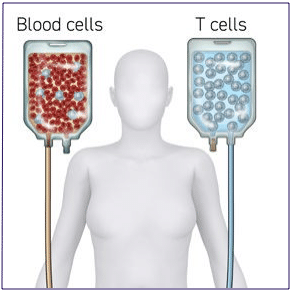
The first step of CAR T cell therapy is to obtain some of the patient’s white blood cells, as shown in the figure. White blood cells work as part of the immune system to help the body fight infections. This process is called leukapheresis and usually takes about three to four hours. During leukapheresis, the patient’s blood is removed through a central catheter inserted underneath the collarbone (pheresis catheter) or an intravenous (IV) line in the arm. The blood is then passed through a machine that separates the patient’s lymphocytes, including T cells, from the other blood cells. The remaining blood cells are returned to the patient through the pheresis catheter or IV line.
T Cell Engineering
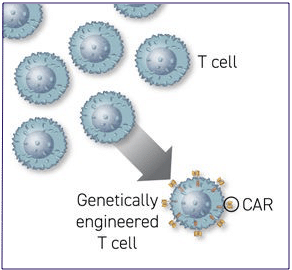
The bag containing the white blood cells collected in the previous stage is sent to a processing center (lab) where the T cells are separated from the rest of the white blood cells. Once separated, the T cells are genetically modified to express a new protein, called the CAR on their surface and are transformed into CAR T cells (see figure). This process reprograms the T cells to recognize targets on the surface of lymphoma cells, allowing them to directly bind and kill lymphoma cells.
CAR T Cell Transport
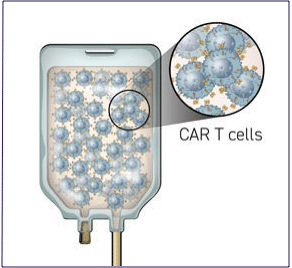
The engineered CAR T cells are then grown at the processing center for approximately two to three weeks. The goal is to produce millions of new CAR T cells. Once enough of the CAR T cells are available, they are frozen for transport to the certified treatment center.
Lymphodepleting Chemotherapy
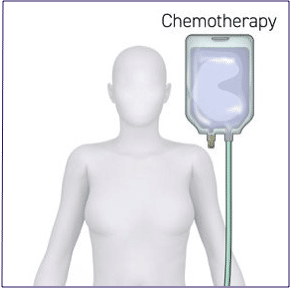
A few days prior to infusion, the patient will receive a short course (3 to 4 consecutive days) of chemotherapy as an outpatient. The two drugs usually given prior to CAR T cell infusion are fludarabine and cyclophosphamide. This process is called lymphodepleting chemotherapy. The aim is to suppress the patient’s immune system slightly so that it does not reject the CAR T cells once they are infused. This gives the infused CAR T cells the chance to grow and expand in the patient’s body to treat lymphoma. While waiting for the CAR T cells to develop, the patient might get radiation or another treatment to control the lymphoma in the meantime (called bridging therapy).
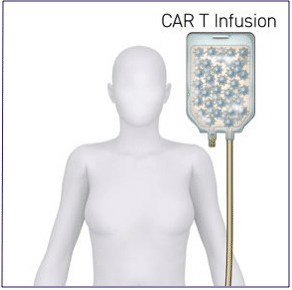
CAR T Cell Infusion
A day or two after completing chemotherapy, the patient will receive the CAR T cells at the certified treatment center. This can be done as an inpatient or outpatient procedure, depending on the facilities available at the treatment center. The infusion of CAR T cells takes only a few minutes. The patient may be given acetaminophen (Tylenol) and/or diphenhydramine (Benadryl) before the infusion to prevent allergic reactions to the preservative in the CAR T cell product.
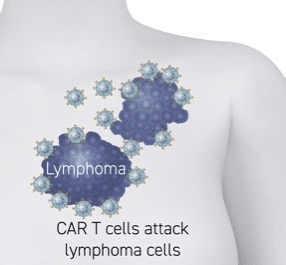
CAR T Cells Attack the Lymphoma
Once the CAR T cells enter the patient’s body, they begin to multiply and attack the lymphoma cells. It is important that the patient remains under close observation by the health care team during the first month, so that they can be closely monitored for side effects.
Recovery
After receiving the CAR T cells, patients will need to remain in or near the certified treatment center for about four weeks (or two weeks for some patients depending upon the recommendation of the medical team) to be monitored for side effects and treated, if needed. Patients will receive their CAR T cells as an inpatient with close surveillance in the clinic. For patients who receive treatment in an outpatient setting, a recent study found that 30% to 40% of these patients did not require hospitalization after receiving the CAR T cell therapy.
Side effects from CAR T cell therapy usually range from mild to moderate in severity. Severe, life-threatening reactions are rare but may be experienced by some patients (see Chapters 6 and 7). Patients should ask their health care team which side effects to contact them about, and when to call 911. If there is any question about what the patient is experiencing after receiving treatment, then it is important that they always contact the health care team.
For more information on the CAR T cell therapy process, see Part 3 of this guide.
The Health Care Team and Considerations Before CAR T Cell Therapy
Certified treatment centers offer a comprehensive care approach to CAR T cell therapy, and their group of specialists is referred to as the health care team. This team consists of doctors, nurses, nurse practitioners and other specialists with experience in cancer care who will work together to provide the best outcome for the patient. The team will include a clinical nurse coordinator, who will organize and schedule the required tests and consultations, explain the treatment plan, and serve as a liaison between the patient, care partner and clinicians. Additionally, a CAR T cell service coordinator will work the insurance company to figure out coverage and pre-approval.
Many patients will receive their CAR T cells as an inpatient with close surveillance in the clinic. Outpatient administration is increasingly available for selected patients and the recommendation between inpatient versus outpatient administration will be carefully weighed by the CAR T team.The health care team can help the patient understand the required length of stay in the treatment center, required items and those not allowed, and visitors’ regulations. If it is done as an outpatient procedure, a care partner is required, as it is not safe for the patient to be alone for the first two weeks after infusion.
Patients should identify suitable primary and alternative care partners prior to treatment. The health care team overseeing the treatment should then help select the person most qualified for the role. More information about care partners can be found in Part 9.
Not all patients are eligible for an outpatient setting, and this decision will depend on the product (some treatments are typically given as an inpatient), tumor burden (how advance is the lymphoma), presence of comorbidities (other medical problems) and availability of housing near the treatment center.
Initial discussions with the health care team should include an overview of the entire treatment process, potential short- and long-term side effects and non-medical issues like financial assistance and insurance concerns. For a typical overview of the CAR T cell therapy journey, see pages 90–93. Sample treatment timelines for CAR T cell therapy begins on page 19.
For patients of reproductive age, one significant long-term side effect to address prior to treatment is the likelihood that lymphodepleting chemotherapy may cause infertility. The treatment can also bring on early menopause in women. For younger patients who may wish to have children in the future, there are options available to help preserve fertility, including possible protection of the ovaries during treatment, freezing of sperm cells or egg cells before treatment, or in vitro creation and freezing of fertilized embryos. Patients of reproductive age who are concerned about maintaining the ability to have children in the future should discuss their options with the health care team before beginning treatment. Unfortunately, some lymphomas progress rapidly and any delay in treatment may be life-threatening, so fertility preservation prior to CAR T cell therapy may not be an option in such cases. This should be discussed with the health care team in detail prior to treatment.
See the Resources in Chapter 23 for information to order the CAR T Cell Journey Checklist, which provides on how to prepare for treatment, or to order the Lymphoma Care Plan that patients and their health care team can use to plan their care before, during, and after treatment.
Chapter 4: Treatment Options in CAR T Cell Therapy
Types of CAR T Cell Therapy
CAR T cell therapies can be classified according to cell origin and the molecule(s) they target in the lymphoma cells. As of May 2022, CAR T cell therapies approved by the FDA to treat lymphoma are autologous, which means that the patient’s own T cells are used to produce CAR T cells. These therapies target a single marker at the surface of lymphoma cells (called CD19) and are described below in detail.
Scientists are currently investigating allogeneic CAR T cell therapies, which use T cells from another donor, as well as therapies directed to different single or multiple targets. See Chapter 15 to find more about treatments under investigation in CAR T cell therapy.
Approved CAR T Cell Therapies in Lymphoma
In describing indications below, the term “relapsed” refers to cancer that returns after treatment and “refractory” means that the cancer does not respond to treatment. None of the currently available CAR T cells are approved for use in primary central nervous system lymphoma outside of clinical trials.
Axicabtagene Ciloleucel (Yescarta)
Treatment targeting CD19 for adult patients with large B-cell lymphoma that is refractory to first-line chemoimmunotherapy or that relapses within 12 months of first-line chemoimmunotherapy, and for adult patients with certain types of refractory or relapsed lymphoma after at least two lines of systemic therapy:
- DLBCL not otherwise specified
- Primary mediastinal large B-cell lymphoma
- High grade B-cell lymphoma
- DLBCL arising from follicular lymphoma (transformed lymphoma)
- Follicular lymphoma
Tisagenlecleucel (Kymriah)
Treatment targeting CD19 for adult patients with certain types B-cell lymphoma who have relapsed or were refractory (cancer does not respond to treatment) to two or more lines of systemic therapy:
- DLBCL not otherwise specified
- High grade B-cell lymphoma
- DLBCL arising from follicular lymphoma
- Follicular lymphoma
Lisocabtagene maraleucel (Breyanzi)
Treatment targeting CD19 for adult patients with large B-cell lymphoma that is refractory to first-line chemoimmunotherapy or that relapses within 12 months of first-line chemoimmunotherapy, as second-line therapy for any transplant ineligible patient with relapsed or refractory disease regardless of duration of initial remission, and for adult patients with certain types of refractory or relapsed lymphoma after at least two other kinds of treatment:
- DLBCL not otherwise specified (including DLBCL arising from
- follicular lymphoma or any other indolent lymphoma)
- High grade B-cell lymphoma
- Primary mediastinal large B-cell lymphoma
- Follicular lymphoma grade 3B
- Chronic lymphocytic leukemia (CLL) or small lymphocytic lymphoma (SLL), after 2 or more prior lines of treatment including Bruton tyrosine kinase (BTK) inhibitors and B-cell lymphoma 2 (BCL-2) inhibitors
- Follicular lymphoma
- Mantle cell lymphoma (MCL), after 2 or more prior lines of treatment including BTK inhibitors
Brexucabtagene Autoleucel (Tecartus)
Treatment targeting CD19 for adult patients with relapsed or refractory mantle cell lymphoma (MCL). This was the first CAR T cell therapy approved for the treatment of MCL. Brexucabtagene autoleucel was specifically studied in patients who had relapsed after both chemoimmunotherapy as well as a BTK inhibitor (ibrutinib [Imbruvica], acalabrutinib [Calquence] or zanubrutinib [Brukinsa]).
For the most recent information on approved CAR T cell therapies, visit https://lymphoma.org/aboutlymphoma/treatments/cartcell/.
Questions to Ask Before Deciding to Undergo CAR T Cell Therapy
- Would CAR T cell therapy be a good treatment option for me?
- Are there any medical conditions that would exclude me from getting CAR T cell therapy?
- What are the risks associated with this procedure?
- What are the benefits associated with this procedure?
- What complications may arise as a result of receiving CAR T cell therapy?
- What are the short- and long-term side effects I might experience?
- What can be done to lessen side effects?
- Would choosing this treatment prevent me from getting a different kind of treatment at a later point?
- How do I identify a certified treatment center?
- How long will I need to be in the treatment center?
- How long will I need someone to care for me after treatment?
- What are the responsibilities of a care partner?
- Will my insurance cover this procedure?
- How sick will this treatment make me?
- How will we know if the treatment is working?
- How and for how long will the treatment affect my normal activities (e.g. work, school, childcare, driving, sexual activity and exercise?)
- What is my chance of full recovery?
- Are CAR T cell therapy and related treatments part of a clinical trial? (see Chapter 14 for additional details on clinical trials)
Part 3: The Procedure of CAR T Cell Therapy
Chapter 5: The CAR T Cell Therapy Process
Before CAR T Cell Therapy
Prior to receiving treatment with CAR T cells, a doctor who specializes in the patient’s type of lymphoma will review their medical and surgical history, past treatments and treatment options. If eligible for CAR T cell therapy, the patient may need to undergo additional tests so that the health care team can evaluate their overall health. Having all medical information organized in a place that is easy to find can help prevent delays or repeat scans or procedures.
The health care team will then develop a treatment plan tailored to the patient’s needs. The timing of CAR T cell therapy will depend on the patient’s overall health and the treatment center’s capacity. Before treatment begins, the patient should consider making practical arrangements like choosing a care partner, and arranging disability/leave of absence from work and determining coverage options with guidance from the health care team’s service coordinator. If needed, develop a payment plan coordinated through health insurance, Medicare, or a related provider. It is also important to fill out a health care proxy form to select a person who will speak for you in case you are not able to communicate.
If you have specific nutritional needs, consult with a clinical nutritionist to establish a dietary plan that addresses your needs. It is also important to talk with your health care team to go over the medications you’ll take before and after your treatment.
For a typical overview of the CAR T cell therapy journey, see pages 90-93. The CAR T cell process and sample treatment timelines for each step of the treatment are described in detail below.
The CAR T Cell Therapy Process
While each patient’s journey is different, the table below shows a sample timeline for someone receiving CAR T cell therapy.
Table 5.1. Sample Timeline of CAR T Cell Therapy
| Phase | Description | Approximate Time Period |
|---|---|---|
| Phase 1 Leukapheresis | Blood is removed through a central catheter underneath the collarbone (pheresis catheter) or an intravenous (IV) line in the arm White blood cells (WBCs) are separated from remaining blood cells | 3 to 4 hours |
| Phase 2 T Cell Engineering | T cells are separated from other WBCs T cells are genetically modified into CAR T cells | 3 to 4 weeks |
| Phase 3 T Cell Transport | CAR T cells are grown at the processing center CAR T cells are frozen for transport to the treatment center | 2 to 3 weeks |
| Phase 4 Lymphodepleting Chemotherapy | Patient receives a short course of chemotherapy to avoid rejection of CAR T cells when infused Most common drugs used are fludarabine and cyclophosphamide | 3 to 4 consecutive days |
| Phase 5 CAR T Cell Infusion | Patient receives CAR T cell treatment intravenously up to 2 days after completing chemotherapy | 5 to 30 minutes |
| Phase 6 Recovery | CAR T cells begin to multiply and attack the lymphoma cells Patient remains in or near the treatment center to monitor for side effects after infusion (early follow up) | 3 to 4 weeks (early recovery) |
| Follow up appointments every few weeks or months (long-term follow up) | Beyond Week 4 (long-term recovery) |
Counseling on Leukapheresis and Bridging Therapy
Leukapheresis might reduce your blood calcium levels, which may cause numbness and tingling in the hands, feet and mouth, as well as muscle spasms. Your health care team can give you calcium through an IV drip to reduce these side effects. Eligibility criteria for leukapheresis may differ among treatment centers. Notify your health care team about any drugs you are receiving (including chemotherapy, steroids, or blood thinners), as they may interfere with the process. Care partners are encouraged to attend collection day, because patients are often fatigued and should not drive.
While your T-cells are being manufactured (which can take 2-4 weeks), you need to be monitored closely. During this time, you may receive bridging chemotherapy (chemotherapy given in the time between leukapheresis and infusion of CAR T cells), steroids, radiation, and/or pain medications to help manage your symptoms. Ask your health care team in advance about standard home chemotherapy precautions, to help you and your care partner prepare accordingly.
Sharing Knowledge and Experience
Though this process may be new for you, several transplant survivors from the Lymphoma Patient, Care Partner, and Advocacy Advisors have shared the following tips and questions that they thought were helpful to know when going through the transplantation process.
Patient Tips
- You may want to ask for a second opinion.
- Several weeks prior to the transplant, you should start completing paperwork such as Family and Medical Leave Act (FMLA) forms, a legal Will, a Living Will, Advanced Directive, Durable Power of Attorney, and a Health Care Power of Attorney.
- Upon deciding to undergo CART cell therapy, it is important to get the paperwork started and set up a payment plan or make other financial arrangements with the hospital.
- Find out which member of your health care team to talk to about working with your insurance company to get coverage for the treatment.
- If you will be an outpatient, ask your treatment team who can help you with lodging arrangements. You must be aware of housing requirements prior to receiving treatment.
- Ask for further explanation from your doctor or health care team if you don’t understand something.
- Have someone accompany you to all appointments to take notes and to be a second set of ears to help you remember things.
- Assign someone the responsibility of reviewing and paying your bills while you are recovering, and provide them with your accounts, user names, and passwords.
- If permitted, consider bringing the following items to the treatment center:
- Things to occupy your time (books, magazines, music, electronic devices, or knitting).
- Multiple outfits to wear and socks or slippers.
- Travel-sized toiletries like shampoo, soap, and razors, if the hospital or transplant center does not provide such items. The infusion of CAR T cells typically does not hurt, although each person’s experience will be different.
- If the procedure is done as an outpatient, a care partner is required (see Part 9 for more about the care partner’s role).
- To ensure the best treatment outcomes, be sure to have a complete understanding of, and full compliance with the discharge instructions provided by the hospital/transplant center when you are sent home.
- During the first weeks or months back home, have someone available to clean your house, go to the store for you, and prepare your meals. Not only will you probably be too weak to do these things for yourself, but you also don’t want to risk infection by going out in crowded places, handling raw foods, or cleaning contaminated surfaces.
- Try to eat healthy and nutritious foods to help your strength recover.
Questions to Ask Your Health Care Team About CAR T Cell Therapy
- How will you manage any pain I experience when the CAR T cells are being infused?
- What is the chemotherapy that I will be receiving prior to the CAR T cell therapy?
- Will I require bridging therapy? If so, what type?
- What is the goal of this treatment?
- Can I take other medications at the same time as CAR T cell therapy?
- Do I need a care partner while I am in treatment? What should I do if I’m having trouble identifying a care partner?
- Can you make recommendations to fulfill the outpatient lodging requirements? How long do I need to be close to the treatment center after infusion?
- What should my care partner know and how should they prepare?
- Once I come home from the hospital after my treatment, what will I require assistance with, and what can I do for myself?
- What should I do to take care of myself during and after treatment?
- How long will I need someone to care for me after treatment?
- What follow-up care will I need to have after treatment?
- How long will I need someone to care for me after treatment?
- What follow-up care will I need to have after treatment?
- How long will it be until I can be near my pet(s) and other people again?
- Will I need to wear a mask when I go out in public or to my
- doctor’s office?
- When will I be able to do my normal activities and go about my normal routine? When will I start to feel like my old self again?
- What will my insurance cover, and what will I be responsible for paying?
- If there are costs that I need to pay, can I set up a payment plan with the treatment center?
- Will the FMLA cover the time I will be in the hospital for my transplant in addition to my recovery time?
- What is needed to apply for short-term disability through my employer?
Part 4: After CAR T Cell Therapy
Chapter 6: Post Treatment Care
In most patients, the number of CAR T cells increases to a maximum level within two weeks after infusion, then steadily declines. Patients will need to remain in or near the certified treatment center for about three to four weeks, or two weeks if receiving treatment with Breyanzi, after infusion to be monitored for side effects and treated, if needed. The two major concerns after receiving CAR T cell therapy Part 4are cytokine release syndrome (CRS) and neurotoxicity (see Chapter 7). Side effects from CAR T cell therapy usually range from mild to moderate in severity. Severe, life-threatening reactions are rare, but may be experienced by some patients. Be sure to ask your health care team which side effects you should contact them about, and when to call 911. If there is any question of what you are experiencing after receiving treatment, then it is important to always contact your health care team. It is strongly suggested that patients discuss all of the potential complications and short-term and long-term side effects of CAR T cell therapy with their doctor and health care team thoroughly and in detail, so that the patient is informed in their decision making.
Early Recovery
Most patients will receive their CAR T cells as an inpatient with close surveillance in the clinic. The duration of the stay in the treatment center can vary for each patient and will depend on how the body is reacting to the CAR T cell infusion. Once the health care team approves, you will be discharged from the treatment center.
If it is done as an outpatient, you will need a care partner, as you may not be able to care for yourself and it will not be safe for you to be alone for the first few weeks after the infusion. You must stay close to the center for about 2 to 4 weeks after the treatment, to be monitored for side effects and treated, if needed. While a recent study found that 30% to 40% of outpatients did not require hospitalization after receiving the CAR T-cell therapy, the treatment center must be prepared for patients to receive them if needed.
Patients are seen daily during the first week and at least 4 times per week during the second week after CAR T therapy. The visits in third and fourth weeks can be spread out to 1-3 times a week, depending on patients’ health
Long-Term Recovery
About 4 weeks after your CAR T cell infusion, visits will typically be spaced out from monthly to every 2-3 months in the first year, and then every 6 months for at least 2 more years. In these appointments, the health care team will perform tests to evaluate how you are doing and how your lymphoma is responding. These tests may include:
- A physical exam
- Blood tests
- Imaging scans to monitor response to treatment
The results of these tests will help your health care team plan your care plan during your recovery. When you are ready, your health care team refer you back to your primary care provider. In some cases, patients may need to come back to the health care team for more care.
Chapter 7: CAR T Cell-Specific Side Effects
Cytokine Release Syndrome
Cytokine release syndrome (CRS) may occur as a systemic response to CAR T cells as they proliferate in the body to fight the lymphoma. When the CAR T cells attack the lymphoma cells, your immune cells are activated and release inflammatory chemicals called cytokines. While cytokines are a natural part of your inflammatory response, a sudden release of a large quantity of cytokines can produce CRS. This condition can be serious and requires treatment by your doctor.
- Fever is the first symptom of CRS, which may also include, low blood pressure, hypoxia (decrease of oxygen in body tissues), body aches, and impairment of kidney, liver or heart function (rarely).
- CRS usually occurs in the first few days to two weeks after the
- infusion of the CAR T cells.
- Most CRS cases are treated with medications and other supportive treatments in the hospital. Severe CRS cases may require admission to an intensive care unit (rarely) and mechanical breathing support or dialysis (very rarely).
- Tocilizumab (Actemra) is approved by the U.S. Food and Drug Administration (FDA) to treat CAR T cell-induced CRS. Corticosteroids can also be given for severe symptoms.
- CRS is completely reversible in nearly all cases.
Neurological Effects
Neurological effects may occur between two days and three weeks after receiving the CAR T cells, and usually follow CRS or occurs at the same time. These may include:
- Difficulty in concentrating and writing
- Confusion (a temporary mental state of confusion, reduced awareness of your environment, etc.)
- Speech conditions (difficulty speaking or finding words)
- Headache
- Insomnia (difficulty sleeping)
- Tremor (shaking)
- Seizures (rare)
The precise cause of these symptoms is unknown, but they appear related to effects of the cytokines on the brain vessels.
Because of these possible side effects, you should NOT drive or engage in hazardous occupations or activities, such as operating heavy or potentially dangerous machinery, for at least eight weeks (or two weeks if receiving treatment with Breyanzi) after the procedure.
Neurological symptoms are treated with corticosteroids and anti-seizure medications such as levetiracetam (Keppra), if needed.
Occasionally, the neurological symptoms can get worse and may require transfer to the ICU, along with a detailed evaluation by a neurologist. Neurologic side effects are completely reversible in nearly all cases.
Secondary Malignancies
More recently, the FDA announced an investigation into several reported cases of secondary T-cell malignancies in patients previously treated with CAR T cell therapy. Despite the preliminary investigation the FDA determined that the risk of secondary T-cell cancers applies to all currently approved CD19- and B-cell maturation antigen (BCMA)-directed genetically modified autologous CAR T cell immunotherapies including, lisocabtagene maraleucel (Breyanzi), axicabtagene ciloleucel (Yescarta), brexucabtagene autoleucel (Tecartus), and tisagenlecleucel (Kymriah).
While there is a potential risk, the development of any type of second cancer after treatment with CAR T cell therapies is extremely rare and the cause of secondary cancers has not been confirmed in many cases, so it remains unclear whether the secondary T cell malignancies were caused by CAR T cell therapy.
In the event of secondary cancers following treatment with CAR T-cell therapy, contact the manufacturer to report the event and ask about the patient testing for the presence of CAR transgene (gene transferred from one organism to another) in the tumor. To report adverse events including T-cell malignancies, contact the FDA at 1-800-FDA-1088 or www.fda.gov/medwatch.
Low blood counts
Low blood counts are common after treatment due to the lymphodepleting chemotherapy and the CAR T cell treatment itself. Some patients will have prolonged low blood counts taking more than a month to improve, and may require transfusion support or growth factor stimulation. Prolonged low blood counts may require evaluation with a bone marrow aspiration and biopsy.
Long-Term Side Effects
In most patients, the number of CAR T cells increases to a maximum level within two weeks then steadily decline. However, CAR T cell therapy is unique in that the genetically modified cells can stay in your body for years, even if all the tumor cells are gone. Healthy cells in your body can also be targeted by your CAR T cells; for example, healthy B cells that express CD19 can be killed by CAR T cells engineered to target CD19. This results in low levels or complete absence of healthy B cells, decreased levels of antibodies, and increased risk of infection. This may be treated with the administration of antibodies to help keep you protected against infections. Patients may also develop bone marrow dysfunction and prolonged low blood cell counts, increasing the risk of infection. In this case, patients are treated with prophylactic antimicrobials to prevent infection.
Chapter 8: Outpatient Care
Identifying Lodging and Care Partners
Patients and care partners must be aware of housing requirements prior to receiving treatment. Patients must stay close to the center for about 2 to 4 weeks after the treatment, to be monitored for side effects and treated, if needed. Your health care team will provide necessary guidance throughout all stages of treatment.
Patients should identify suitable primary and alternative care partners prior to treatment. The health care team overseeing the treatment should then help select the person most qualified for the role. More information about care partners in CAR T cell therapy can be found in Part 9.
Acute and Long-term Toxicities Awareness
Patients and care partners should learn to recognize acute episodes of CRS and neurotoxicity (see Chapter 7), and to immediately contact their health care team if any of these symptoms appear. While severe cases may require temporary admission to an intensive care unit (ICU), these acute manifestations are usually transient and reversible.
Recurrent CRS and neurotoxicity may occur throughout the first few weeks following CAR T cells infusion. Patients should not drive or operate heavy machinery for 8 weeks after treatment, or for 2 weeks after treatment with Breyanzi. You may also experience persistent lower-than-normal blood cell counts (cytopenias) and infections.
Part 5: Concepts and Considerations Before Stem Cell Transplant in Lymphoma
Chapter 9: The Basics of Stem Cell Transplant in Lymphoma
What Are Stem Cells and What Do They Do?
Hematopoietic (blood-forming) stem cells are immature cells that live in the bone marrow, a spongy tissue inside bones. They can either divide into more blood-forming stem cells, or they can develop into mature blood cells and move into the bloodstream. These stem cells can turn into different kinds of blood cells, including white blood cells, which fight infection; red blood cells, which transport oxygen; and platelets, which help with blood clotting. All of these types of blood cells live for only a short time, so old and damaged cells are constantly being replaced by newer cells. The body needs an adequate supply of hematopoietic stem cells to create enough new red blood cells, white blood cells, and platelets to stay healthy.
Why Are Stem Cells Used?
In patients with lymphoma, chemotherapy and radiation are often used to kill the cancerous white blood cells in the body.
Unfortunately, these treatments also kill some of the hematopoietic stem cells that the body needs to replace the cancerous cells with new, healthy cells. High-dose chemotherapy, which uses stronger than usual doses of chemotherapy medications, often kills most or all of a patient’s stem cells. Although high-dose chemotherapy (with or without the addition of radiation therapy) can be very successful at killing cancer cells, it is generally not safe to use as a stand-alone treatment, because the body cannot survive without enough stem cells to make new blood.
This is where stem cell transplantation comes in. A stem cell transplant adds new stem cells back into the body after high-dose chemotherapy with or without radiation, replacing the cells that were destroyed and restoring the bone marrow’s ability to make new blood cells. The ability to transplant stem cells allows doctors to use higher doses of chemotherapy than the body would normally tolerate, increasing the probability of treatment success.
Which Patients Can Benefit From a Stem Cell Transplant?
Stem cell transplantation, in combination with high-dose chemotherapy with or without radiation, is used in the treatment of several types of lymphoma. It is used for treatment of both Hodgkin lymphoma and non-Hodgkin lymphoma. High-dose chemotherapy followed by stem cell transplantation is a treatment that can lead to a long-lasting response.
For some patients with lymphoma, a stem cell transplant may be considered for:
- lack of response to a previous treatment (refractory disease)
- return of disease after an earlier treatment success (relapse)
- achieving a prolonged remission (disappearance of signs and symptoms of lymphoma) in patients at high risk of relapse
Stem cell transplantation is most commonly used for patients with relapsed, aggressive (fast-growing) lymphoma that is still sensitive to the effects of chemotherapy. Autologous stem cell transplantation (patient is his or her own donor) is rarely used for patients with cancers that are not responding to chemotherapy.
Because the combination of high-dose chemotherapy and stem cell transplantation places great strain on a patient’s body, this approach may not be an option for every patient. This treatment usually requires a lengthy inpatient or intense outpatient stay and a long recovery process, and there are a number of side effects. Most of these side effects are temporary, such as low blood cell counts, infections, fatigue (tiredness), and hair loss, but a few may be permanent, such as infertility (inability to have children). For more information about side effects, see Chapters 12 and 13.
In deciding whether a patient is a candidate for a stem cell transplant, the patient’s health care team considers a patient’s age, medical history, current health status, type of lymphoma, and response to previous treatments. They will compare the risks associated with the lymphoma itself versus the potential risks of Part 5the transplant procedure, and they will outline these expected risks and benefits with the patient. They may also evaluate other options such as standard chemotherapy, radiation, or clinical trials to treat the lymphoma (see Chapter 14 for more information on clinical trials). It is important for patients to discuss all potential therapeutic options and their risks and side effects with their health care team to determine if a stem cell transplant is the right option for them.
Transplant Centers
Stem cell transplantation is a complex procedure that involves specialized care that is only offered at certain hospitals or specialized transplant centers. If the hematologist–oncologist (doctor specializing in treating patients with blood disorders/ cancers such as lymphoma) thinks a patient is a good candidate for a transplant (depends on overall health, type of lymphoma, major organ function and current disease state), the patient will be referred to a transplant center.
The transplant center staff will conduct their own evaluations to confirm whether the patient is eligible for stem cell transplantation. This may be followed by a psychosocial assessment to evaluate the patient’s support system and other elements that may affect the procedure’s success. The transplant team collectively reviews the results of the evaluation and shares them with the patient, family, and referring physician.
Transplantation Stages
- History and Physical Examination – assessment of the patient’s general level of health to determine the eligibility for the transplant
- Collection – the process of obtaining the stem cells to be used in the transplant
- Conditioning – treating the patient’s lymphoma with chemotherapy with or without radiation
- Infusion – preparation of the stem cells followed by administration (transplant) into the patient
- Recovery Period – monitoring the patient for any complications or side effects while the stem cells grow and begin working
Types of Stem Cell Transplants
Autologous Stem Cell Transplantation
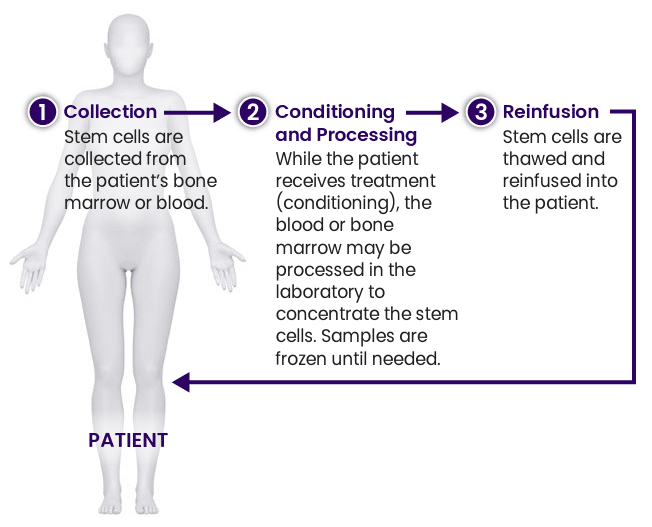
In autologous stem cell transplantation, the patient is his or her own donor. Stem cells are collected from the patient, processed to get them ready, and then frozen. Several days, weeks, or even years later, the patient undergoes conditioning, which is another term for the high-dose chemotherapy with or without radiation used to treat the lymphoma. Conditioning may also be called a preparatory regimen. After the conditioning treatment is given and most or all of the cancer cells have been killed, the collected stem cells are infused back into the patient to replace the normal stem cells that were destroyed by the treatment. Because a patient is receiving his or her own stem cells, an autologous stem cell transplant ensures a perfect match between the patient and the transplanted cells, which reduces the risk of complications.
Allogeneic Stem Cell Transplantation
In allogeneic stem cell transplantation, the stem cell donor is another person who has genetically similar blood cells to the patient. This person is often a brother or sister. For patients who do not have a compatible sibling, the donor can be another family member (called a haploidentical donor) or a person unrelated to the patient who is identified through a registry of possible donors. The donor’s stem cells are collected in the same way as a patient’s cells are collected in an autologous transplant. Then, once the patient has undergone conditioning, the donor’s stem cells are infused into the patient.
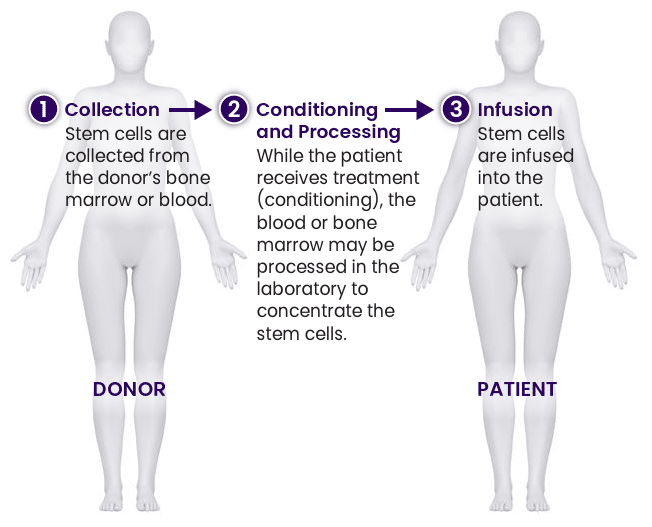
One of the benefits of allogeneic transplants is that after the donated cells engraft (take hold) in the patient (typically a few months later), they begin to function as part of the patient’s immune system and may attack any remaining cancer cells. This benefit is termed graft-versus-lymphoma (GVL) effect, and it only occurs in allogeneic stem cell transplants.
One significant risk of allogeneic transplants, however, is that in some cases, the donor’s stem cells may start to attack the patient’s healthy cells. This is called graft-versus-host disease (GVHD). See Chapter 12 for more information about GVHD.
Reduced-intensity transplantation (also called non-myeloablative or miniallogeneic transplantation) is a type of allogeneic transplantation. Compared with a standard allogeneic transplant, a reduced-intensity transplant uses lower doses of chemotherapy with or without radiation to prepare the patient for the transplant. These types of transplants can be used in patients at a more advanced age or in those with other health conditions that may make it unsafe to completely destroy their bone marrow using a high-dose conditioning treatment.
After a reduced-intensity transplant, the stem cells from both the donor and the patient exist together in the patient’s body for some time, but the donor’s cells eventually take over the bone marrow and replace the patient’s own bone marrow cells over the course of months. The new cells from the donor can then develop an immune response to the cancer cells and exhibit a GVL effect, helping to kill any remaining cancer cells.
The reduced-intensity treatment, however, may be less effective in killing the cancer cells. The conditioning regimen kills as many cancer cells as possible and suppresses the patient’s immune system just enough to allow the donor’s stem cells to engraft in the bone marrow. The patient’s blood cell counts may not fall as low as they would with high-dose chemotherapy, and the reduced-intensity regimen puts less strain on the patient’s major organs, making it a more tolerable treatment.
The Transplant Team and Considerations Before Transplantation
Transplant centers offer a comprehensive care approach to transplantation, and their group of specialists is referred to as the transplant team. The team consists of doctors, social workers, dietitians, physical therapists, and a transplant coordinator.
The team may also include pharmacists, respiratory therapists, dermatologists, gastroenterologists, pulmonologists, nephrologists, intensive care physicians, psychologists, and other medical/ surgical subspecialists who will work together to provide the best outcome for the patient.
The transplant coordinator, who is often a registered nurse, is a key member of the transplant team. The transplant coordinator is in control of timing, tests, stem cell collection, and treatments. The coordinator can help the patient understand the required length of stay in the hospital, required items and those not allowed for the hospital stay, and visitors’ regulations. The potential short-term and long-term side effects and coping strategies will also be reviewed with the patient. The transplant coordinator is also the person who can help or find the right transplant team member to answer a patient’s questions, including financial assistance and insurance concerns.
Initial discussions with the transplant team should include an overview of the entire transplantation process, as well as the role of a stem cell transplant within the larger plan of lymphoma treatment. For a typical overview of the transplant journey, see pages 87-90. Sample treatment timelines for both autologous and allogeneic transplants begin on page 46.
Patients should inform family and friends about the process and their expectations of its impact on their lives. They should also anticipate and make plans for social and financial support. Finally, it is very important for the patient to choose a care partner who will help them through the entire process. More information about care partners can be found in Part 9 of this guide.
For patients of reproductive age, one significant long-term side effect to address prior to treatment is the likelihood that high-dose chemotherapy may cause infertility. The treatment can also bring on early menopause in women.
For younger patients who may wish to have children in the future, there are options available to help preserve fertility, including possible protection of the ovaries during treatment, freezing of sperm cells or egg cells before treatment, or in vitro creation and freezing of fertilized embryos. Patients of reproductive age who are concerned about maintaining the ability to have children in the future should discuss their options with the transplant team before beginning treatment. Unfortunately, some lymphomas progress rapidly and any delay in treatment may be life-threatening, so fertility preservation prior to stem cell transplant may not be an option in such cases. This should be discussed with the health care team in detail prior to transplantation.
See the Resources in Chapter 23 for information to order the Transplant Journey Checklist, which provides an overview of steps to take to prepare for a transplant or to order the Lymphoma Care Plan that patients and their health care team can complete together to plan their care before, during, and after a transplant.
Chapter 10: Treatment Options in Stem Cell Transplantation
As discussed in Chapter 9, a stem cell transplant is used to replace stem cells that have been destroyed by high-dose chemotherapy with or without radiation. There are two main types of stem cell transplantation: autologous (the patient is his or her own donor) and allogeneic (the donor is another person who is genetically similar to the patient). Sources for stem cells include bone marrow, peripheral blood, and umbilical cord blood.
Choosing Which Type of Stem Cell Transplant to Use
The major difference between autologous and allogeneic transplantation is that in autologous transplantation, the main benefit is the high-dose chemotherapy with or without radiation that occurs before the transplant. In allogeneic transplantation, on the other hand, the GVL effect that happens when the donor cells attack the patient’s remaining cancer cells may be just as important as—or even more important than—the high-dose conditioning treatment itself. The intensity of the GVL effect varies among patients.
In general, control of the lymphoma is better with allogeneic transplantation, but the toxicity and risk of complications is also higher, because the donor immune cells can sometimes attack the healthy cells of the patient and cause GVHD. On the other hand, an allogeneic transplant is a cleaner stem cell source, meaning that it avoids the potential contamination of cancer cells that can occur with an autologous transplant.
The decision about which treatment to use is complex, and the factors that have to be considered are different for each individual patient. Therefore, the decision should involve a detailed discussion with the patient’s doctor and a referral to a major transplant center.
Sources of Stem Cells for Transplantation
Identifying a Donor
In autologous transplants, there is no need to find another person to donate stem cells, as the patient will be donating to himself or herself. However, for allogeneic transplantation, it is important to find a donor whose blood cells are as similar to the patient’s own cells as possible. If the stem cells are too different, the new immune cells from the transplant are more likely to try to destroy healthy cells in the patient’s body, leading to GVHD.
Before a transplant, human leukocyte antigen (HLA) typing (also called tissue typing) is performed with blood tests or a swab of saliva to check the surface of the blood cells for proteins called HLA markers. The proteins on the outside of the patient’s cells are compared to those of a potential donor. Well-matched HLA antigens between recipient and donor result in greater transplant success.
Part 5Close family members, particularly siblings, are more likely to have very similar patterns of proteins; however, only 25 to 35 percent Part 5of stem cell transplant patients have an HLA-matched sibling. When a patient does not have a matched sibling, the patient’s HLA markers can be compared to a database of individuals who have volunteered to donate their stem cells. The likelihood that an unrelated donor can be found who is HLA-matched to a patient ranges from 65 to 99 percent. The best chance for HLA matching occurs when the donor and recipient have the same ethnic background. Although the number of people registered to be donors is increasing overall, people from certain minority ethnic groups may have a lower chance of finding a matching donor. Large volunteer donor registries make it more likely that an HLA-matched donor not related to the patient can be found. For instance, Be The Match® (bethematch.org), operated by the National Marrow Donor Program® (NMDP), manages the largest and most diverse marrow registry in the world. Be The Match is working to increase the number of available volunteers who have had their tissue typed and are registered to donate, so that they can find a match for all patients in need of a transplant.
Over the past few years, increasing numbers of U.S. transplant centers have begun performing mismatched or haploidentical transplants from family members who are not a perfect match. This strategy is most often used when a child, parent, or sibling donates to a patient who is only half-matched. In this case, half or more of the HLA factors will match, while up to half of them don’t match. This procedure sometimes requires processing to remove some of the non-matching white blood cells that can cause GVHD. Researchers are also developing promising new techniques to prevent GVHD by using high-dose chemotherapy to eliminate donor white blood cells. This approach may make haploidentical transplants a viable donor option for increasing numbers of patients. Haploidentical transplantation is being used more and more commonly in specialized transplant centers in the United States.
HLA matching does not have anything to do with blood type. For example, if a patient’s blood type is A positive, the HLA-matched donor who is identified to provide stem cells for that patient could have a blood type of O negative. In autologous transplants, the patient’s blood type does not change after the transplant, because the cells are from his or her own body. However, in allogeneic transplants, the patient’s blood type will actually change to the donor’s blood type once the stem cells have engrafted and begun making new red blood cells, typically a few months after the transplant.
Whether stem cells for transplantation are collected from the patient or from the donor, they can be obtained from one of three sources: bone marrow, peripheral blood, or umbilical cord blood.
Bone Marrow
Bone marrow is a wet, spongy tissue inside bones where the blood cells are generated. Bone in the pelvis, or hip bone, is a good source of stem cells, and this bone is the most common source of cells for a bone marrow transplant. Bone marrow stem cells can be used for allogeneic or, less commonly, autologous stem cell transplantation. To remove the stem cells, the patient or donor is given general anesthesia. In a process called harvesting, a large needle is inserted into the back of the hip bone, and some of the bone marrow is removed and frozen. To collect enough stem cells from the bone marrow for a transplant, more than 100 insertions are made into the bone, usually through a few holes in the skin. The marrow that is harvested is passed through a series of filters to remove bone or tissue fragments and to concentrate the cells. In an allogeneic transplant, if the donor’s cells are harvested immediately before the transplant, then the cells are placed in a plastic bag and infused directly into the recipient’s vein within a few hours. If the donor is not located near the patient, or if the transplant is autologous and the patient is donating for his or her own use, the marrow can be frozen and stored for years. When it is time for the patient to receive the stem cells, the marrow is administered directly into a vein, just like a blood transfusion.
Part 5A hospital stay of about 6 to 24 hours after the harvesting procedure is needed for the donor to recover from the anesthesia and the pain at the needle insertion sites. Lower back soreness may be experienced for a few days following the procedure. The donor’s bone marrow regenerates soon after the procedure. The loss of red blood cells may result in temporary anemia, or low levels of iron in the blood, which can make donors feel tired and short of breath, especially when it is severe. Anemia can often be managed with iron supplements.
Peripheral Blood
As discussed in Chapter 9, the stem cells that form blood cells normally live in the bone marrow. However, a small number of these stem cells move into the bloodstream and circulate freely in the blood; these are called peripheral blood stem cells. In many cases, doctors can now use the process called apheresis to filter these peripheral stem cells out of the blood, eliminating the need for the surgical removal of bone marrow. In this procedure, blood is removed from a vein, the stem cells are collected, and the rest of the blood is returned to the patient or donor.
The only challenge with this approach is that normally there are very few stem cells circulating in the blood. However, drugs called granulocyte colony-stimulating factors (G-CSFs)—such as filgrastim, lenograstim, and pegfilgrastim—can be administered a few days before the apheresis procedure to stimulate more stem cells to move out of the bone marrow and into the bloodstream. Using G-CSFs before the apheresis procedure greatly increases the chances of collecting enough stem cells for the transplant. Some transplant centers also use chemotherapy or other drugs before the administration of G-CSFs to further help release stem cells from the bone marrow. Even so, the apheresis procedure may need to be repeated several times until enough stem cells are collected. The collected stem cells are treated, processed, and then frozen to keep them alive until the patient is ready to receive them.
Collecting stem cells from the blood is easier on the patient or donor than harvesting bone marrow from a bone, because the procedure involves less pain, no anesthesia, and no hospital stay. The entire apheresis procedure also takes just four to six hours, with no recovery time needed. Another benefit of using peripheral blood stem cells is that after they are transplanted, they engraft and begin working more quickly than cells taken from bone marrow.
However, one major disadvantage of using stem cells collected from the blood is that, in allogeneic transplants, this approach is associated with a greater risk of GVHD. Collecting peripheral stem cells from the blood is now the most commonly used method of obtaining cells for autologous stem cell transplants. But in certain situations, especially in allogeneic transplants, stem cells harvested from the bone marrow may be preferred due to the possible lower risk of GVHD.
Umbilical Cord Blood
After the birth of a newborn, some of the baby’s blood is left behind in the placenta and umbilical cord; this is known as umbilical cord blood or just cord blood. Cord blood contains many stem cells, so this blood can be collected and frozen until needed for later use in a stem cell transplant. Stem cell transplantations with cord blood are not as common as those from other sources, for two reasons:
1) there are a smaller number of stem cells present in cord blood, and 2) the cells can take longer to engraft and start working than stem cells from bone marrow or peripheral blood. However, one advantage of this source is that umbilical cord blood stem cells do not need to match entirely with a patient to be acceptable for allogeneic stem cell transplantation. For this reason, umbilical cord blood stem cell transplants may be considered when a well-matched donor cannot be found among family members or volunteers who have signed up to donate.
Questions to Ask Before Deciding to Undergo a Stem Cell Transplant
- What type of transplant is most appropriate for me (autologous or allogeneic) and why?
- If an allogeneic transplant is being considered, how will a donor be found?
- What are the risks associated with this procedure?
- What are the benefits associated with this procedure?
- What are the short-term and long-term side effects I might experience after my transplant?
- Part 5What can be done to lessen the side effects?
- Will getting a transplant make me ineligible for other lymphoma treatments?
- How long will I need to be in the hospital?
- Will I need someone to care for me after the transplant? For how long?
- Will my insurance cover this procedure?
- How will we know if the treatment is working?
- How and for how long will the treatment affect my normal activities (e.g., work, school, childcare, driving, sexual activity, and exercise)?
- What is my chance of making a full recovery?
- Is the transplant and related treatment part of a clinical trial? (see Chapter 14 for additional details on clinical trials)
Part 6: The Procedure of Stem Cell Transplantation
Chapter 11: The Stem Cell Transplantation Process
Before Stem Cell Collection
Prior to collecting the stem cells for the transplant, tests will be administered to either the patient (in autologous transplants) or the donor (in allogeneic transplants) to evaluate their overall health.
These may include a complete blood count (CBC); liver and kidney function tests; tests for viral hepatitis and human immunodeficiency virus (HIV); a restaging test (bone marrow biopsy, computed tomography [CT], or positron emission tomography [PET]/CT scan) to measure the extent of the lymphoma and response to previous therapy; a bone marrow biopsy (in autologous transplants); and lung, heart, and kidney function tests. Stem cell collection usually occurs a few weeks prior to high-dose chemotherapy with or without radiation.
The Transplantation Process
Once autologous or donor stem cells have been obtained, patients undergoing a stem cell transplant will experience a similar procedure whether they are undergoing an autologous transplant or an allogeneic transplant.
Conditioning
Stem cell transplants are preceded by chemotherapy with or without radiation to kill the cancerous cells. The conditioning chemotherapy regimen can vary from high-dose (for autologous stem cell transplants) or reduced intensity (for allogeneic stem cell transplants). The goal of the higher dose of chemotherapy is to kill as many cancer cells as possible before the transplant takes place. These chemotherapeutic treatments typically require up to 7 days. This process is called conditioning, or preparatory therapy. The treatment destroys the patient’s stem cells along with the cancerous cells. These conditioning treatments can be relatively toxic, depending on the intensity of the chemotherapy regimen.
In certain circumstances, the radiation may be “fractionated,” meaning that the radiation dose is given over several days to decrease the toxicity. Monoclonal antibodies such as rituximab (Rituxan) may also be used.
Central Line or Port Placement
Prior to the transplant, a surgeon or a radiologist will implant some type of central venous access device into the patient’s chest near the neck. The device used is typically a long tube called a central venous catheter (commonly known as a central line); in rare cases, a round device called a port (sometimes called a portacath) is implanted just beneath the skin. The central line or port is inserted surgically after giving local anesthesia to numb the insertion area, and it usually remains in place for the duration of treatment and for several weeks or even months following the transplant.
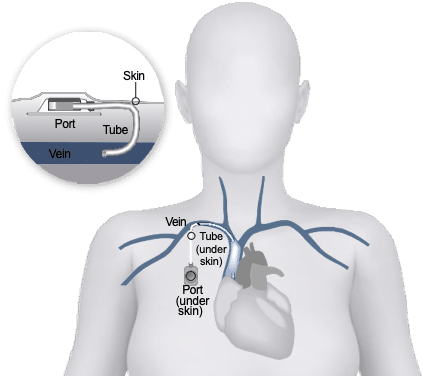
On a central line, the tube coming out of the chest has several openings that can be used to give or take fluids into or out of the body. With a port, fluids can be exchanged by inserting a needle through the skin and into the center of the port, called the septum. The central line or port will be used to infuse the transplanted stem cells, as well as to administer other medications and blood products into the body. It can also be used to draw blood samples for laboratory tests. The figure below shows where the central line or port is typically inserted.
Stem Cell Infusion
Usually a day or two after conditioning treatment is finished, the patient is given the stored stem cells. Donor stem cells are delivered through the central line or port into the patient’s veins. Infusing the stem cells usually takes between one and four hours and is typically not painful; however, some patients have reported discomfort or pain, as each patient’s pain tolerance is different. Patients are closely monitored throughout the infusion process, as they may experience fever, chills, hives, shortness of breath, or a drop in blood pressure during the procedure. To stimulate the growth of infection-fighting white blood cells, granulocyte colony-stimulating factor (G-CSF) may also be given a few days after stem cell infusion. Additionally, blood cell replacement, nutritional support, and drugs to prevent graft-versus-host disease (GVHD) may be used.
Recovery
Following a stem cell transplant, inpatient or intense outpatient stays can vary from 12 to 30 days, depending on how quickly the new stem cells engraft, or move into the patient’s bone marrow and begin making new blood cells. During this engraftment period, the patient’s white blood cell levels are very low, making the risk of infection high. These infections can be severe and even life-threatening. To prevent this, the patient receives prophylactic antimicrobials (drugs that prevent infections). Infection risk remains high until the stem cells have been able to regenerate the white blood cells, usually in about two to four weeks. Engraftment is faster after transplantation of peripheral blood stem cells than after a bone marrow stem cell transplant. While each patient’s transplant is different, the two tables on the following pages show a sample timeline for someone having an autologous stem cell transplant or an allogeneic stem cell transplant. The days leading up to the transplant are given minus numbers, such as Day −3 or Day −2. The day of the transplant is Day 0, and the days that follow are Day +1, Day +2, etc.
Table 11.1. Sample Timeline of an Autologous Transplant
| Phase | Description | Approximate Time Period |
|---|---|---|
| Phase 1 Stem Cell Mobilization | If peripheral blood stem cells will be used, the patient receives daily injections of a G-CSF for five days prior to collection to stimulate the stem cells to move into the bloodstream. | 5 days prior to collection |
| Phase 2 Stem Cell Collection Stem cell apheresis or bone marrow harvesting | For peripheral cell donations, blood is removed from the patient’s arm, passed through a machine to collect the stem cells, and then returned into the patient’s other arm. This apheresis procedure may need to be repeated one or more times on subsequent days if not enough cells are collected the first time. For bone marrow donations, anesthesia is given, and then needles are inserted into the patient’s hip bone to withdraw liquid bone marrow. All necessary bone marrow is collected in a single procedure. Collected cells are frozen until infusion. | Day −21 to Day −14 A few weeks before high-dose chemotherapy |
| Phase 3 Conditioning High-dose chemotherapy with or without radiation | High-dose chemotherapy and possibly radiation are given to kill most or all of the remaining cancer cells in the blood. | Day −10 to Day 0 Start date varies depending on particular conditioning treatment |
| Phase 4 Transplant Infusion of stem cells | Frozen cells are thawed prior to transplant. Infusion through the central line or port takes 1 to 4 hours | Day 0 |
| Phase 5 Early Recovery Feeling the effects of the chemotherapy | Blood cell counts are low. Nausea is the most common side effect. Patient may also experience diarrhea and/or mouth sores. The risk of developing an infection is high. G-CSF is administered. | Day 0 to day +7 |
| Phase 6 Pre-Engraftment The turning point | These days may be the most difficult, as blood counts are still low and the stem cells have not taken hold yet. Rarely, patients develop a fever, rash, and fluid in the lungs, known as “engraftment syndrome.” | Day +7 to day +10 |
| Phase 7 Engraftment Blood counts return to normal | The patient starts feeling better, and the risk of infection decreases. | Day +12 to day +30 |
| Phase 8 Recovery Immune system is still not working properly | The patient is sent home to recover with a care partner. The patient may remain on medications to prevent infections. | Day +30 to 6 months Continued monitoring by transplant team |
| Phase 9 Late Recovery Patient returns to normal activities | The patient’s immune system is almost fully recovered. There is still a risk of late complications, such as organ dysfunction or recurrence of the original disease. Patient receives vaccinations they had during childhood. | 6 months and onward |
Table 11.2. Sample Timeline of an Allogeneic Transplant
| Phase | Description | Approximate Time Period |
|---|---|---|
| Phase 1 Donor Identification | A potential donor who is HLA-matched to the patient is identified either from within the patient’s family or from a database of individuals registered to donate stem cells. Cord blood stem cells may also be used. | Varies |
| Phase 2 Donor Screening | The potential donor undergoes a physical exam and blood tests to confirm that donation will be safe and effective for both patient and donor. | Varies |
| Phase 3 Donor Stem Cell Mobilization | If donating peripheral blood stem cells, the donor receives five days of daily injections of a G-CSF to stimulate stem cells to move into the bloodstream. | 5 days prior to collection |
| Phase 4 Donor Stem Cell Collection Stem cell apheresis or bone marrow harvesting | For peripheral cell donations, blood is removed from the donor’s arm, passed through a machine to collect the stem cells, and then returned into the donor’s other arm. This apheresis procedure may need to be repeated one or more times on subsequent days if not enough cells are collected the first time. For bone marrow donations, anesthesia is given, and then needles are inserted into the donor’s hip bone to withdraw liquid bone marrow. All necessary bone marrow is collected in a single procedure. Collected cells are frozen until infusion. | Varies Can occur while patient is receiving high-dose chemotherapy, but is usually done days, weeks, or months beforehand |
| Phase 5 Donor Recovery | Most donors are able to return to work, school, or other activities within a week of donation. | 1 to 7 Days after Donation |
| Phase 6 Patient Conditioning Chemotherapy with or without radiation | Patient receives chemotherapy and possibly radiation are given to kill most or all of the remaining cancer cells in the blood. | Day −10 to Day 0 Start date varies depending on particular conditioning treatment |
| Phase 7 Patient Transplant Infusion of stem cells | Frozen cells are thawed prior to transplant. Infusion through the central line or port usually takes 1 to 4 hours | Day 0 |
| Phase 8 Early Recovery Feeling the effects of the chemotherapy | Blood cell counts are low. Patient may experience diarrhea and/or mouth sores. The risk of developing an infection is high. Patient receives medication to prevent GVHD. | Day 0 to day +7 |
| Phase 9 Pre-Engraftment The turning point | These days may be the most difficult, as blood counts are still low and the stem cells have not taken hold yet. Rarely, patients develop a fever, rash, and fluid in the lungs, known as “engraftment syndrome.” | Day +7 to day +10 |
| Phase 10 Engraftment Blood counts return to normal | The patient starts feeling better, and the risk of infection decreases. | Day +12 to day +30 |
| Phase 11 Recovery Immune system is still not working properly | The patient is sent home to recover with a care partner around Day 90. The patient may remain on medications to prevent infections. | Day +30 to 6 months Continued monitoring by transplant team |
| Phase 12 Late Recovery Patient returns to normal activities | The patient’s immune system is almost fully recovered. There is still a risk of late complications, such as organ dysfunction or recurrence of the original disease. Patient receives vaccinations they had during childhood. | 6 months and onward |
Sharing Knowledge and Experience
Though this process may be new for you, several transplant survivors from the Lymphoma Patient, Care Partner, and Advocacy Advisors have shared the following tips and questions that they thought were helpful to know when going through the transplantation process.
Patient Tips
- You may want to ask for a second opinion.
- Several weeks prior to the transplant, you should start completing paperwork such as Family and Medical Leave Act (FMLA) forms, a legal Will, a Living Will, Advanced Directive, Durable Power of Attorney, and a Health Care Power of Attorney.
- Upon deciding to undergo stem cell transplantation, it is important to get the paperwork started and set up a payment plan or make other financial arrangements with the hospital.
- Find out which member of your health care team to talk to about working with your insurance company to get coverage for the treatment.
- If you will be an outpatient, ask your treatment team who can help you with lodging arrangements. You must be aware of housing requirements prior to receiving treatment.
- Ask for further explanation from your doctor or health care team if you don’t understand something.
- Have someone accompany you to all appointments to take notes and to be a second set of ears to help you remember things.
- Assign someone the responsibility of reviewing and paying your bills while you are recovering, and provide them with your accounts, user names, and passwords.
- If permitted, consider bringing the following items to the treatment center
- Things to occupy your time (books, magazines, music, electronic devices, or knitting).
- Multiple outfits to wear and socks or slippers.
- Travel-sized toiletries like shampoo, soap, and razors, if the hospital or transplant center does not provide such items.
- The process of receiving stem cells typically does not hurt, although each person’s experience will be different.
- If the procedure is done as an outpatient, a care partner is required (see Part 9 for more about the care partner’s role).
- Be sure you completely understand and faithfully follow the discharge instructions provided by the hospital/transplant center when you are sent home.
- During the first weeks or months back home, have someone available to clean your house, go to the store for you, and prepare your meals. Not only will you probably be too weak to do these things for yourself, but you also don’t want to risk infection by going out in crowded places, handling raw foods, or cleaning contaminated surfaces.
- Try to eat healthy and nutritious foods to help your strength recover.
Questions to Ask Your Health Care Team About Stem Cell Transplantation
- For autologous transplants:
- How will you manage any pain I experience when my stem cells are collected?
- How will you manage any pain I experience when the stem cells are reinfused into my body?
- For allogeneic transplants:
- Can donors have their cells collected at a facility near their homes, or do they need to come to my facility for collection?
- Is it painful for donors to have their cells collected?
- How long should the donor plan to be away from home/ work for the cell collection process?
- Is having the central line or port inserted painful, and will it be uncomfortable once it’s in?
- How long will the central line or port remain in my chest?
- What will my insurance cover, and what will I be responsible for paying?
- If there are costs that I need to pay, can I set up a payment plan with the hospital/transplant center?
- Will the FMLA cover the time I will be in the hospital for my transplant in addition to my recovery time?
- What is needed to apply for short-term disability through my employer?
- Once I come home from the hospital after my transplant, what will I require assistance with, and what can I do for myself?
- What types of tests and follow-up care will I need to have after my stem cell transplant?
- How long will it be until I can be near my pet(s) and other people again?
- Will I need to wear a mask when I go out in public or to my
- doctor’s office?
- When will I be able to do my normal activities and go about my normal routine? When will I start to feel like my old self again?
Part 7: After a Transplant
Chapter 12: Engraftment and Post-Engraftment Periods
During the first month after the transplant, the transplanted cells will start to move into the bone marrow, grow and multiply, and produce healthy blood cells that appear in the blood. This process is referred to as engraftment. Frequent blood tests may be done to monitor this process. Complete recovery of immune function may take up to several months for autologous transplant recipients (a patient is his or her own donor) and one to two years for patients receiving allogeneic transplants (the stem cell donor is another person who is genetically similar to the patient). The first sign of recovery is typically a large increase in the white blood cell count. Blood and platelet transfusions are continued as needed. During this period of engraftment, antimicrobials (antibiotics and other drugs that kill microorganisms) are continued as needed to prevent infection.
It is strongly suggested that patients discuss all of the potential complications and short-term and long-term side effects of stem cell transplantation with their doctor and health care team thoroughly and in detail, so that the patient is informed in their decision making.
Short-Term Side Effects
Because the chemotherapy doses used before a stem cell transplant are usually higher than standard chemotherapy doses, the typical side effects from the chemotherapy—such as nausea, vomiting, fatigue (being tired), mouth sores, and loss of appetite—may also be more intense, especially right after transplantation and for a few weeks thereafter. The key to the management of the potential side effects is prevention and early treatment.
Mild kidney issues are common after transplants and will be monitored closely and treated aggressively. To manage fatigue, patients will need to use strategies to minimize their exertion and optimize rest. Issues can also arise related to a patient’s limited mobility, such as diminished muscle strength, muscle loss, loss of balance and coordination, a diminished sense of well-being, and risk of chest infections.
It is important to remember that not all patients experience the same side effects or intensity of side effects. Patients and their care partners should keep a journal of their side effects and discuss them with their health care team.
Complications
After treatment with high-dose chemotherapy with or without radiation, all three types of blood counts become very low, which affects the body in several ways.
- A low white blood cell count (neutropenia) increases a patient’s risk of infection.
- A low red blood cell count (anemia) can make a patient feel tired and have low energy.
- A low platelet count (thrombocytopenia) reduces the ability of the blood to clot, potentially increasing the risk of bleeding.
All of these are common complications after a stem cell transplant. While waiting for the patient’s body to begin making new blood cells, these complications are managed with red blood cell and platelet transfusions and antimicrobials to prevent or treat infections.
Veno-Occlusive Disease
Part 7High-dose chemotherapy also brings the risk of veno-occlusive disease (VOD), a complication causing blood vessels that carry blood through the liver to become blocked. VOD is extremely rare in autologous stem cell transplants and is primarily a complication in allogeneic transplants. Symptoms of VOD include jaundice (yellowing of the skin and eyes), fluid retention, and a painfully enlarged liver. While this complication occurs in fewer than two percent of transplant recipients, severe cases can be life-threatening. Because traditional anticlotting medications can cause severe bleeding, doctors had few options for treating VOD until 2016, when the U.S. Food and Drug Administration (FDA) approved defibrotide sodium (Defitelio) for treating confirmed cases of VOD.
Ongoing research is now exploring the preventive use of defibrotide to reduce the chances that stem cell transplant recipients will develop VOD.
Graft-Versus-Host Disease
For patients who undergo allogeneic stem cell transplantation, one of the most significant risks is a complication known as graft-versus-host disease (GVHD). This is a common condition that occurs when the donor’s immune cells attack the patient’s healthy cells, and it can range from a minor problem to a very serious one. When it develops shortly after engraftment of the donated cells, this complication is known as acute GVHD (aGVHD), whereas when it develops or continues months or years after the transplant, it is called chronic GVHD (cGVHD). The two forms were once considered the same disease process occurring at different times, but now some doctors think of cGVHD as a condition more like an autoimmune disease such as lupus or rheumatoid arthritis.
To prevent GVHD, patients undergoing allogeneic stem cell transplantation are given medicines like cyclophosphamide post-transplant to suppress the immune cells and keep them from attacking the patient’s healthy cells. Nevertheless, as many as 30 to 70 percent of patients receiving an allogeneic transplant may develop aGVHD, and 20 to 50 percent may experience cGVHD. An individual patient may experience either, both, or neither forms of this condition, but those who develop aGVHD are more likely to subsequently have cGVHD. Both forms can affect many different areas of the body, including the skin, liver, eyes, mouth, and digestive tract.
Historically, high doses of corticosteroids and other immunosuppressants have been the primary approach for treating GVHD as well as preventing it. However, long-term immunosuppressant use has many serious potential side effects and risks, including making the body very susceptible to life-threatening infections. The only FDA-approved medicine for aGVHD is ruxolitinib (Jakafi; a JAK1/2 inhibitor), specifically for steroid-refractory cases in both adults and pediatric patients. In addition, as many as 50 percent of cases of cGVHD do not resolve with corticosteroids alone. For cGVHD, the FDA-approved medicines are ibrutinib (Imbruvica; a BTK inhibitor, for patients after failure of one or more lines of systemic therapy), ruxolitinib (Jakafi; a JAK1/2 inhibitor, for patients after failure of one or two lines of systemic therapy), belumosudil (Rezurock; a ROCK2 inhibitor, for patients after failure of at least two prior lines), and axatilimab-csfr (Niktimvo; a CSF1R monoclonal antibody, for patients after failure of at least two prior lines).
As stem cell transplantation has become increasingly common, there has been a tremendous surge in research into new treatments for GVHD. Dozens of clinical trials are currently underway testing numerous promising medications to prevent or treat aGVHD and cGVHD Promising agents currently being explored in clinical trials for aGVHD include mesenchymal stromal cells (MSCs), fecal microbiota transplantation (FMT), neihulizumab (anti-CD6 antibody), begelomab (anti-CD26 antibody), tocilizumab (IL-6 receptor antagonist), vedolizumab (anti-α4β7 integrin), and alpha-1 antitrypsin. For cGVHD, investigational therapies include kinase inhibitors (e.g., itacitinib), monoclonal antibodies, cellular therapies, and agents targeting fibrotic pathways such as alvelestat (neutrophil elastase inhibitor).
The Recovery Process
Part 7The recovery time needed before returning to work or school is different for each person, but patients receiving an autologous transplant may recover sooner than those who undergo an allogeneic transplant.
Part 7Hair loss is a result of the high-dose chemotherapy. As the hair begins to grow back during the recovery period, it is important to keep the scalp protected from sun, heat, and cold. Patients should be aware that when their hair starts to grow again, it may be a different texture and slightly different in color than it was before the transplant. Often these differences go away in time and hair returns to normal.
Many patients experience a loss of appetite and taste. As a patient’s appetite returns, it is better to eat smaller meals more often at first.
It is recommended to continue good oral hygiene, but to reduce infection risk, patients should not go to a dentist without permission from the doctor. Patients should alert the doctor in the event of bleeding, ulcers, or cold sores in the mouth. Increased water intake can combat dry mouth.
Some patients may notice that they bruise more easily during this period, and shedding skin is also common. For skin care, baby oil or another non-irritating oil for dry skin is recommended, as is avoiding strong sunlight for approximately six months, then using sunscreen.
Fatigue is common, but it will eventually pass for the majority of people. It is recommended to exercise gently, rest often, and keep a diary to help measure progress. Fatigue may decrease sexual activity and desire at first, but this will likely return to normal over time.
Feeling depressed is also common during this time. Patients should realize that the feeling of depression is normal and many transplant patients experience this. Patients naturally face changes and a certain loss of control after a stem cell transplant. If patients feel that the challenges are too big to conquer, they might feel helpless or hopeless. Some helpful strategies to cope with these struggles are obtaining more information, asking about how other people have coped, and turning to others for support. If these feelings continue, the patient should seek help from a counselor or therapist. It is important for the care partner to take notice if depression lasts for an extended period and to mention this to the health care team.
Follow-up
Most patients will require a period of three months to one year after transplant to recover. After returning home post-engraftment, patients can do things to continue to prevent infections, such as taking regular showers, washing hands often, keeping their teeth and gums clean, and avoiding contact with sick people. If antibiotics have been prescribed, they should be taken as directed. It will be helpful for patients to take their temperature when feeling hot, chills or unwell, monitor for blood in urine or stool, and look out for new bruising or persistent nosebleeds. If the central line is still in place, it must be regularly flushed with saline, and the insertion site needs to be cleaned and redressed often. The line will be removed when it is no longer needed. Ports do not require any maintenance care.
Patients with lymphoma should have regular visits with a doctor who is familiar with their medical history and the treatments they have received. Medical tests (such as blood tests, positron emission tomography [PET] scans, and computed tomography [CT] scans) may be required at various times during remission (signs of the disease disappear after treatment) to see if the patient needs additional treatment. Some treatments can cause long-term side effects or late side effects. These side effects may depend on the patient’s age, gender, and overall health at the time of treatment, as well as on the treatment type, duration, and frequency. A doctor will check for these side effects during follow-up care. Patients and their care partners are strongly encouraged to keep copies of all medical records and test results as well as information on the types, amounts, and duration of all treatments received using a Lymphoma Care Plan document (shown in Chapter 23). These documents will be important for keeping track of the effects of treatment, potential disease relapse (disease returns after treatment), or disease that is refractory (disease does not respond to treatment).
To learn more about any of these resources, visit the Foundation’s website at lymphoma.org/publication, or contact the Foundation’s Helpline at (800) 500-9976 or [email protected].
Post-Transplant Revaccinations
Antibodies to vaccine-preventable diseases decline one to four years after allogeneic or autologous stem cell transplantation, putting transplant recipients at risk of acquiring these infections. Therefore, beginning at 6 to 12 months after transplant (or as directed by the health care team), patients who received an autologous transplant should start to be revaccinated for the common childhood preventable infectious diseases. Patients who received an allogeneic transplant should wait until their immunosuppressive medications have been discontinued before beginning the revaccination process. After that, they should follow their transplant physician’s recommended schedule.
Because every patient is different, physicians will provide guidance on exactly which vaccines a patient should receive and the optimal time to receive them. Vaccines that may be recommended include diphtheria, tetanus, and pertussis (DTaP); measles, mumps, and rubella (MMR); polio; coronavirus disease (COVID-19); and hepatitis B. Vaccinations against pneumococcus, meningococcus, and Haemophilus influenzae type b (Hib) may also be indicated, and most patients will be advised to begin receiving the yearly influenza (flu) vaccine as well. Physicians will provide guidance on a case-by-case basis about whether an individual patient is healthy enough to receive the varicella vaccine against chickenpox.
Patients can use the Lymphoma Care Plan (ordering instructions in Chapter 23) to discuss their physician’s suggestions for recommended vaccines and the timing of those vaccinations after transplantation.
Chapter 13: Transplant Survivorship
Many transplant recipients experience ongoing medical symptoms, even two years after transplant. However, at 10 years post-transplant, survivors are nearly as healthy as adults who have never had a transplant.
Long-Term Side Effects
Patients receiving a stem cell transplant may experience significant long-term side effects, including:
- cataracts (clouding of the lens of the eye, which causes vision loss)
- early menopause
- organ damage to the liver, kidneys, lungs, heart, and/or bones and joints
- relapse (the disease returns)
- secondary or new cancers
- infertility (the inability to have children; for information about ways to preserve fertility, see Chapter 9 or refer to the Lymphoma Research Foundation’s web page on “Fertility” available at lymphoma.org/fertility
Survivors are also more likely to experience musculoskeletal complaints (stiffness and cramping), sexual problems, and a higher use of antidepressants and anti-anxiety medications.
While some survivors view their health as worse than an average person their age, many also report positive changes. These can include greater personal growth, an enhanced appreciation for life, greater appreciation of friends and family, different priorities, and a shift in life expectations.
Other issues impacting survivors can include pain management, quality of life, and care partner burnout. It is important for patients to discuss any problem they experience with their health care team, as these issues are very common. Additional resources on these topics are available by visiting the Foundation’s website at lymphoma.org, or contacting the Foundation’s Helpline at (800) 500-9976.
Relapsed/Refractory Disease
For some transplant recipients, the lymphoma relapses or becomes refractory (does not respond to treatment). In this case, other treatment options may be available. In some cases, a second autologous or allogeneic stem cell transplant may be an option. Medications may also be used in this situation. Brentuximab vedotin (Adcetris) is approved by the U.S. Food and Drug Administration (FDA) for the treatment of classical Hodgkin lymphoma (cHL) after failure of autologous stem cell transplantation. In addition, it can be used as consolidation or maintenance therapy in patients with cHL who are at high risk of relapse or progression after a stem cell transplant. It is also approved, in combination with lenalidomide (Revlimid) and a rituximab product, for the treatment of large B-cell lymphoma, after at least two lines of systemic therapy, for patients who are not eligible for autologous stem cell transplantation or CAR T cell therapy. Another medication called nivolumab (Opdivo) was approved in 2016 for the treatment of patients with cHL that has relapsed or progressed after autologous stem cell transplantation and post-transplantation brentuximab vedotin (Adcetris), or after at least 3 lines of systemic treatment after autologous stem cell transplant. Pembrolizumab (Keytruda) is also an option for patients with relapsed or refractory cHL. It is also approved for patients with refractory primary mediastinal large B-cell lymphoma, or who have relapsed after at least two prior lines of therapy. In some cases, patients with cHL may even receive these treatments as first- line or second-line therapy.
Targeted therapies like BTK inhibitors (acalabrutinib [Calquence], ibrutinib [Imbruvica] and zanubrutinib [Brukinsa]) can be used in patients with MCL that relapsed or did not respond to first-line treatment (usually chemotherapy with stem cell transplant). CAR T cell therapy may also be an option for patients with relapsed or refractory large B-cell lymphoma (including DLBCL , high grade B-cell lymphoma, primary mediastinal large B-cell lymphoma, and follicular lymphoma) and MCL after failure of previous systemic therapy.
It is critical to remember that today’s scientific research is continuously evolving. Treatment options may change as new treatments are discovered and current treatments are improved. Therefore, it is important that patients check with their physician or with the Lymphoma Research Foundation for any treatment updates that may have recently emerged.
Sharing Knowledge
Below are a few tips about the recovery process shared by other transplant survivors.
Patient Tips
- In the first 1-2 months after the transplant, you should limit visitors other than your care partner to your hospital room or home to reduce infection risk.
- In the first 2-3 months after discharge from the hospital, you may need to wear a mask when going out in public, including going to doctors’ appointments, to reduce infection risk.
- Do not be afraid to ask for help.
- Listen to your body. If you need to rest, you should; if you feel you can move around and walk, you should.
- You may continue to have many follow-up blood tests after returning home from having the transplant. This is one reason why your doctors may decide to leave the central line or port in place after hospital discharge.
- Consider having an oncology massage once you are cleared by your health care team to receive one. This is a special type of massage that uses modified massage techniques designed to be safe for patients at any stage of cancer treatment. Be sure the massage therapist you choose is well-trained in oncology massage and designated as a preferred practitioner by the Society for Oncology Massage (s4om.org). An oncology massage can help you relax and sometimes helps to manage any pain you may experience.
Part 8: Clinical Trials and Treatments Under Investigation
Chapter 14: Enrolling in a Clinical Trial
Patients who are planning to undergo stem cell transplantation or CAR T cell therapy may want to consider enrolling in a clinical trial. A clinical trial is a carefully designed research study that involves people who volunteer to participate. The purpose of a clinical trial is to safely monitor the effects of a new drug, a new combination of drugs, or another type of treatment on patients over time and to identify more effective therapies for specific diseases. By participating in a randomized clinical trial, patients may or may not get access to the newest therapies, but at a minimum they will receive quality care and the standard treatment in a carefully controlled and supportive environment.
Patients who are planning to undergo stem cell transplantation or CAR T cell therapy could be eligible for several different types of clinical trials. These trials could study:
- the high-dose chemotherapy, radiation, and other conditioning regimens given prior to stem cell transplantation
- the source of the stem cells (bone marrow, peripheral blood, or umbilical cord blood medications and strategies used to manage side effects or prevent infection after transplantation
- medications to prevent or treat graft-versus-host disease (GVHD)
- testing FDA-approved CAR T cell therapies for other types of lymphoma
- testing drugs to prevent and treat toxic side effects following FDA-approved CAR T cell therapies
- testing combinations of FDA-approved CAR T cells with other drugs that modulate the immune system
- innovative CAR T cell therapies, including dual targeted and allogeneic modalities
Clinical trials are described by phase, with each phase designed to find out specific information.
- Phase I Clinical Trials – A new research treatment is given to a small number of participants to determine a safe dose and schedule, and to find out what side effects it may cause.
- Phase II Clinical Trials – The treatment is given to participants who all have a particular type of lymphoma to learn whether the new treatment has an anticancer effect on that specific type of lymphoma.
- Phase III Clinical Trials – Either the new treatment or the standard treatment is given to two larger groups of participants to compare the effectiveness and safety of the two treatments.
- Phase IV Clinical Trials – Also called post-marketing studies, the treatment continues to be studied after it has been approved to learn more about the long-term safety and effectiveness.
Clinical trials may offer many benefits and risks. Patients in clinical trials may be able to try new treatments that are not otherwise available to all patients. However, in some trials, patients do not get to choose which treatment they receive, so being part of the trial means that the patient could receive the therapy that turns out to be the less effective of the two treatments being compared. No matter which therapy is received, however, one advantage of all clinical trials is that the health of enrolled patients is monitored very closely. The health care team studying the new treatment will explain all of the possible benefits and risks of a specific clinical trial.
Patients interested in learning more about clinical trials should discuss this option with their health care teams. Patients interested in participating in a clinical trial should view the Understanding Clinical Trials fact sheet on the Lymphoma Research Foundation’s website at lymphoma.org/publications, talk to their physician, or contact the Foundation’s Helpline for an individualized clinical trial search by calling (800) 500-9976 or emailing [email protected].
Questions to Ask Your Health Care Team Before Starting a Clinical Trial
- What is the purpose of this clinical trial?
- Why are you recommending this clinical trial for me?
- Who is sponsoring this trial (the National Cancer Institute [NCI], a cancer center, an international study group, a state or national study group, or a pharmaceutical/biotechnology company)?
- Who has reviewed and approved this clinical trial?
- Does this clinical trial include the additional use of a placebo (no active ingredient/no intervention)?
- How long will the study last? Where will it take place?
- What are the risks involved?
- What are the possible benefits? If I benefit from the intervention, will I be allowed to continue receiving it after the trial ends?
- What are my responsibilities during the clinical trial?
- What kinds of additional tests, procedures, or treatments will be performed? How many and how often?
- Will I be in any discomfort or pain?
- Will I be able to see my own doctor during the clinical trial?
- What type of long-term follow-up care is part of this trial?
- Do I have to travel to the site for follow-up care, or is all long-term follow-up done locally?
- What costs will I be responsible for? Who will pay for my participation? Will I be paid for other expenses?
- What happens if my health gets worse during the clinical trial?
Chapter 15: Treatments Under Investigation in CAR T Cell Therapy
Several CAR T cell therapies are in development for patients with lymphoma and chronic lymphocytic leukemia/small lymphocytic lymphoma (CLL/SLL). The studies are also evaluating innovative approaches, including dual targeted and allogeneic CAR T cell therapies. Please refer to Table 15.1 to find selected information on clinical trials involving CAR T cell therapies and lymphoma. A comprehensive list of all clinical trials of CAR T cell in lymphoma is available on the official National Institutes of Health (NIH) database (visit www.clinicaltrials.gov).
In describing the type of treatment, the term “autologous” refers to the use of the patient’s own cells and “allogeneic” means that the cells are collected from another donor (not the patient).
Table 15.1. Treatments Under Investigation in CAR T Cell Therapy
| Drug | Type/Target | Condition |
|---|---|---|
| ALLO-501A | Allogeneic therapy Targets CD19 | r/r large B-cell lymphoma |
| CD19CAR-CD28-CD3zeta- EGFRt-expressing Tn/mem- enriched T-lymphocytes | Autologous therapy Targets CD19 | r/r MCL |
| CD19-CD22 CAR T Cells | Autologous therapy Targets CD19 and CD22 | Lymphomas that are positive for CD19 and CD20 |
| PBCAR0191 | Allogeneic therapy Targets CD19 | r/r NHL |
| UCD19 Car T | Autologous therapy Targets CD19 | Pediatric r/r B-cell NHL |
| CD30 CAR T Cells | Autologous therapy Targets CD30 | r/r HL, NHL, r/r peripheral T-cell lymphoma |
| CD19 CAR T Cells | Autologous therapy Targets CD19 | CLL/SLL |
| WU-CART-007 | Allogeneic therapy Targets CD7 | r/r T-cell ALL/LBL |
| KTE-X19 | Autologous therapy Targets CD19 | r/r B-cell ALL, r/r B-cell NHL, r/r MCL |
| MB-105 | Autologous therapy Targets CD5 | r/r T-cell lymphoma |
| CTX131 | Allogeneic Therapy Targets CD70 | r/r T- or B-cell lymphoma |
It is critical to remember that today’s scientific research is continuously evolving. Treatment options may change as new treatments are discovered and current treatments are improved. Therefore, it is important that patients check with their physician or with the Lymphoma Research Foundation for any treatment updates that may have recently emerged.
Chapter 16: Treatments Under Investigation for in Stem Cell Transplantation
Scientists are continuously studying new approaches to make stem cell transplants safer and more effective in fighting cancer. This research is increasingly translational, which means that the advances made can be used patients who will undergo stem cell transplantation to treat their lymphoma. Areas of research include:
- strategies to reduce complications such as GVHD
- new conditioning regimens given prior to stem cell transplantation
- the source of the stem cells (bone marrow, peripheral blood, or umbilical cord blood medications)
- strategies used to manage side effects or prevent infection after transplantation
Please refer to clinicaltrials.gov to find the latest information on clinical trials involving stem cell transplantation and lymphoma.
It is critical to remember that today’s scientific research is continuously evolving. Treatment options may change as new treatments are discovered and current treatments are improved. Therefore, it is important that patients check with their physician or with the Lymphoma Research Foundation for any treatment updates that may have recently emerged.
Part 9: The Role of The Care Partner
Chapter 17: Who is a Care Partner?
A care partner is someone who is helping a loved one with lymphoma through their treatment. If you are taking care of your partner, a family member or a friend who has lymphoma, you are a care partner.
Some facilities, including most transplant centers, require a care partner to be identified. Many centers offer classes to teach care partners about their important role in assisting the patient. Sometimes a care partner is one person, but often several people share the responsibilities. Patients should identify suitable primary and alternative care partners prior to treatment. The health care team overseeing the treatment should then help select the person most qualified for the role. Overall, the care partner:
- Should be at least 18 years of age, in good health, able to provide hands-on care, and available around the clock for a designated time frame.
- Should not be hired.
- Should be able to communicate with the health care team whenever needed.
- Should be able to transport or accompany the patient to emergency and scheduled appointments.
- Should be able to administer oral and potentially IV medications as instructed.
- Should be able to prepare meals and keep housing clean.
Can I Be a Long-Distance Care Partner?
It is possible to support a loved one with lymphoma from afar. This is called long distance caregiving and applies if you are taking care of a loved one who lives an hour or more away. Long distance care partners can assist with practical issues like helping with finances, arranging for in-home medical care, clarifying insurance coverages, and providing emotional support. While this can occur remotely, long distance caregiving can sometimes require in-person visits. Below are simple actions to take to support a loved one with lymphoma from afar:
- Build a contact network close to your loved one. This includes members of the health care team, social workers, or local relatives, friends or neighbors whom you can call during a crisis or just to check in.
- Share a complete list of your contact information (email, home, work, and cell phone numbers) with the health care team, local relatives, friends or neighbors. Ask them to update you as frequently as possible.
- Use remote technologies like Skype, FaceTime, or other technologies such as Zoom that can bring in others to communicate directly with your loved one and provide emotional support.
- Explore the local availability of paid or volunteer support, adult day care centers or meal delivery services.
- Plan your visits. Be familiar with the hospital’s most recent visitor policy and ask for visitor information packets or lists. Check with the primary care partner (if there is one) to learn ahead of time what your loved one needs.
- When traveling, check with transportation companies (bus or airlines) for special deals for care partners. Time your flights or drives so that you have time to rest.
Long distance care partners can also go online to browse for local resources for a loved one. See Chapter 20 for more information.
Chapter 18: What to Expect as a Care Partner Before, During, and After Treatment
As a care partner for a loved one diagnosed with lymphoma, the dynamics of the relationship may change. Caregiving often implies a change in roles, like taking care of a parent as an adult, or caring for a spouse or friend who has always been healthy. In this new role, parents may be uncomfortable with receiving help from their adult children, or a patient may only accept help from a spouse. It is very common for care partners to feel overwhelmed in the beginning, particularly if they lack experience. Many care partners say that they learn more as they go through their loved one’s cancer treatment.
While caring for a loved one may feel natural, being a care partner is often demanding and can be a full-time job. Caregiving can mean many things, like helping with daily activities (practical care), overseeing health care routines (medical care) or providing emotional support (emotional care).
- Practical care: assisting in daily chores, like running errands, cleaning, meal prepping or childcare. Care partners may also be asked to manage financial and insurance matters, keep track of important documents or be a direct contact for any pressing non-medical issues.
- Medical care: going to medical appointments, talking to doctors, gathering information as an active part of the health care team, sorting through treatment options, and making sure medications are taken correctly. You may also assist in managing side effects or special diets according to the doctor’s instructions.
- Emotional and social care: offering emotional or spiritual support to the person with lymphoma and keeping other family and friends informed and involved. This includes listening to your loved one and helping them cope with their feelings throughout the course of treatment. The single most important thing to do is to show up and just be present.
Care Partner Tips
There are many ways to help a loved one with lymphoma, including the tips below:
- Be prepared. Talk with the health care team so that you know what to expect throughout the treatment, how to manage symptoms and when to ask for help.
- Listen. Each person asks for help in different ways (some require more comfort; others are more action-oriented). It is important that you understand what your loved one wants, so that you are able to provide the best help you can at each phase throughout their diagnosis and therapy.
- Avoid “cheerleading”. Do not disregard your love one’s negative feelings (such as sadness, anger, or worry). Be alert to signs of depression (hopelessness, prolonged crying, or persistent inability to enjoy things) and seek expert help from a mental health professional if needed.
- Organize help. A rush of sudden help upon diagnosis can make the situation harder to manage and create unproductive tension. If an abundance of help is available, find ways to organize and coordinate help amongst those who are willing, so that anyone offering help can be of the greatest value to you and your loved one at appropriate times.
- Offer transportation. This is important for older people with decreased mobility or limited resources. Making sure your loved one gets to the appointment or simply going along for the ride can be very helpful.
- Take notes. If you go into the appointments, write down notes with the doctor’s plan, medications, potential side effects and other relevant information. Keep the doctor’s phone number in a place that is easy to find in case you have questions. It is beneficial to keep these in one place such as on your computer or cell phone or even a spiral notebook to keep track of these things and questions that arise.
Helping at Home
It can be difficult to know how to open the lines of communication with a loved one. They may not always be ready to talk. It’s important to offer emotional support by allowing opportunities for communication and demonstrating a willingness to listen.
While asking a loved one how they feel may provide an opportunity for them to express their emotions, it may not always feel natural. Questions about practical issues such as how their last appointment went or when the next appointment will be could provide a safer context in which to delve further into more emotional topics.
Good communication tactics can facilitate communication as well. Providing eye contact can demonstrate warmth and attention from the listener. Asking additional questions can be an invitation to continue to have an opportunity to talk. Paraphrasing what has been said can help to confirm understanding of what a loved one is saying. If it’s not the right time for a discussion, its useful to let a loved one know that someone is available to support them when they are ready for a conversation.
Caregiving and Treatment
Before treatment, the care partner will be a partner with the health care team, helping the patient follow the treatment plan and make informed medical decisions.
Before treatment, the patient may experience many emotions, including hope, fear, excitement, and anxiety. The care partner can be present to listen, to talk, or simply to be by the patient’s side. If patients feel well enough in the days or weeks before treatment, it is important for them to spend time doing things they like to do and having fun with friends and family.
After treatment, the care partner’s role will change. In the inpatient setting, nurses may have provided the majority of care for the patient during and after cell therapy. However, once the patient returns home, or when CAR T cell therapy is received as an outpatient, much of that care will transition to the care partner. The patient’s health care team will teach the care partner the necessary skills to care for the patient, and the care partner should ask for instructions on what to do in case of emergencies or whom to contact with specific questions.
The patient and care partner may need to plan for returning to work and managing ongoing medical bills. Family members, friends, or volunteers may be able to take over at some point so the care partner can return to work if necessary. During the patient’s recovery, there will also be additional costs and ongoing medical bills. The patient’s health insurance coverage should remain active during this time.
The patient’s return home can involve many emotions, particularly when the patient doesn’t feel better as quickly as he or she had hoped or expected. Both the care partner and patient may feel frustrated if the patient is not able to do activities, help with household tasks, or be as active as he or she was before the illness. It is important to remember that adjustment takes time.
Turning to a support group or talking to a professional counselor can help, as well as reaching out to family and friends.
Care partner responsibilities cover a wide range of activities. Table 18.1 below covers many of the responsibilities that can be expected of a care partner before and after treatment.
Table 18.1. Caregiving Timeline
| Timeframe | Potential Caregiving Duties |
|---|---|
| Before treatment | Request information and resources from the patient’s doctors about cell therapy and other treatment options. Ask the health care team to explain what test results mean and how medicines and other treatments will help. Organize information about the patient’s treatment in a notebook to help remember the details. Be present when the doctors make their daily rounds to ask questions and hear about any changes to the patient’s care during the hospital stay. Help with financial concerns. – Research cost of treatment (insurance coverage vs. out-of-pocket cost). – Find financial assistance and/or fundraising if needed. Plan time off of work as needed, possibly with extended leave under the Family and Medical Leave Act (FMLA). |
| After treatment | Be present with the patient all the time, in case a sudden complication develops and help is needed. Watch the patient for new symptoms or problems and report them to the doctor or health care team right away. – Know what symptoms to look for and having the proper phone numbers to call during office hours and outside of office hours. Make sure the patient takes the right medications and dosages at the right times. Clean and change dressings on the patient’s central line, if applicable. Prepare meals according to the doctor’s indications and encourage the patient to eat. Provide or arrange the patient’s transportation to appointments at the treatment center (sometimes on short notice), accompany the patient and discuss with the health care team how the patient is doing. Help to protect the patient from infections by preparing the home for recovery, making healthy choices, and minimizing visitors. Take charge of household cleaning. Take care of pets. Make sure household bills are paid on time. |
Taking Care of Yourself
Being a care partner can be demanding and requires emotional and physical endurance, particularly if the care partner has other responsibilities (such as work or raising children). Care partners often disregard their own well-being and have a hard time focusing on other matters. Over time, this can lead to “burnout”—a condition marked by irritability, fatigue, sleep disturbances, weight fluctuation, feelings of helplessness or hopelessness, and social isolation.
As a care partner, it is important to practice self-care regularly to reset physical and emotional well-being. Adopting routines of self-care throughout the process will help to recharge the batteries and provide the strength needed to carry on. This will make the experience less stressful and help in being a better care partner.
Care partners can consider the following suggestions:
- Watch your health. Stay up to date with your own medical appointments and take any medications as prescribed.
- Exercise. Stay active with short periods of daily exercise (30 min of power walking, jogging or biking). If not possible, take the stairs instead of the elevator or park farther away than usual.
- Eat well. Include fruits and vegetables in your meals and maintain a balanced diet.
- Sleep. Try to get 7 hours of sleep per night or take naps when needed.
- Rest. Meditation, deep breathing and stretching can help you relax and reduce stress.
- Know your limits. It is ok to say no if you do not have time or energy to complete a given task.
- Take breaks. Maintaining some hobbies and keeping up with friends is important to help you unwind. Do not neglect your personal life.
- Get support. You can open up to friends and family or join a support group for care partners.
- Keep a journal. Writing down your experience can be a helpful way to vent your negative thoughts and feelings.
- Be alert for signs of burnout. Seek help from a trained mental health professional if you feel it is too much to handle.
Chapter 19: Special Considerations for Caregiving – Stem Cell Transplantation vs CAR T Cell Therapy
Both CAR T cell therapy and stem cell transplantation require a significant amount of support from a care partner, including continuous monitoring for side effects. In some cases, this may also include around-the-clock care. Treatment can be extremely challenging without the support of others.
Patients and care partners must be aware of housing requirements prior to receiving treatment. Patients may need to stay close to the center during treatment and for about 2 to 4 weeks after the treatment, to be monitored for side effects and treated if needed. The health care team will provide necessary guidance throughout all stages of treatment.
CAR T Cell Therapy
For both inpatient and outpatient settings, the two major concerns after receiving CAR T cell therapy are cytokine release syndrome (CRS) and neurotoxicity. Recurrent CRS and neurotoxicity may occur throughout the first few weeks following CAR T cell infusion. Care partners should be able to measure the patient’s oral temperature, understand and recognize symptoms of these two side effects, and immediately contact their health care team if any of these symptoms appear. Side effects from CAR T cell therapy usually range from mild to moderate in severity. While severe cases may require temporary admission to an intensive care unit (ICU), CRS and neurotoxicity are usually transient and reversible. Severe, life-threatening reactions are rare, but may be experienced by some patients. The care partner should be aware of when to contact the health care team, and when to call 911. For more information regarding side effects of CAR T cell therapy, please see chapter 7.
Stem Cell Transplant
Patients undergoing stem cell transplant, are at risk of side effects such as an infection or graft-versus-host disease (GVHD). Care partners should be able to recognize the signs and know when to contact the medical team. Patients undergoing stem cell transplant will need to limit visitors to the home, and may need to wear a mask when going out in public, including going to doctors’ appointments, to reduce risk of infection. For more information regarding side effects of stem cell transplant, please see chapters 12 and 13.
Chapter 20: Caregiving Specific Resources
List below are several resources that may be useful, specifically for care partners of loved one with a cancer diagnosis:
- Family Care Partner Alliance’s Services by State tool helps to locate programs and services including government health and disability programs, legal resources, and disease-specific organizations.
- The American Cancer Society offers resources for care partners and/or those dealing with a cancer diagnosis in their family, including parents, siblings, and teens.
- Cancer Support Community offers online assistance for care partners including an online community and local resources.
- CancerCare provides free, professional support services, information, and other resources for care partners.
Part 10: Other Considerations and Resources
Chapter 21: Commonly Asked Questions
Transplantation, Cell Therapies and Gene Therapy: What’s the Difference?
Cellular therapy is the introduction of healthy human cells into the patient’s body to replace or repair damaged tissue and/or cells. Examples of cell therapies include cellular immunotherapies, cancer vaccines, and stem cell transplantation.
Human gene therapy seeks to modify or manipulate the expression of a gene or to alter the biological properties of living cells for therapeutic use. Gene therapies can work by replacing a disease-causing gene with a healthy copy, by inactivating a disease-causing gene that is not functioning properly or by introducing a new or modified gene into the body to help treat a disease.
A list of FDA-approved cellular and gene therapy products can be found on the FDA’s website (visit fda.gov/vaccines-blood-biologics/ cellular-gene-therapy-products/approved-cellular-and-gene-therapy-products).
Is the procedure covered by insurance?
Before undergoing this procedure, check with your medical insurance provider to see what costs the provider will cover and what costs you will be responsible for paying. The medical center performing the procedure usually submits all of the required information to determine if your insurance will cover these procedures. If there is a dispute about coverage or if coverage is denied, ask your insurance carrier about their appeals process.
If a claim is repeatedly denied, contact your state’s insurance agency. CAR T cell therapy and stem cell transplants should only be performed at certified centers, which may require travel and housing near the treatment center. Be sure to consider these costs and ask your provider if they cover these expenses.
If you need financial assistance, talk with your doctor and social worker about available options to enroll in an appropriate program. Cancer organizations like the Lymphoma Research Foundation offer limited financial assistance to patients who qualify. Some pharmaceutical companies may have patient assistance programs in place that help to provide drugs to qualified patients, as well.
For additional information on financial aid resources, view the Foundation’s Resources for Financial Assistance fact sheet available at lymphoma.org/publications or contact the Foundation’s Lymphoma Resource Center at (800) 500-9976 or [email protected].
Which symptoms should I call my health care provider about or go to the emergency room for after I received CAR T cell therapy?
You will need to seek immediate attention for any of the following:
- Signs or symptoms associated with CRS including fever, chills, fatigue, rapid heartbeat, nausea, feeling short of breath, and feeling faint or dizzy upon standing.
- Signs or symptoms associated with neurologic events including altered mental state, new sleepiness, memory loss, personality changes, seizures, changes in your level of consciousness, difficulty writing, speech disorders, tremors, confusion, new headaches, or any stroke symptoms such as sudden vision loss, inability to swallow, or trouble moving your face, arms, or legs.
- Signs or symptoms associated with infection such as fever, chills, cough, burning with urination, or new diarrhea.
- Signs or symptoms associated with bone marrow suppression including feeling overtired, bleeding that does not stop, or fever.
Which symptoms should I report to my health care provider after I received stem cell transplant?
If you received an allogeneic stem cell transplant, you will need to seek immediate attention for any of the following:
- Signs or symptoms associated with acute GVHD (aGVHD) including:
- skin rash or reddened areas on the skin (signs of aGVHD of the skin)
- yellow discoloration of the skins/eyes (signs of aGVHD of the liver)
- nausea, vomiting, diarrhea, or abdominal cramping (signs of aGVHD of the gut).
- Signs or symptoms associated with chronic GVHD (cGVHD) including:
- rash, raised, or discolored areas, skin thickening or tightening (signs of cGvHD of the skin).
- abdominal swelling, yellow discoloration of the skin and/or eyes (signs of cGVHD of the liver)
- dry eyes or vision changes, dry mouth, white patches inside the mouth, pain or sensitivity to spicy foods (signs of cGVHD of the mouth)
- shortness of breath (signs of cGVHD of the lungs)
- difficulty swallowing, pain with swallowing, or weight loss (signs of cGVHD of the gut)
- fatigue, muscle weakness, or pain (signs of cGVHD of the nerves and muscles)
- vaginal dryness or pain with intercourse (signs of cGVHD of the vagina or vulva)
- decreased range of motion in joints or tightness in joints (signs of cGVHD of the connective tissue)
Patients who have received any type of stem cell transplant (allogeneic or autologous) should be aware of:
- Signs and symptoms of veno-occlusive disease (VOD) including fluid retention, swollen and painful abdomen, yellow skin or eyes, dark urine and weight gain (≥5%)
- Signs and symptoms of infection such as fever or chills.
- Signs or symptoms associated with low blood cell counts including feeling overtired, bleeding that does not stop, or fever.
How can I be sure that I am getting my own CAR T cell therapy?
There are several quality control checks throughout the process to make sure that you only receive your own CAR T cells. Your T cells are labeled with a unique identifier that stays with them during the entire process, and the identifiers are carefully matched to your identity before the cells are infused.
How long do I need to be near the certified treatment center after I received CAR T cell therapy?
You will need to plan to be near the certified treatment center (usually within one to two hours driving) for at least four weeks (or 2 weeks if receiving treatment with Breyanzi) after the infusion of your CAR T cells. For the first month a stem cell transplant, patients similarly may need to make several clinic visits.
Can I take other medications at the same time as CAR T cell therapy?
Before receiving the CAR T cell therapy, tell your health care provider about all the medications, including the dosages, you currently take. Be sure to include prescription and over-the-counter medicines, as well as vitamins and herbal supplements. It is especially important to let your health care provider know about any corticosteroids (such as prednisone, dexamethasone, or methylprednisolone) that you currently take or have been prescribed by other health care providers. It is also important to tell your health care provider about all your medical history, including if you have or have had:
- Neurologic conditions (such as seizures, stroke, or memory loss)
- Lung or breathing conditions
- Heart conditions
- Liver conditions
- Kidney conditions
- Conditions predisposing to bleeding
- A recent or active infection
What medications should I avoid during or after a stem cell transplant?
There are some medications, such as corticosteroids and certain antibiotics and antivirals, that can interact with typical regimens used leading up to a stem cell transplant. Be sure to make your health care provider aware of all medications that you currently take so that your therapy can be adjusted as needed.
How does the donor donate stem cells?
The donor’s donation experience depends on the stem cell source. Donation via bone marrow harvest is done under general anesthesia, whereby a large needle is inserted into the hip bone to extract the bone marrow. After extraction, the donor may stay in the hospital for a few hours or a day. If the stem cells are to come from peripheral blood, the donor takes an injection for a few days prior to extraction. Blood is then extracted through the vein, sometimes in several sessions over a few days. Stem cells sourced from cord blood come from blood left in the placenta and umbilical cord, and thus there are no additional medical processes needed for extraction from the patient.
Can I go back to work after cell therapy?
The timing of your ability to go back to work can widely vary depending on the type of cell therapy you received and can also vary depending on what your work environment is like in terms of cleanliness, contact with others, and physical requirements of the job. Your health care provider will follow up with you to determine when it is appropriate for you to return to work.
Chapter 22: Procedure Expenses, Medical Coverage, and Financial Support
Stem cell transplants and CAR T cell therapy are very expensive. Over the years, advances in treatment have shortened the length of hospital stays for transplants, somewhat reducing this cost.
As soon as stem cell transplant or CAR T cell therapy becomes a consideration in treatment, patients are encouraged to discuss these financial issues with their health care team. Certified treatment centers have staff who are available to help navigate patients’ financial questions, including insurance and financial assistance.
For certain types of cancers, most health insurance companies cover some of the costs, and they may also cover some of the costs incurred once the patient has returned home from the hospital after the procedure. Health insurance companies tend to cover these costs when the procedure meets their criteria of what they consider to be “medically necessary,” and the patient also meets other criteria required for coverage.
Before undergoing a medical procedure, patients should check with their medical insurance provider to see what costs the provider will cover and what costs the patient will be responsible for paying. The medical center performing the procedure usually submits all of the required information to determine if insurance will cover these procedures. If there is a dispute about coverage or if coverage is denied, patients should ask the insurance carrier about their appeals process. If a claim is repeatedly denied, the patient should contact their state’s insurance agency.
Patients in need of financial assistance should talk with their doctor and social worker about available options and how to enroll in an appropriate program. Cancer organizations like the Lymphoma Research Foundation offer limited financial assistance to patients who qualify. Some pharmaceutical companies may have patient assistance programs in place that help to provide drugs to qualifying patients, as well. Federal government programs such as the National Cancer Institute’s Cancer Information Service can provide further information regarding financial assistance at (800) 422-6237.
To learn more about financial aid options, view the Foundation’s Resources for Financial Assistance fact sheet at lymphoma.org/ publications, or contact the Foundation’s Lymphoma Resource Center at (800) 500-9976 or [email protected]. The Foundation provides resources for financial assistance through which the patient may qualify for aid related to care for his or her lymphoma.
Financial Resources
If a loved one expects to run into financial difficulties, reaching out to the people involved and working out payment plans early on can be helpful. This applies to hospital bills, creditors, landlords, utilities and mortgage companies. Resources for cancer patients requiring financial help include:
- CancerCare
Call 800-813-HOPE(4673) or visit https://www.cancercare.org/
- Medicine Assistance
Call 571-350-8643 or visit https://medicineassistancetool.org/
- Patient Advocate Foundation
Call 800-532-5274 or visit https://www.patientadvocate.org/
- Social Security Administration
Call 800-772-1213 or visit https://www.ssa.gov/
- The Bone Marrow & Cancer Foundation
Call 800-365-1336 or visit https://bonemarrow.org/
- BMTINFONET
Call 847-433-3313 or visit https://www.bmtinfonet.org/
- HELPHOPELIVE
Call 800-642-8399 or visit https://helphopelive.org/
- National Foundation for Transplants
Call 800-489-3863 or visit https://transplants.org/
Chapter 23: Resources
The Lymphoma Research Foundation is here to help. We have prepared a sample Transplant Journey Checklist and Lymphoma Care Plan that can be used to help document your journey. These resources are available online at lymphoma.org/publications or by contacting the Foundation’s Lymphoma Resource Center at (800) 500-9976 or [email protected].
A Transplant Journey Checklist
This checklist was developed as a general guideline based upon common experiences. However, patients may need to adapt it during discussions with their transplant team.
8 Weeks Before Transplant
❏ Develop and stick to a solid nutritional and physical fitness plan.
❏ Have a dental cleaning in preparation for being unable to do so during the recovery period.
❏ Secure a legal Will, Living Will, Advanced Directive, Durable Power of Attorney, and Health Care Power of Attorney.
❏ Investigate health insurance coverage of transplant and communicate with the transplant facility coordinator.
❏ If needed, develop a transplant payment plan coordinated through health insurance, Medicare, or a related provider.
❏ Select, educate, and train the primary transplant care partner and any secondary care partners.
❏ Ensure that family, friends, associates, and all those affected are aware of the approximate dates during which normal activities will be limited.
❏ Share the transplant procedure and recovery schedule with work, school, and other points of contact normally associated with activities of daily living.
❏ If preservation of fertility is a concern, make arrangements for appropriate consultation to discuss freezing of eggs, sperm, or embryos or other fertility-sparing treatments.
❏ Contact the Lymphoma Research Foundation (lymphoma.org) and the National Marrow Donor Program (NMDP.org/patient) for free programs and resources to prepare you for transplant and the post-transplant period.
2–3 Weeks Before Transplant
❏ Maintain the nutritional and physical fitness plan.
❏ Undergo an overall health assessment to ensure fitness for high-dose chemotherapy and stem cell transplantation.
❏ Central line or port is placed in chest for use in chemotherapy, stem cell infusion, blood testing, and administering drugs.
❏ Growth factors are given to the patient (autologous) or the donor (allogeneic) to stimulate stem cell growth.
❏ Stem cells are collected from the patient or the donor and stored for future infusion.
❏ High-dose chemotherapy with or without radiation to kill lymphoma cells begins.
1 Week Before Transplant
❏ High-dosechemotherapywith or without radiation continues; duration of treatment may vary.
❏ Patient is admitted to hospital/transplant center to rest before the procedure.
Transplant Days 0–20
❏ Day 0: Infusion of stem cells through the central line or port.
❏ Days 0 to 6: The patient feels generally “low” due to the effects of chemotherapy, which may include fatigue, nausea, loss of appetite, and soreness in mouth and throat. Blood counts are low, and the risk of infection is high.
❏ Days 7 to 10: These are often the most difficult days. Engraftment is beginning to take place, and careful precautions must be taken to prevent infection until blood counts rise. Visitors to the hospital room may be strictly limited.
❏ Days 10 to 14: The patient may begin to feel better because white and red blood cell counts are beginning to rise.
- When white blood cell levels are steady for three days in a row, the transplant is considered engrafted. This can take up to several weeks or longer.
- Another one to two weeks are required for red blood cells and platelets to stabilize.
❏ Days 12 to 35: Hospital discharge times vary widely depending on the recovery process. After the stem cell infusion, blood levels slowly return to normal, and other discharge criteria must also be achieved in order to be sent home.
Day 30 (Return Home After Transplant)
❏ The primary care partner and any secondary care partners are in place. The patient will need a care partner available around the clock for approximately one to two weeks after discharge.
❏ Generalized lethargy(low energy levels) is normal as blood counts continue to return to normal.
❏ A thermometer should be kept on hand to check temperature if fever is suspected.
❏ The care partner should report blood in urine, stool, or unusual vaginal bleeding as well as bruising and skin rashes.
❏ For autologous transplant recipients, the central line or port is typically removed before discharge. For patients who received an allogeneic transplant, the device may need to be kept in place for another 1–2 months. If a central line is still in place, it should be regularly flushed and cleaned.
❏ Exposure to possible infection must be kept to a minimum. Crowded or enclosed spaces should be avoided, and people with infections should not visit the patient. Other infection control practices, including guidelines for contact with pets, will be provided by the treatment team.
❏ Maintain a structured nutritional and physical exercise plan.
❏ Reintegrate gradually into the normal activities of daily living.
❏ Attend follow-up visits to the doctor, transplant center, and/or oncologist.
❏ Recovery may require a few weeks, months or even longer.
3–4 Months
❏ Many patients may be able to return to work in this time frame, but the exact date must be determined in consultation with the health care team.
❏ Hair may begin to regrow.
Year 1 “The New Normal”
❏ Energy levels and stamina may remain low for up to a year, but some patients recover much sooner.
A CAR T Cell Therapy Journey Checklist
This checklist was developed as a general guideline based upon common experiences. However, patients may need to adapt it during discussions with their health care team. To learn more this resource, visit our website at lymphoma.org, or contact the Foundation’s Lymphoma Resource Center at 800-500-9976 or [email protected].
5-8 Weeks Before CAR T Cell Administration
❏ Develop and stick to a solid nutritional and physical fitness plan.
❏ Have a dental cleaning in preparation for being unable to do so during the recovery period. Discuss with your health care team the best timing for dental cleaning.
❏ Secure a legal Will, Living Will, Advanced Directive, Durable Power of Attorney, and Health Care Power of Attorney.
❏ Investigate health insurance coverage of CAR T cell therapy and communicate with the medical facility coordinator.
❏ If needed, develop a payment plan coordinated through health insurance, Medicare, or a related provider.
❏ Select, educate, and train the primary care partner and any secondary care partners.
❏ Ensure that family, friends, associates, and all those affected are aware of the approximate dates during which normal activities will be limited.
❏ Share the procedure and recovery schedule with work, school, and other points of contact normally associated with activities of daily living.
❏ If preservation of fertility is a concern, make arrangements for appropriate consultation to discuss freezing of eggs, sperm, or embryos or other fertility-sparing treatments.
❏ Contact the Lymphoma Research Foundation (lymphoma.org) and the National Marrow Donor Program (NMDP/patient) for free programs and resources to prepare you for CAR T cell treatment and the post-treatment recovery period.
❏ Undergo leukapheresis (blood removal for the purpose of obtaining white blood cells) about 4 to 6 weeks before CAR T cell administration.
2–4 Weeks Before CAR T Cell Administration
❏ Maintain the nutritional and physical fitness plan.
❏ Undergo an overall health assessment to ensure fitness for lymphodepleting chemotherapy and CAR T Cell Therapy.
❏ A peripherally inserted central catheter (PICC) is placed in the patient’s arm. Some patients may need treatment, called bridging therapy, to control the cancer during this time period while awaiting the manufacture of the CAR-T cells. Bridging therapy could include corticosteroids, radiation treatments, or systemic medications such as pills or intravenous drugs.
❏ T cells are genetically modified into CAR T cells and then grown at the processing center and frozen for transport.
1 Week Before CAR T Cell Administration
❏ Maintain nutritional and physical fitness plan.
❏ Health care provider visit to ensure appropriate organ function for lymphodepleting chemotherapy for CAR T cell therapy.
❏ Patient receives an infusion of lymphodepleting chemotherapy, administered on 2 or 3 successive days.
CAR T Cell Therapy Administration
❏ Infusion of CAR T cells through the central line or port up to 2 days after completing chemotherapy.
❏ The patient may feel generally “low” due to the effects of chemotherapy, which may include fatigue, nausea, loss of appetite, and soreness in mouth and throat. Blood counts are low, and the risk of infection is high.
❏ As infusion may be done on an inpatient or outpatient basis, hospital discharge times vary widely depending on the recovery process. The health care team will be vigilant for signs of CRS and neurotoxicity. Discharge criteria must be achieved in order to be sent home.
3-4 Weeks After CAR T Cell Administration (Early Recovery)
❏ The primary care partner and any secondary care partners are in place. The patient will need a care partner available around the clock for approximately four weeks after CAR T cell infusion to monitor for side effects and assist the patients with doctor’s appointments as needed.
❏ The PICC is removed (usually 1-3 weeks after therapy). In some cases, it can be removed when patients leave the hospital.
❏ Generalized lethargy (low energy levels) is normal as blood counts continue to return to normal. After the CAR T cell infusion, blood levels slowly return to normal.
❏ Care partner should watch for and report signs of CRS or neurotoxicity, and a thermometer should be kept on hand to check temperature if fever is suspected.
❏ Exposure to possible infection should be kept to a minimum. Crowded or enclosed spaces should be avoided, and people with infections should not visit the patient. Other infection control practices, including guidelines for contact with pets, will be provided by the treatment team.
❏ Maintain a structured nutritional and physical exercise plan.
❏ Reintegrate gradually into the normal activities of daily living.
❏ Attend follow-up visits to the doctor, medical center, and/or oncologist daily or every few days.
❏ Return to 100% health status may require a few weeks to a few months.
4+ Weeks After CAR T Cell Administration (Long-Term Recovery)
❏ Many patients may be able to return to work in this time frame, but the exact date must be determined in consultation with the health care team.
❏ Hair may begin to regrow.
❏ Patients may start having appoinments in their physician’s regular clinic every few weeks or months. Follow-up visits may be less frequent for some patients.
❏ Test such as blood tests, imaging, bone marrow biopsy, or physical exams may be administered to evaluate how the patient is responding to treatment and when to refer back to the primary care provider.
Support
A lymphoma diagnosis and undergoing transplantation often trigger a range of feelings and concerns. In addition, cancer treatment can cause physical discomfort. One-to-one peer support programs, such as the Foundation’s Lymphoma Support Network, connect patients and care partners with volunteers who have experience with lymphoma or chronic lymphocytic leukemia, similar treatments, or challenges, for mutual emotional support and encouragement. Patients and loved ones may find this
useful whether the patient is newly diagnosed, in treatment, or in remission. Contact the Foundation’s Lymphoma Resource Center by calling (800) 500-9976 or emailing [email protected], for more information.
Lymphoma Care Plan
The Lymphoma Research Foundation is pleased to provide this Lymphoma Care Plan as a resource and guide to help patients and their physicians discuss and document the cancer experience. Keeping your information in one location can help you feel more in control during and after treatment. Patients should complete this form with their care team. For copies of the Lymphoma Care Plan, please visit lymphoma.org/wp-content/uploads/2020/09/LRF-Care-Plan-Form_091620-1.pdf or contact the Foundation’s Lymphoma Resource Center at (800) 500-9976 or [email protected].
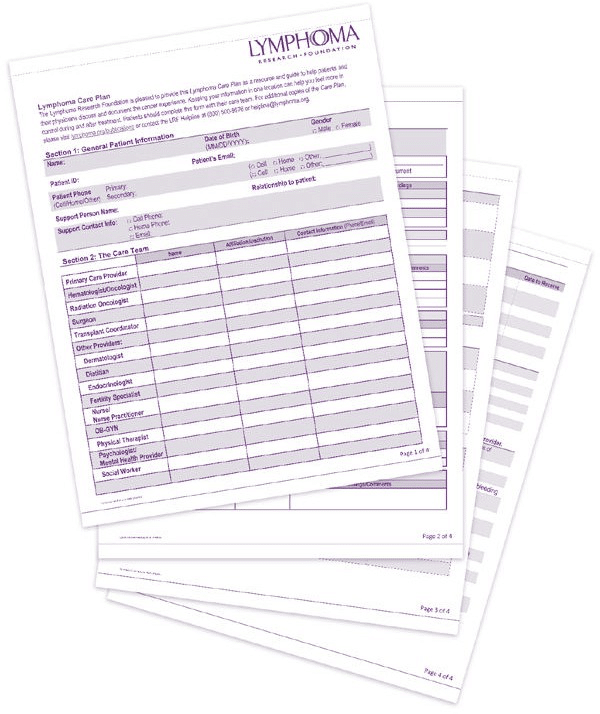
Glossary
| allogeneic transplant | a type of stem cell transplant in which the stem cells a patient receives come from a donor who is either a closely related family member or a well-matched unrelated person |
| anemia | a condition marked by low levels of red blood cells; symptoms can include feeling tired, weak, low energy, cold, short of breath, dizzy, and/ or confused |
| antimicrobials | medications that fight infections by various kinds of microorganisms, including bacteria (antibiotics), viruses (antivirals), and fungi (antifungals) |
| apheresis | a process in which whole blood is removed from a vein, a certain type of cell (such as stem cells) is filtered out and collected, and the rest of the blood is returned to the vein of the patient or donor |
| autologous transplant | a type of stem cell transplant in which the patient’s own stem cells are collected and re-infused several weeks later, after a high-dose chemotherapy regimen |
| bone marrow | the soft, spongy tissue inside bones that contains stem cells and makes blood cells |
| bridging chemotherapy | chemotherapy given in the time between leukapheresis and infusion of CAR T cells |
| CAR | a receptor made in a laboratory that is designed to bind to cancer cells; this receptor is added to T cells to help them kill cancer cells |
| catheter | a flexible tube used to deliver fluids into or withdraw fluids from the body |
| chimerism | the state of having two different individuals’ cells living in a single body; can occur after an allogeneic transplant or a reduced-intensity transplant if some of the patient’s stem cells are still alive and mixed in with the donor’s stem cells |
| collection | the process of obtaining stem cells for a transplant, either by harvesting them from bone marrow or by filtering them out of the blood through stem cell apheresis |
| conditioning (also called preparatory regimen) | cancer treatment (high-dose, intermediate or reduced intensity chemotherapy with or without radiation) given just before infusion of stem cells |
| cytokine | a type of protein made in the body that has an effect on the immune system (to either stimulate or inhibit immune activity) |
| cytokine release syndrome (CRS) | a condition that can occur after certain types of immunotherapy; immune cells affected by immunotherapy quickly release a large amount of cytokines into the bloodstream causing fever, increased heart rate, etc. |
| engraftment | the process in which transplanted stem cells move into the recipient’s bone marrow, multiply, and start making new blood cells |
| fatigue | weariness or tiredness |
| graft-versus-host disease (GVHD) | a complication of an allogeneic stem cell transplant in which the transplanted T cells attack the healthy cells in the patient’s body such as the skin, gastrointestinal tract, etc. |
| graft-versus-lymphoma (GVL) effect | a benefit of an allogeneic stem cell transplant in which the donor’s T cells attack and kill any remaining cancerous cells |
| granulocyte colony-stimulating factors (G-CSF) | medications that can stimulate stem cells to move out of the bone marrow and into the bloodstream (e.g., filgrastim, lenograstim, and pegfilgrastim) |
| haploidentical | half-matched; used to describe a type of allogeneic stem cell donation in which only half of the HLA antigens are matched between the donor and the recipient |
| harvesting | the process of collecting stem cells from bone marrow that will be used for transplant; cells are harvested from either the patient (in an autologous transplant) or the donor (in an allogeneic transplant) |
| hematologist–oncologist | a doctor who specializes in the treatment of blood disorders, including blood cancers such as lymphoma |
| hematopoietic stem cells | immature cells that can develop into any type of blood cell; most live in the bone marrow, but some are found in the bloodstream |
| high-dose chemotherapy | chemotherapy given in a higher dose than is used in standard chemotherapy; used to kill most or all cancer cells before infusion of stem cells |
| human leukocyte antigens (HLA) | proteins found on the surface of the blood cells that are used to match a patient with a donor for a stem cell transplant |
| infertility | the inability to have children |
| infusion | the process of putting (transplanting) the stem cells into the patient’s bloodstream |
| jaundice | yellowing of the skin or eyes |
| leukapheresis | the process in which white blood cells are separated from the rest of the blood; remaining blood is returned to the body |
| neutropenia | a condition marked by low levels of neutrophils (a type of white blood cell) that puts an individual at increased risk of infection |
| neurotoxicity | damage to the nervous system caused by a treatment or therapy |
| peripheral blood stem cells | hematopoietic stem cells that move out of the bone marrow and circulate in the bloodstream |
| port or portacath | a type of central venous access device that is implanted under the skin in the chest; used to administer stem cells, medications, and blood products and to withdraw blood samples |
| reduced-intensity transplant (also called non-myeloablative or mini-allogeneic transplant) | a type of allogeneic transplant that uses lower doses of chemotherapy before the transplant; sometimes used in older patients or those whose bodies cannot tolerate high-dose chemotherapy |
| refractory | lymphoma that does not respond to, or is resistant to, attempted forms of treatment |
| relapse | the return of cancerous lymphoma cells after a period of improvement |
| remission | a condition in which the signs and symptoms of lymphoma decrease (partial remission) or disappear (complete remission) after treatment |
| T cell | a type of white blood cell that helps the body fight infection and may help fight cancer |
| thrombocytopenia | a condition marked by low levels of platelets (also called thrombocytes) that makes it more difficult for blood to clot and puts an individual at greater risk of bleeding |
| umbilical cord blood (also called cord blood) | blood that remains in the umbilical cord after a baby is born; contains stem cells that can be used for some allogeneic transplants if an adult donor cannot be found |
About the Lymphoma Research Foundation
The Lymphoma Research Foundation is the largest lymphoma-specific non-profit organization in the United States; the Foundation’s mission is to eradicate lymphoma and chronic lymphocytic leukemia/small lymphocytic lymphoma (CLL/SLL) and serve those touched by this disease. Through a national education program, innovative research portfolio and numerous outreach and awareness opportunities, we remain dedicated to serving patients with lymphoma and CLL/SLL and to finding a cure.
Awareness and Outreach
The Foundation offers numerous opportunities for members of the lymphoma community to support one another and the Foundation’s vital mission. The Foundation provides active and fun ways to become involved with the organization through a dynamic Fundraise Your Way program, signature Lymphoma Walks, the Research Ride and endurance marathon teams. The Lymphoma Research Foundation brings communities and champions together to support one another and the Foundation’s vital mission.
Opportunities include the Foundation’s dynamic Fundraiser Your Way program, Volunteer Network, and Foundation events, such as galas, golf tournaments, scientific socials, Lymphoma Walks, and entry into some of the nation’s most renowned endurance events. Contact [email protected] to get started!
Education Resources and Support Services
The Foundation provides a comprehensive series of expert programs and services for people with lymphoma and their care partners, including, Clinical Trials Information Service; Publications focused on lymphoma subtypes and different treatment options; Financial Assistance Resources; In-Person Education Conferences; The Foundation’s Lymphoma Resource Center; Lymphoma Support Network; Webinars; and Videos. All programs and materials are offered free of charge. Learn more at lymphoma.org.
Professional Education
The Lymphoma Research Foundation is committed to educating health care professionals on the latest developments in lymphoma and CLL/SLL diagnosis and treatment. The Foundation offers a wide range of lymphoma-focused continuing education activities for physicians including workshops, conference symposia, and webcasts. Our signature Lymphoma Rounds program is CME-accredited and provides a forum for health care professionals to meet to address issues specific to the diagnosis and treatment of their lymphoma patients.
Research
The Foundation is focused on finding a cure for lymphoma and CLL/SLL through an aggressively funded research program. The Foundation supports early career investigators through the Clinical Investigator Career Development Awards, Lymphoma Postdoctoral Fellowship Grants and Lymphoma Scientific Research Mentoring Program (LSRMP), and senior investigators through several disease-specific research initiatives. These efforts are led by the Foundation’s Scientific Advisory Board (SAB), comprised of 45 world-renowned lymphoma experts. The Foundation has awarded more than $82.7 million in funding for lymphoma-specific research.
Lymphoma Support Network
The Lymphoma Support Network (LSN) offers a one-on-one peer support program for people living with lymphoma and their care partners. Through the LSN, patients and care partners are paired with volunteers who have gone through similar experiences. These volunteers provide support, understanding, and encouragement, helping others find strength as they navigate the challenges of their journey.
Connecting with peers who have been through similar experiences can offer unique insights, emotional support, and practical advice, helping individuals feel less isolated and more empowered.
In order to participate, you can complete a questionnaire or contact the Lymphoma Research Foundation Lymphoma Resource Center (800-500-9976 or [email protected]) and provide information about yourself, including your lymphoma subtype and treatment history.

Supported through grants from:

