Understanding Diffuse Large B-Cell Lymphomas
Overview
Diffuse large B-cell lymphoma (DLBCL) is the most common form of non-Hodgkin lymphoma (NHL). It accounts for approximately 1 in 3 new cases of B-cell NHL in the United States. DLBCL is slightly more common in men, and in people who are over 60 years old. While the incidence (number of new cases) increases with age (half of the patients are over 60 years old), DLBCL can also occur in younger adults and, rarely, in children.
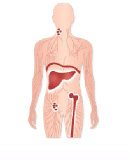
DLBCL is an aggressive (fast-growing) lymphoma that can appear in lymph nodes (bean-shaped structures that help the body fight infection, Figure 1) and often the spleen, liver, or bone marrow (the spongy tissue inside the bones), though it can appear anywhere in the body.
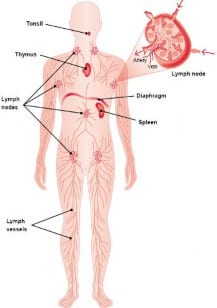
Figure 1. The lymphatic system (tissues and organs that produce, store, and carry white blood cells) and lymph nodes.

Symptoms, Staging, and Diagnostic Procedure
The first sign of DLBCL is usually a painless, rapid swelling in the neck, underarms, or groin caused by enlarged lymph nodes. For some patients, this swelling may be painful.
Other symptoms may include:
- Night sweats
- Fever
- Unexplained weight loss
- Fatigue (extreme tiredness)
- Loss of appetite
- Shortness of breath
- Pain

To confirm a diagnosis of DLBCL, doctors need to collect a sample of the affected lymph node and examine it under a microscope. This procedure is called a biopsy, and it can be done under local or general anesthesia. Once the diagnosis of DLBCL is confirmed, the next step is to understand the location of the disease in the body (disease staging). Because DLBCL is a blood cancer, it is important to look for any signs of lymphoma across the entire body. This is usually done with a positron emission tomography (PET) scan, which uses a special dye that is injected into the patient and shows where the cancer is.
Staging may also include:
Bone marrow biopsy (a procedure that collects a small sample of the spongy tissue inside the bone), to search for signs of cancer in the bones. Most of the time this is not required for staging.
Spinal tap or lumbar puncture (a needle is inserted into the lower back to collect a sample of the fluid that surrounds the brain and spinal cord), to look for signs of cancer in the central nervous system (CNS, the brain and spinal cord).
The physician will use the results of these tests to assess the stage of the lymphoma. NHL is categorized as Stages I (limited disease) to IV (advanced disease), as shown in the figure below.
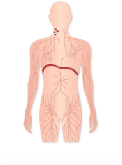
Stage I:
Involvement of a single lymph node or group of adjacent nodes
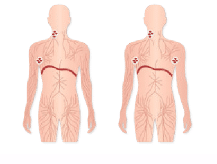
Stage II:
Involvement of two or more groups of lymph nodes on the same side of the diaphragm (muscle that separates the chest from the abdomen)
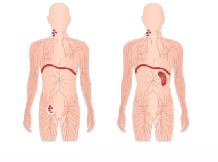
Stage III:
Involvement of lymph nodes on both sides of the diaphragm, or Involvement of lymph nodes above the diaphragm plus spleen involvement
Stage IV:
Widespread disease in lymph nodes, bone marrow, and organ involvement, such as liver or lungs
Figure 2. Staging of NHL according to the Lugano system. This system categorizes NHL from Stage I-II (limited disease) to IIIIV (advanced disease), based on whether the cancer is restricted to a single group of lymph nodes, involves several groups of lymph nodes, or has reached the bone marrow and/or other organs (like the liver or lungs).
Staging is needed to choose an appropriate treatment. The majority of patients with DLBCL have advanced-stage disease but treatment can help achieve long-term remission (disappearance of signs of cancer for a long period) or cure (permanent disappearance of the cancer without ever returning).
Subtypes
There are several subtypes of DLBCL. Doctors determine the DLBCL subtype based on testing of the tumor tissue, as well as the clinical presentation (e.g., signs, symptoms, and location). To classify the specific DLBCL subtype, doctors may require additional tests that study:
- Cancer cell morphology: looking at the cancer cells under the microscope to examine their shape, structure, and form.
- Cancer markers: using special methods (like immunohistochemistry and flow cytometry) to look for specific proteins at the surface of cancer cells.
- Cancer genetics: using genetic tests (like fluorescence in situ hybridization or FISH) to detect mutations (permanent changes in the DNA [deoxyribonucleic acid, the molecule that carries genetic information inside the cell]) on a specific gene (a small portion of DNA that has the information needed to determine a person’s physical and biological traits) of the cancer cells.
The subtype of DLBCL may affect a patient’s prognosis (how well a patient will do with standard treatment [the proper treatment that is widely used by healthcare professionals and accepted by medical experts]) and treatment options. Most cases of DLBCL do not fall into a specific subtype and are referred to as diffuse large B-cell lymphoma, not otherwise specified (DLBCL-NOS). The different types of DLBCL-NOS are named according to their cell of origin (the normal cell that originated the cancer) and include:
- Germinal center B-cell-like (GCB): The most common subtype. Generally, it appears in the lymph node but can also appear in other parts of the body. It is an aggressive lymphoma, but patients may have a greater response to standard chemotherapy than those with the ABC subtype and, consequently, improved clinical outcomes.
- Activated B-cell-like (ABC): Less responsive to therapies than the GCB subtype and associated with poorer clinical outcomes compared to GCB subtype.

Other subtypes of DLBCL are less frequent and include:
Other Subtypes of DLBCL
- Primary mediastinal B-cell lymphoma (affects a specific region of the chest and occurs mainly in younger patients).
- Primary CNS lymphoma (affects the brain and/or spinal cord). For more information about CNS lymphoma, patients should view the CNS Lymphoma guide on the Foundation’s website (visit lymphoma.org/publications).
It is important to note that DLBCL is a complex disease and some cases that were previously considered to be DLBCL are now diagnosed as high-grade B-cell lymphoma (HGBL). HGBL is a category of B-cell NHL introduced in 2016 by the World Health Organization (WHO). HGBL in general is more likely to relapse (disease returns after treatment) than DLBCL and may have a higher risk of relapse in the patient’s CNS.
HGBL can be grouped in two subtypes:
- Diffuse large B-cell lymphoma/high grade B-cell lymphoma with MYC and BCL2 rearrangements (DLBCL/ HGBL-MYC/BCL2). This subtype is characterized by permanent changes (mutations) called translocations (Figure 3) in the parts of the DNA that contain the information for the MYC and BCL2 proteins. This category includes most NHL previously known as double/triple hit lymphoma.
- HGBL, not otherwise specified (NOS). This subtype includes aggressive B-cell lymphomas with mixed characteristics of other types of B-cell lymphoma such as DLBCL, Burkitt lymphoma (BL), blastoid-appearing large B-cell lymphomas, and lymphomas that do not have MYC and BCL2 translocation.
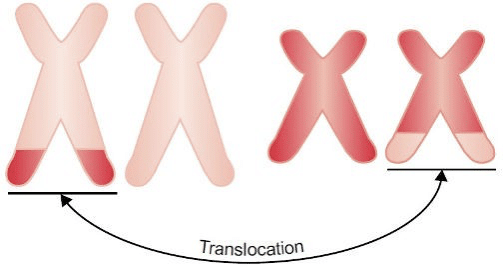
Figure 3. Example of a translocation, where a chromosome (a structure made of DNA and proteins found inside the cell) breaks and part of it reattaches to another chromosome.
Cancer cells in HGBL can look similar to B-lymphoblastic leukemia/lymphoma (B-LBL), BL, and DLBCL. Because of this, an expert review conducted by a hematopathologist (doctor who specializes in diagnosing blood diseases by examining cells and tissues under the microscope) is important. The signs and symptoms of HGBL may also be similar to those of DLBCL and BL.
Treatment Options
First Treatment after Diagnosis
DLBCL treatment typically begins shortly after diagnosis. The goal is to achieve durable remission or cure. Treatment types for DLBCL include:
Chemoimmunotherapy
Chemoimmunotherapy is a combination of chemotherapy (drugs that stop the growth of or kill cancer cells) with immunotherapy (drugs that use the body’s immune system to fight cancer).
- The most common chemoimmunotherapy combination is chemotherapy and a monoclonal antibody (a protein produced in the laboratory that recognizes cancer cells and helps the body fight cancer) that
targets CD20 (a protein found at the surface of lymphoma cells), such as rituximab (Rituxan) given intravenously (injected into a vein). Rituxan and hyaluronidase human (Rituxan Hycela), a form of rituximab that is injected subcutaneously (under the skin), may be an option for some patients. RCHOP (rituximab, cyclophosphamide, doxorubicin, vincristine, and prednisone) and Pola-R-CHP (polatuzumab [Polivy], rituximab, cyclophosphamide, doxorubicin, prednisone) are the two most widely used chemoimmunotherapy combination regimens for DLBCL. These regimens are very similar and are usually given in 21-day cycles (a period of treatment followed by a period of rest that is repeated on a regular schedule). The only difference between the two regimens is whether vincristine, a chemotherapy drug, or polatuzumab are given. Polatuzumab is an antibody drug conjugate which binds to a protein on the surface of lymphoma cells called CD79b and is attached to a chemotherapy drug. In specific cases, patients may receive a regimen including etoposide (VePesid, Toposar, Etopophos), in a drug combination called R-EPOCH (also referred to as dose-adjusted R-EPOCH). - R-mini-CHOP (rituximab and reduced-dose CHOP) may be considered for patients who are older or frail.
- Biosimilar therapies (a biologic therapy [molecule that are created inside living cells] that is modeled after an existing biologic therapy or reference product already approved by the FDA) may be an option for patients who are taking rituximab (Rituxan). These include rituximab-abbs and rituximab-pvvr. For more information about biosimilars, please see the Biosimilar Therapies publication on the Foundation’s website (lymphoma.org/publications).
Radiation Therapy
Radiation therapy that uses high-energy radiation to kill cancer cells may be considered in certain situations.
Patients seeking more information about immunotherapy should view the Immunotherapy and Other Targeted Therapies fact sheet on The Foundation’s website (lymphoma.org/publications).
HGBL is generally treated with chemoimmunotherapy, similarly to DLBCL. The most common chemoimmunotherapy regimens for HGBL include:
- DA-R-EPOCH (dose-adjusted etoposide/ VP16 [VePesid, Toposar, Etopophos], prednisone [Deltasone], vincristine [Oncovin], cyclophosphamide [Cytoxan, Neosar], and doxorubicin/hydroxydaunorubicin [Rubex, Adriamycin PFS] plus the monoclonal antibody rituximab [Rituxan]).
- R-Hyper-CVAD/MA (rituximab plus hyperfractionated cyclophosphamide, vincristine, doxorubicin, and dexamethasone [Decadron], alternating with high-dose methotrexate [Mexate] and cytarabine/high-dose Ara-C [Cytosar-U, Tarabine PFS]).
- R-CODOX-M/R-IVAC (rituximab plus cyclophosphamide, vincristine, doxorubicin, and methotrexate, alternating with rituximab plus ifosfamide [Ifex], etoposide, and cytarabine).
- R-CHOP (rituximab, cyclophosphamide, doxorubicin, vincristine, prednisone).
- Pola-R-CHP (polatuzumab, rituximab, cyclophosphamide, doxorubicin, prednisone)
Surgery is not a typical treatment for DLBCL or HGBL because these are blood cancers, and surgery will not be able to get rid of all the cancer cells.
To reduce this risk of relapse in the patient’s CNS, some patients with DLBCL or HGBL may receive additional chemotherapy drugs to treat the CNS in addition to one of the chemotherapy regimens described above. CNS treatments may include methotrexate and/or cytarabine that is administered either intravenously, through a lumbar puncture or both. During the lumbar puncture chemotherapy is injected directly into the cerebrospinal fluid surrounding the CNS.

Relapsed and Refractory DLBCL
Some patients with DLBCL respond to initial treatment and go into remission. In other cases, the disease may relapse or become refractory (does not respond to treatment). For these patients, different therapies may result in improved treatment outcomes.
It is important to understand that patients should speak with their healthcare providers about their options for additional therapy in the future in case of relapse or if the lymphoma becomes refractory. These patients are eligible for second-line treatment (treatment received after initial treatment), which can reduce symptoms, control cancer growth, provide a second chance at cure, and extend life.
Early evaluation with a team of specialists is recommended for patients with relapsed/ refractory DLBCL. Treatment options will depend on a number of factors, including when the relapse happened and whether the patient is eligible for a stem cell transplant (SCT) or chimeric antigen receptor (CAR) T-cell therapy.

Primary Refractory Disease or Relapse Within 12 Months
For patients with DLBCL or HGBL who become primary refractory or relapse within 12 months, the standard second-line therapies are a type of immunotherapy called CAR T-cell therapy:
- CAR T-cell therapies (a special type of immunotherapy that uses the patient’s immune cells to fight cancer):
- Axicabtagene ciloleucel (Yescarta)
- Tisagenlecleucel (Kymriah)
- Lisocabtagene maraleucel (Breyanzi)
Patients should talk to their doctors about having a consultation with a physician at an authorized CAR T center early after a relapse or if the lymphoma does not respond to the initial treatment. For more information on the CAR T-cell therapy process, please view the Understanding Cellular Therapy guide at lymphoma.org/publications.
If CAR T-cell therapy is not recommended, additional treatment options include:

Immunotherapy:
- Bispecific antibodies (antibodies that recognize two different antigens, which can be on the same cell or two different cells). Bispecific antibodies used to treat lymphoma are called T-cell engagers and work by linking cancer cells to healthy immune cells, such as glofitamab (Columvi) and epcoritamab (Epkinly). To learn more about bispecific antibodies, view the Bispecific Antibodies fact sheet on the Foundation’s website (visit lymphoma.org/publications).
- Monoclonal antibodies such as tafasitamab-cxix (Monjuvi)
- Antibody-drug conjugates (ADC, a monoclonal antibody attached to a chemotherapy drug) such as polatuzumab vedotin (Polivy) and brentuximab vedotin (Adcetris). The monoclonal antibody in the ADC recognizes and binds to a protein on the cancer cell surface. Once the ADC is inside the cell, the chemotherapy drug separates from the ADC and kills the cancer cell by targeting cell multiplication.
- Immunomodulatory agents (drugs that regulate the immune system directly by activating or slowing down the activity of specific proteins), such as lenalidomide (Revlimid).
Relapse After 12 Months
For patients where the lymphoma relapses after 12 months, the standard second-line treatment is additional chemotherapy followed by an autologous SCT (the patient’s own stem cells are used for transfusion). The patient is treated with high-dose chemotherapy or radiation to remove the blood forming cells or stem cells and then receives their own healthy stem cells back to replace the ones that were destroyed. The aim is to get rid of any remaining cancer cells with high-dose chemotherapy.
If more chemotherapy and an autologous SCT are not recommended because of age or other health conditions, patients will often be recommended CAR T-cell therapy, typically with lisocabtagene maraleucel (Breyanzi) for a late relapse.
Patients should talk to their doctors about having a consultation with a physician at an authorized CAR T center or SCT center early after a relapse or if the lymphoma does not respond to the initial treatment. For more information on the CAR T-cell therapy process, please view the Understanding Cellular Therapy guide at lymphoma.org/publications.
If SCT and CAR-T cell therapy are not recommended, other therapeutic options for relapsed/refractory DLBCL are listed below (Table 1) and may include:
Immunotherapy, including:
- Bispecific antibodies such as glofitamab (Columvi) and epcoritamab (Epkinly).
- Monoclonal antibodies such as tafasitamab-cxix (Monjuvi)
- Antibody-drug conjugates such as polatuzumab vedotin (Polivy), brentuximab vedotin (Adcetris), and loncastuximab restoring (Zynlonta).
- Immunomodulatory agents, such as lenalidomide (Revlimid).
For more information about SCT, please view the Understanding Cellular Therapy Guide, also on the Foundation’s website (lymphoma.org/publications).
Third Line and Later Therapies
For patients whose lymphoma has not responded to two different lines of therapy, several third-line therapies are available (Table 1):
- Immunotherapy:
- Bispecific antibodies such as glofitamab (Columvi) and epcoritamab (Epkinly).
- Monoclonal antibodies such as tafasitamab-cxix (Monjuvi)
- Antibody-drug conjugates such as polatuzumab vedotin (Polivy), loncastuximab restoring (Zynlonta), and brentuximab vedotin (Adcetris).
- Immunomodulatory agents such as lenalidomide (Revlimid).
- CAR T-cell therapies, including:
- Axicabtagene ciloleucel (Yescarta)
- Tisagenlecleucel (Kymriah)
- Lisocabtagene maraleucel (Breyanzi)
- Targeted therapies such as ibrutinib (Imbruvica) and selinexor (Xpovio).
- Chemotherapy
Table 1. Second- and Third-Line Treatments for Relapsed or Refractory DLBCL
| Patients with Refractory Disease or an Early Relapse and Who Are Candidates for CAR-T Cell Therapy | |
|---|---|
| Axicabtagene ciloleuclel (Yescarta) Lisocabtagene maraleucel (Breyanzi) |
| Patients with a Late Relapse Who Are Candidates for a Stem Cell Transplant | |
|---|---|
| Chemotherapy is the preferred second-line treatment (other chemotherapies are also options sometimes) | DHAP +/- rituximab (Rituxan) DHAX or DHAC +/- rituximab (Rituxan) GDP +/- rituximab (Rituxan) ICE +/- rituximab (Rituxan) |
| Additional Treatments in the Second Line and Beyond | |
|---|---|
| Other second-line regimens | Lisocabtagene maraleucel (Breyanzi) (for a late relapse but not a candidate for SCT) Glofitamab (Columvi) +gemcitabine + oxaliplatin Epcoriramab (Epkinly) + gemcitabine + oxaliplatin Mosunetuzumab (Lunsumio) + polatuzumab (Polivy) Tafasitamab-cxix (Monjuvi) and lenalidomine (Revlimid) Polatuzumab vedotin (Polivy) +/- rituximab (Rituxan) and +/-bendamustine (Treanda) |
| After ≥ 2 lines of systemic therapy | Axicabtagene ciloleucel (Yescarta) Tisagenlecleucel (Kymriah) Lisocabtagene maraleucel (Breyanzi) Epcoritamab (Epkinly) Glofitamab (Columvi) Tafasitamab-cxix (Monjuvi) and lenalidomine (Revlimid) Polatuzumab vedotin (Polivy) +/- rituximab (Rituxan) and +/-bendamustine (Treanda) Loncastuximab tesirine (Zynlonta) Brentuximab vedotin (Adcetris) + lenalidomide (Revlimid) + rituximab (Rituxan) Selinexor (Xpovio) |
| Other second-line regimens | Ibrutinib (Imbruvica) Lenalidomide (Revlimid) +/- rituximab (Rituxan) |
B-cell lymphoma; GDP: gemcitabine, dexamethasone and cisplatin or carboplatin; ICE: ifosfamide, carboplatin and etoposide.
Treatments Under Investigation
Many new treatments (also referred to as investigational drugs) are currently being studied in clinical trials for patients with DLBCL and HGBCL. Results from these clinical trials may improve or change the current standard of care. For more information on clinical trials, view the Understanding Clinical Trials publication on the Foundation’s website at lymphoma.org/publications. Please consult with your doctor or a specialist in DLBCL and HGBCL to discuss any questions you may have about clinical trials.
Table 2. Selected agents under investigation for DLBCL and HGBCL in Phase 2-3 clinical trials
| Agent(s)(Drug) | Class(typeoftreatment) | Under investigation for |
|---|---|---|
| Abexinostat | Targeted therapy; HDAC inhibitor | R/R DLBCL |
| Acalabrutinib (Calquence) | Targeted therapy, BTK inhibitor | Untreated DLBCL, R/R DLBCL, untreated HGBCL and R/R HGBCL |
ALLO-647 | Monoclonal antibody; anti-CD52 | Untreated DLBCL and untreated HGBCL |
| Atezolizumab (Tecentriq) | Immune checkpoint inhibitor; anti-PD1 | Untreated DLBCL |
| AZD0486 (TNB-486) | Bispecific monoclonal antibody; anti-CD19 | R/R DLBCL |
| Cemacabtagene ansegedleucel | CAR T-cell therapy; anti-CD19 | Untreated DLBCL and untreated HGBCL |
| Copanlisib (Aliqopa) | Targeted therapy; PI3K inhibitor | Untreated DLBCL and R/R DLBCL |
| CRC01 | Immunotherapy; CAR T-cell therapy, anti-CD19 | R/R DLBCL and R/R HGBCL |
| CRG-022 | CAR T-cell therapy; anti-CD22 | R/R DLBCL |
| Decitabine | Chemotherapy | Untreated DLBCL, R/R DLBCL and R/R HGBCL |
| E7777 | Immunotherapy; fusion protein | R/R DLBCL and R/R HGBCL |
| GLPG5101 (19CP02) | Autologous CAR T-cell; anti-CD19 | R/R DLBCL |
| Inotuzumab ozogamicin (Besponsa) | Immunotherapy; antibody-drug conjugate, anti-CD22 | R/R HGBCL |
| Itacitinib | Targeted therapy; JAK1 inhibitor | Untreated DLBCL |
| Maplirpacept (TTI-622) | Immunotherapy; fusion protein | R/R DLBCL and R/R HGBCL |
| Nivolumab (Opdivo) | Immunotherapy; immune checkpoint inhibitor, anti-PD-1 | Untreated DLBCL, R/R DLBCL, untreated HGBCL and R/R HGBCL |
| Odronextamab | Bispecific monoclonal antibody; anti-CD20 | R/R DLBCL |
| Orelabrutinib (ICP-022) | Targeted therapy, BTK inhibitor | Untreated DLBCL |
| Ontorpacept (TTI-621) | Immunotherapy; fusion protein | R/R DLBCL and R/R HGBCL |
| Pembrolizumab (Keytruda) | Immunotherapy; immune checkpoint inhibitor, anti-PD-1 | Untreated DLBCL, R/R DLBCL, untreated HGBCL and R/R HGBCL |
| Purinostat mesylate (PM) | Targeted therapy; HDAC inhibitor | R/R DLBCL |
| Relmacabtagene autoleucel | Immunotherapy; CAR T-cell therapy, anti-BCMA | R/R DLBCL and R/R HGBCL |
| Retifanlimab | Immunotherapy; immune checkpoint inhibitor, anti-PD-1 | Untreated DLBCL and untreated HGBCL |
| Sepantronium bromide (SepB) | Targeted therapy; surviving inhibitor | R/R HGBCL |
| Tazemetostat (Tazverik) | Targeted therapy: EZH2 inhibitor | Untreated DLBCL, R/R DLBCL and R/R HGBCL |
| Tislelizumab | Immune checkpoint inhibitor; anti-PD1 | R/R DLBCL |
| Toripalimab | Immunotherapy; immune checkpoint inhibitor, anti-PD-1 | Untreated DLBCL and untreated HGBCL |
| Tucidinostat | Targeted therapy; HDAC inhibitor | Untreated DLBCL and R/R DLBCL |
| Varlilumab (CDX-1127) | Immunotherapy; monoclonal antibody, anti-CD27 | R/R DLBCL and R/R HGBCL |
| Venetoclax (Venclexta) | Targeted therapy; BCL-2 inhibitor | Untreated DLBCL, R/R DLBCL and untreated HGBCL |
| Zanubrutinib (Brukinsa) | Targeted therapy; BTK inhibitor | Untreated DLBCL, R/R DLBCL and R/R HGBCL |
| Zilovertamab vedotin | Antibody-drug conjugate; anti-extracellular ROR1 | Untreated DLBCL and R/R DLBCL |
It is important to remember that scientific research is always evolving. Treatment options may change as new treatments are discovered, and current treatments are improved. Therefore, it is important that patients check with their physician or with the Foundation for any treatment updates that may have recently appeared. It is also very important that all patients with DLBCL or HGBCL consult a spe-cialist to clear up any questions.
How to Be a Self-Advocate
Being a self-advocate and an active participant in healthcare decisions can be a positive experience. It may help patients regain a sense of control that they may have lost following the lymphoma diagnosis by making sure patients receive the best care. Patients and caregivers should remember they are partners in their treatment plan.
- Do not be afraid to ask your doctors or nurses questions about your care. An educated patient asking questions is not ‘being a challenge to your physician’ (or ‘being a difficult patient’).
- Learn more about lymphoma by asking your doctor for information and visiting reliable websites, such as the Foundation’s at www.lymphoma.org.
- Take advantage of counseling, support groups, nutritional counseling, fitness classes, expressive arts, and other services offered at your doctor’s office, cancer center, or hospital.
- Consider joining the Foundation’s Lymphoma Support Network, a nationwide peer support program that matches patients and caregivers with people who have had similar experiences. For information about the program, call (800) 500-9976 or email [email protected].
- Finally, it is important that patients not be afraid to talk with the healthcare team about nonmedical issues such as transportation, finances, insurance, working through treatment or taking time off, and childcare. There are nurses, social workers, physician’s assistants that are be able to provide the support and resources to help.

Clinical Trials
Clinical trials are crucial in identifying effective drugs and optimal treatment doses for patients with lymphoma. They are not a “last resort” for patients. Every drug available today had to be tested in clinical trials before it was approved for general use, and all new and emerging treatments. There are four main types or phases of clinical trials. The phase is based on the study’s objective and the number of participants.
Phase I
- To identify a safe dose of a new drug
- To decide on a dosing schedule for the drug
- To see what side effects are related to the therapy
Phase II
- To see if a new treatment is effective against a certain type of cancer at the dose determined in Phase I
- To confirm and learn more about the side effects identified in Phase I
Phase III
- To compare the new treatment or new use of an existing treatment with the current standard treatments
- To obtain detailed information about how well the treatment works and the types and severity of side effects it causes
Phase IV
- To look at long-term safety and effectiveness that take place after a new treatment has been approved by the FDA and is available to the public.


Patients interested in participating in a clinical trial should view the Understanding Clinical Trials fact sheet on the Foundation’s website (visit lymphoma.org/publications), and the Clinical Trials Search Request Form at lymphoma.org, talk to their physician, or contact the Foundation’s Lymphoma Resource Center for an individualized clinical trial search by calling (800) 500-9976 or emailing [email protected].
Follow-Up
Survivorship
As a cancer survivor, it is important that you practice self-care regularly to reset your physical and emotional well-being. Adopting routines of self-care will help you recharge your batteries and stay healthy. Talk with your healthcare team about developing a wellness plan to help you stay physically and emotionally healthy and improve your mood. Consider the following suggestions:
- Watch your health. Stay up-to-date with your own medical appointments and take any medications as prescribed.
- Exercise. Stay active with short periods of daily exercise (30 minutes of power walking, jogging or biking). If not possible, take the stairs instead of the elevator or park farther away than usual.
- Eat well. Include fruits and vegetables in your meals and maintain a balanced diet.
- Cut down on risk factors. Quit smoking and reduce alcohol intake.
- Sleep. Try to get 7 hours of sleep per night, or take naps when needed.
- Rest. Meditation, deep breathing and stretching can help you relax and reduce stress.
- Write it down. Keeping a journal with thoughts and feelings may help to let go of worries and fears.
View the Foundation’s Survivorship Series factsheet on the Foundation’s website at lymphoma.org/publication for more info.
Care Partners
There are many ways you can help a loved one with lymphoma, as follows:
- Be present. The most important thing that a care partner can do is to “just show up.”
- Be prepared. Talk with the healthcare team so that you know what to expect throughout the treatment, how to manage symptoms and when to ask for help.
- Listen. Each person asks for help in different ways, verbally (through words) and nonverbally, and some may require more comfort while others are more action oriented.
- Avoid “cheerleading”. Do not disregard your love one’s negative feelings (sadness, anger or worry).
- Organize the help. A rush of sudden help upon diagnosis can make the situation harder to manage and create unproductive tension.
- Set up remote access with computer and/or phone access. This is helpful for regular communication with your loved one.
- Offer rides. This is important for people with decreased mobility or limited resources.
- Take notes. If you go into the appointments, write down notes with the doctor’s plan, medications, potential side effects and other relevant information.
Patients and their care partner are encouraged to keep copies of all medical records. This includes test results as well as information on the types, amounts, and duration of all treatments received. Medical records are important for keeping track of any side effects resulting from treatment or potential disease recurrences. The Foundation can help patients manage this documentation.
View the Care Partners factsheet on the Foundation’s website atl ymphoma.org/publication for more info.
Questions to Ask Your Healthcare Team
- What is my exact diagnosis? What subtype of lymphoma do I have? May I have a copy of the report from the pathologist?
- What is the stage of my disease? In what area of the body is it specifically located?
- What are my treatment choices? Which do you recommend for me and why? Would choosing one treatment prevent me from getting a different kind of treatment later on? How are the different treatments administered?
- Do I need more than one type of treatment?
- What is the goal of treatment? What are the expected benefits of each type of treatment?
- How will we know if the treatment is working? What tests will I need to determine if treatment is working, and how often will I need to be tested?
- How long will the treatment last?
- What are the chances the treatment will be successful?
- What is a clinical trial? Are clinical trials available that are studying new treatments for my type of lymphoma? Would a clinical trial be appropriate for me? How would I benefit? Are there any drawbacks of participating in a clinical trial?
- Will I be able to work during treatment? Will I be able to drive or take public transportation during my treatment?
- Should I take care of other medical or dental issues before I start treatment?
- How much will the treatment cost? Will my insurance cover some or all of it? What will my out-of-pocket costs be?

The Foundation’s Programs and Services

Lymphoma Care Plan
Keeping your information in one location can help you feel more organized and in control. This also makes it easier to find information pertaining to your care and saves valuable time. The Foundation’s Lymphoma Care Plan document organizes information on your health care team, treatment regimen, and follow-up care. You can also keep track of health screenings and any symptoms you experience to discuss with your health care provider during future appointments. The Lymphoma Care Plan document can be accessed by visiting lymphoma.org/publications.

Patient Education Programs
The Foundation also offers a variety of educational activities, including live meetings and webinars for individuals looking to learn directly from lymphoma experts. These programs provide the lymphoma community with important information about the diagnosis and treatment of lymphoma, as well as information about clinical trials, research advances and how to manage/cope with the disease. These programs are designed to meet the needs of a lymphoma patient from the point of diagnosis through long-term survivorship. To view our schedule of upcoming programs, please visit lymphoma.org/programs.

Lymphoma Resource Center
The Lymphoma Resource Center staff are available to answer your general questions about lymphoma and treatment information, as well as provide individual support and referrals to you and your loved ones. Callers may request the services of a language interpreter. The Foundation also offers a one-to-one peer support program called the Lymphoma Support Network and clinical trials information through our Clinical Trials Information Service. For more information about any of these resources, visit our website at lymphoma.org, or contact the Foundation’s Lymphoma Resource Center at (800) 500-9976 or [email protected].
Para información en español, por favor visite lymphoma.org/es(for information in Spanish please visit lymphoma.org/es).

Lymphoma Support Network
The Foundation’s one-to-one peer support program – Lymphoma Support Network – connects patients and care partners with volunteers who have experience with lymphomas, similar treatments, or challenges, for mutual emotional support and encouragement. You may find this useful whether you or a loved one is newly diagnosed, in treatment, or in remission. For more information about this program, please contact the Foundation’s Lymphoma Resource Center at (800) 500-9976 or visit lymphoma.org/resources/supportservices/lsn.

Treatment Navigation Service
A lymphoma diagnosis can bring a lot of questions about your subtype, your treatment options, and what comes next. The Lymphoma Resource Center’s Treatment Navigation Service is here to help you find answers. Through a one-on-one consultation with the Resource Center team, you’ll receive personalized educational materials, a comprehensive overview of standard and emerging treatments, and a customized clinical trials search list tailored to your diagnosis. You’ll walk into your next appointment feeling prepared and empowered to ask the right questions and take the next step in your journey. This free service is available to every member of our community, patients, survivors, and care partners alike. Reach out to the Lymphoma Resource Center to take your next step with confidence.
© 2026 Lymphoma Research Foundation
Disclaimer: The Lymphoma Research Foundation is a national nonprofit organization based in the United States (U.S.) with educational programs and resources which are intended for a U.S. based audience. These programs and resources are intended for educational purposes only and are not a substitute for medical advice. Individuals who use Foundation programs and services are advised to consult a medical professional for medical advice, diagnoses, or treatment. Foundation programs and resources address available lymphoma/CLL treatments in the United States and information on drug approvals by the U.S. Food and Drug Administration (FDA).
The Foundation does not endorse any treatments, products, or services mentioned in its resources. The information provided is for informational purposes only and should not be considered as an endorsement. The Foundation shall not be liable for any direct, indirect, incidental, special, consequential, or punitive damages arising out of the use of its programs and resources, to the extent permitted by law. You assume full responsibility for any actions taken based on the information provided.
For individuals outside of the U.S. seeking information, the Foundation recommends the Lymphoma Coalition. The Lymphoma Coalition is a global network of worldwide nonprofit/NGO lymphoma patient organizations with information appropriate for non-U.S.-based audiences. Additional information can be found by visiting their website at https://lymphomacoalition.org/.
All content provided by the Foundation is protected by intellectual property laws. You may not reproduce, distribute, or otherwise use the content without the Foundation’s prior written consent.
The Lymphoma Research Foundation appreciates the expertise and review of our Editorial Committee:
Co-Chair: Leo I. Gordon, MD, FACP
Robert H. Lurie Comprehensive Cancer Center of Northwestern University
Co-Chair: Kristie A. Blum, MD
Emory University School of Medicine
Jennifer E. Amengual, MD
Columbia University
Carla Casulo, MD
James P. Wilmot Cancer Institute
Shana Jacobs, MD
Children’s National Hospital
Patrick Conner Johnson, MD
Massachusetts General Hospital
Manali Kamdar, MD
University of Colorado
Ryan Lynch, MD
University of Washington
Peter Martin, MD
Weill Cornell Medicine
Lia Palomba, MD
Memorial Sloan Kettering Cancer Center
Tycel Phillips, MD
City of Hope
Pierluigi Porcu, MD
Thomas Jefferson University
Neha Mehta-Shah, MD, MSCI
Washington University School of Medicine St. Louis
Sarah Rutherford, MD
Weill Cornell Medicine
Supported through grants from: