
Understanding Indolent B-cell Lymphomas
Overview
Marginal zone lymphoma (MZL), Waldenström macroglobulinemia (WM) and Cutaneous B-cell lymphoma (CBCL) are indolent (slow-growing) B-cell non-Hodgkin lymphomas (NHLs). B-cells are a type of white blood cell that helps the body fight infection.
Marginal Zone Lymphoma (MZL)
MZL develops in a part of the lymph node (small bean-shaped structures that help the body fight disease, Figure 1) tissue called the marginal zone. MZL is the third most common indolent lymphoma and accounts for approximately 5 to 10% of all NHLs. The number of new cases of MZL increases with age, but the average age at diagnosis depends on the type of MZL (see below).
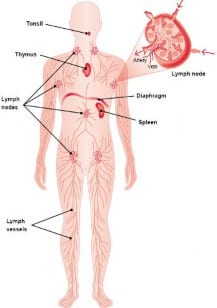
Figure 1. The lymphatic system (tissues and organs that produce, store, and carry white blood cells) and lymph nodes.

The most common MZL subtypes are:
Mucosa-associated lymphoid tissue (MALT) lymphoma or extranodal MZL is the most common form of MZL (61% of all MZL cases). This type of MZL affects tissues outside the lymph nodes (extranodal tissues) like the mucosa (inner lining) of some internal organs and body cavities. Listed below are the organs where MALT lymphomas are found:
- Small intestine, salivary glands, thyroid, breast, around the eye (ocular adnexa lymphoma [OAL]), lung and skin (called non-gastric MALT).
- Stomach (called gastric MALT), parotid gland (the largest of the salivary glands) or thyroid: MALT lymphomas often appear as a result of chronic inflammation (slow, long-term body response to infection lasting for prolonged periods of several months to years) caused by infection (with bacteria) or autoimmune conditions (the body’s immune system starts attacking its own healthy cells) such as Hashimoto’s thyroiditis or Sjogren’s syndrome. In some patients, this might increase the risk of them developing into lymphoma cells. However, most patients with these autoimmune diseases will not develop MALT. The bacteria that are known to cause MALT lymphoma include: Helicobacter pylori (causes chronic inflammation of the stomach and gastritis), Chlamydia psittaci (can cause orbital MALT lymphoma), and Campylobacter jejuni, (causes Mediterranean abdominal lymphoma or immunoproliferative small intestinal disease, often originated in the abdomen, and affects young adults in eastern Mediterranean countries).

Nodal MZL is a rare type of MZL (30% of all MZL cases) that occurs within the lymph nodes.
Splenic MZL is the rarest form of MZL (9% of all cases) and occurs most often in the spleen, blood, and bone marrow. It has been associated with hepatitis C virus (HCV) infection.
Waldenström Macroglobulinemia (WM) is rare and represents only 2% of newly diagnosed NHLs in the United States. There are about 1,000 to 1,500 new cases of WM diagnosed each year in the United States. WM is a cancer that starts in B-cells. In WM, some B-cells may have a mutation (permanent change) in their DNA (deoxyribonucleic acid, the molecule that carries genetic information inside the cells). This mutation is present in 90% of WM cases.
The abnormal lymphoma cells are called lymphoplasmacytic cells because they have features of both B-cells and plasma cells (another type of white blood cell).

Figure 2. Normal and cancer cell division. In normal cell division, damaged (with mutations that lead to cancer) or senescent (old) cells are destroyed by apoptosis (a type of cell death the body uses to get rid of abnormal cells). In cancer, abnormal cells multiply uncontrollably.
Lymphoplasmacytic cells can survive longer and multiply faster than normal B-cells (Figure 2). High numbers of these abnormal cells in the bone marrow can slow down its function and reduce the number of healthy blood cells and platelets. This can result in anemia (low levels of red blood cells), neutropenia (low levels of white blood cells called neutrophils), and thrombocytopenia (low levels of platelets). In some cases, the same abnormal cells can also be found in lymph nodes or the spleen, which might appear enlarged on a computed tomography (CT) scan (uses a computer linked to an X-ray machine to make pictures of areas inside the body).
Cutaneous B-cell Lymphoma (CBCL) CBCL is often indolent and rare, representing approximately 2% of the NHLs. CBCL starts in the B-cells of the skin and may appear on the skin as a rash, reddish bump, lump, or nodule, usually with a raised and smooth appearance.
The most common CBCL subtypes are:
Primary Cutaneous Follicle Center Lymphoma (PCFCL) is the most common type of CBCL. This skin lymphoma is indolent, developing slowly over months or years. It usually appears on the head, neck, or torso (upper body or chest) of the body as red pimples, nodules, or plaques. In some cases, it can also be found on the legs. This type of CBCL is usually diagnosed in middle-aged adults and responds well to treatment.
Primary Cutaneous Marginal Zone B-Cell Lymphoma (PCMZL) is the second most common form of CBCL. This indolent lymphoma can have a similar appearance to cutaneous follicle center lymphoma, often as red to purplish large pimples, plaques, or nodules on the arms or upper body. Some cases are linked to an infection with Borrelia burgdorferi, a type of bacteria carried by ticks that causes Lyme disease. This type of CBCL is more common in older adults.

Symptoms, Staging, and Diagnostic Procedure
MZL, WM and CBCL can present similar general symptoms. Symptoms depend on the tumor location (where the tumor is located in the body) and the extent (cancer stage and how far it has spread) of the disease.
Patients with WM have an increased level of a protein called immunoglobulin M (IgM) in their blood, which is produced by the abnormal lymphoplasmacytic cells. Very high levels of IgM can cause blood hyperviscosity (thickening of the blood). Thickened blood cannot flow easily through the body, which may lead to excess bleeding, vision or hearing problems, headache and/or lightheadedness. In some cases, the IgM in the blood can cause other issues, such as autoimmune hemolytic anemia (a condition where the body attacks and destroys its own red blood cells) or neuropathy (tingling, numbness or pain caused by damage to the nerves). However, some patients with hyperviscosity do not experience any symptoms.
The most common symptoms include:
- Swollen lymph nodes – a lump that you can see or feel.
- Tiredness.
- Skin rash.
- Nodules (bumps).
- Plaques (raised or flat lesions).
- Chest or abdominal pain.
Other common symptoms may be:
- Bleeding (particularly from the nostrils and gums).
- Headaches.
- Dizziness.
- Double vision.
- Pain or tingling in the extremities.
CBCL can appear as a single lesion (area that looks abnormal or different from the surrounding skin) or multiple lesions in either one or several body regions (areas). Many skin conditions may look similar but are not CBCLs. The disease can relapse (return after treatment) or occur in new places on the skin, but it rarely spreads outside the skin. About 50% of patients with single lesions are cured after radiation therapy (uses high-energy radiation to kill cancer cells). However, patients with multiple lesions are more likely to continue to have new lesions appear. This fact does not affect prognosis (how well the patient will do), which remains very good.
To diagnose indolent B-cell lymphomas, blood tests and a bone marrow biopsy are usually performed. During the biopsy, a needle is inserted into a bone (usually the pelvic bone), to collect a small sample of the bone marrow. This sample is then examined to search for signs of cancer in the bones.

Treatment Options
When patients have stable disease (cancer is neither decreasing nor increasing in size or severity) or show no symptoms, doctors may decide to monitor the patient without treating the disease. This approach is called active surveillance, or watchful waiting. In this case, patients’ overall health and disease are monitored through regular check-up visits that may include laboratory (like a complete blood cell count) and imaging tests (such as CT scans). To know more about active surveillance, view the Active Surveillance fact sheet.
First Treatment after Diagnosis
Marginal Zone Lymphoma (MZL)
Treatment for MZL is started if the patient begins to develop lymphoma-related symptoms or there are signs that the disease is progressing (cancer is growing and/or spreading). Treatment selection for a patient with MZL depends on the MZL subtype, stage (the size of the cancer and whether it has spread), location, patient’s age and overall health, and signs or symptoms.
Gastric MALT Lymphomas
Since gastric MALT lymphoma is often the result of an infection with Helicobacter pylori, the initial treatment combines therapy with two antibiotics and one proton pump inhibitor (PPI, drugs that reduce the amount of acid in the stomach), typically given for two weeks. PPIs help to prevent or heal stomach ulcers (sores on the walls of the stomach). In about 80% of cases, MALT lymphomas go away after antibiotic and PPI treatment, although this may take several months. Most gastric MALT lymphomas are low-grade lesions that grow slowly and do not commonly spread to other places in the body. For patients who do not have an infection with Helicobacter pylori, radiation therapy is the standard of care approach.
Non-Gastric MALT Lymphomas
Non-gastric MALT lymphomas can appear throughout the body. Therefore, treatment is usually based on the exact location of the lymphoma and how far it has spread. For OAL, radiation therapy with or without antibiotic therapy is usually very effective, and patients may achieve durable remission (no signs or symptoms of disease for a long time). The antibiotic doxycycline has been shown to be effective in MALT that affects the area around the eye, especially in certain areas of the world where infection with Chlamydia psittaci is commonly associated with OAL. In localized cases, treatment usually includes radiation therapy, which is effective even at very low doses. In rare cases where radiation is not feasible, surgery can be used as an alternative. More advanced disease is usually treated with immunotherapy (drugs that use the body’s immune system to fight cancer) such as the monoclonal antibody (a protein made in the laboratory that binds to cancer cells and helps the immune system destroy them) rituximab (Rituxan), with or without chemotherapy.
Nodal MZL
Because nodal MZL is most often a slow-growing disease, physicians may recommend an active surveillance or watchful waiting approach until symptoms appear. When treatment is necessary, options include radiation therapy, chemotherapy, targeted therapy and/or immunotherapy, and other treatments commonly used in other types of slow growing lymphomas, such as follicular lymphoma.
Splenic MZL
Treatment is not always immediately necessary for splenic MZL, but when a treatment is needed, several options exist. In rare cases, patients may receive a surgery called splenectomy (removal of the spleen) while other patients may be given rituximab (Rituxan) with or without chemotherapy. When the splenic MZL is associated with hepatitis C virus (HCV) infection, treatment of the infection might cure the lymphoma.
The most common types of treatment for MZL include:
- Antibiotics (drugs that fight bacterial infections).
- Radiation therapy.
- Immunotherapy.
- Monoclonal antibodies (proteins made in the laboratory that bind to cancer cells and help the immune system destroy them) such as rituximab (Rituxan).
- Immunomodulatory drugs (drugs that work on the immune system directly by activating or slowing down the activity of specific proteins).
- Chemoimmunotherapy is a combination of chemotherapy (drugs that stop the growth of or kill cancer cells) with immunotherapy.
- Bendamustine (Treanda) plus rituximab (BR).
- R -CHOP (rituximab [Rituxan], cyclophosphamide, doxorubicin, vincristine, and prednisone)
- R -CVP (rituximab [Rituxan], cyclophosphamide, vincristine, and prednisone).
- Targeted therapies (drugs that target molecules that cancer cells use to grow and spread) such as Bruton’s tyrosine kinase (BTK) inhibitors.
- Surgery.
Patients seeking information about immunotherapy should view the Immunotherapy and Other Targeted Therapies fact sheet on the Foundation’s website (lymphoma.org/publications).
For all subtypes of MZL, biosimilar therapies (drugs that are similar to an existing biological therapy [reference drug] but may cost less than the reference drug) may be an option for patients who are taking rituximab. These include rituximab-abbs and rituximab-pvvr. For more information, patients should view the Biosimilars fact sheet on the Foundation’s website at lymphoma.org/publications and talk to their physician.
Waldenström Macroglobulinemia (WM)
Treatment for WM is indicated (recommended) for patients with symptoms, evidence of decreased bone marrow function (low levels of blood cells and platelets, caused by the presence of lymphoplasmacytic, or lymphoma cells), and symptoms related with the excess of IgM protein, such as hyperviscosity syndrome, or autoimmune complications (when the body’s immune system attacks its own healthy cells), such as autoimmune hemolytic anemia. Although WM is an incurable disease, it is treatable, and many patients have a durable remission to treatment. For patients who require treatment, many factors help determine the best type of treatment, such as:
- The type and severity of the symptoms.
- The level of IgM in the blood.
- Disease burden (includes how the cancer affects the patient clinically and in other areas of life, such as financial).
- The genetic characteristics of the disease.
- The patient’s age and overall health.
Treatment choice is based on an individual patient’s needs, as well as considerations for short-term (caused by treatment and usually goes away after treatment ends) and long-term (occurs during treatment and continue for months or years) side effects.
Patients with very high IgM and symptoms related to hyperviscosity undergo a procedure called plasmapheresis to temporarily reverse or prevent the symptoms associated with the excess of IgM protein. This procedure involves passing the patient’s blood through a machine that separates the plasma (the liquid part of the blood that contains the IgM protein) from the blood cells. The thickened plasma is replaced with a fluid containing albumin (a natural component of plasma) before returning the blood to the patient, now thinner and clearer of IgM protein. Physicians often follow plasmapheresis with other treatments, such as immunotherapy or chemotherapy.
Treatment options for patients with WM include:
- Targeted therapy with BTK inhibitors like ibrutinib (Imbruvica) and zanubrutinib (Brukinsa).
- Immunotherapy with the monoclonal antibody rituximab (Rituxan). Rituximab binds to a protein called CD20 located at the surface of WM cells and can be used in combination with ibrutinib (Imbruvica).
There are also many other drugs that can be used to manage WM, alone and/or in various combinations such as chemoimmunotherapy, including the following:
- Bendamustine (Treanda)
- Cyclophosphamide (Cytoxan)
- Bortezomib (Velcade)
- Carfilzomib (Kyprolis)
- Ixazomib (Ninlaro)
- Corticosteroids
The standard (proper treatment that is widely used by healthcare professionals and accepted by medical experts) immunotherapy or chemoimmunotherapy combinations are used for a set period of time. Once the desired number of cycles (regular treatment schedule that consists of treatment periods followed by a rest period) are administered, patients will stop treatment and be monitored over time for disease progression (when cancer continues to grow or spread).
Cutaneous B-cell Lymphoma (CBCL)
Upon CBCL diagnosis, appropriate staging work-up (a procedure to evaluate how much the cancer has grown and if it has spread) should be done to make sure that the disease is limited to the skin. In general, this includes routine laboratory tests (like blood testing) and whole-body imaging studies (like CT scans). Bone marrow biopsies are not recommended for all patients with indolent CBCLs.
Treatment selection for CBCL depends on the type of CBCL, and whether the skin lesion is solitary/regional (single lesion or lesions that are limited to one region of the skin) or multifocal (widespread). Treatment also depends on how fast the lymphoma grows (indolent vs aggressive).

For indolent lymphomas with solitary/regional lesions, the most common treatment is local radiation therapy. Surgical treatment can be an option, but may result in wide, unnecessary scars.
Common treatments for CBCL include:
- Intralesional corticosteroids (applied directly into the lesion).
- Topical therapies (treatment applied to the skin), such as chemotherapy, bexarotene (Targretin), and imiquimod (Zyclara).
- Radiation therapy (applied directly to the lesions).
About 50% of patients with single lesions are cured after radiation therapy. However, patients with multiple lesions are more likely to continue to have new lesions appear. This fact does not affect prognosis, which remains very good. Surgical treatment can be an option, but may result in wide, unnecessary scars. Indolent CBCLs that present as multiple lesions may be observed through an approach known as “active surveillance” or “watchful waiting,” in which patients’ overall health and disease are monitored through regular checkup visits that can include laboratory and imaging tests. For more information on active surveillance, view the Active Surveillance fact sheet on the Foundation’s website (lymphoma.org/publications).

If lesions are very widespread and symptomatic, systemic therapies (treatment with drugs that travel through the bloodstream and reach all parts of the body) may be appropriate. This includes monoclonal antibodies like rituximab (Rituxan), with or without chemotherapy. Regular skin examinations are very important, especially for indolent CBCLs, as the skin is the most common site of new lesions. General laboratory tests may also be done, but imaging is not needed unless there is a concern of systemic (widespread) disease.
Relapsed and Refractory Indolent B-cell Lymphomas
Some patients with indolent B-cell lymphomas respond to initial treatment and go into remission. In other cases, the disease may relapse or become refractory (does not respond to treatment). For these patients, different therapies may result in improved treatment outcomes.
Marginal Zone Lymphoma (MZL)
New treatments for all MZL subtypes have been recently approved for relapsed disease. Lenalidomide (Revlimid), is an immunomodulatory oral (taken by mouth such as pills) medication that has been approved by the FDA for the treatment of patients with MZL who have received at least one prior therapy, and it is used in combination with rituximab (Rituxan), often referred to as R2 (R-squared). Recently, another BTK inhibitor called zanubrutinib (Brukinsa) was approval for use in adult patients with relapsed or refractory (does not respond to treatment) MZL after at least one prior anti-CD20-based regimen.
Although most gastric MALT lymphomas are indolent, if the lymphoma relapses or becomes refractory after antibiotic therapy, there are many additional treatment options available. This includes another round of antibiotic treatment, radiation, and immunotherapy with monoclonal antibodies targeting CD20 such as rituximab (Rituxan), alone or in combination with chemotherapy (chemoimmunotherapy).
Waldenström Macroglobulinemia (WM)
For patients with WM, whose disease relapses or becomes refractory, changing therapies may help in providing additional remissions. Some of the previously described therapies for WM can be used or reused depending on a patient’s age, how long they have been in remission, other medical problems, and previous experience of side effects.
Additional therapies to treat relapsed/refractory WM include:
- Everolimus (Afinitor).
- Venetoclax (Venclexta).
- Autologous (patient receives own stem cells) and allogeneic (patients receive stem cells from another donor) stem cell transplant (SCT), following high-dose chemotherapy.

For more information on stem cell transplantation, view the Understanding Cellular Therapy guide.
Cutaneous B-cell Lymphoma (CBCL)
Treatment for relapse of indolent CBCL can include observation, surgery, topical treatments, injected steroids, or radiation (low-dose). Indolent CBCLs usually remain indolent and relapse in the skin. Very rarely, indolent CBCLs relapse as systemic disease, most commonly in regional lymph nodes. In extremely rare cases, indolent CBCLs can transform into more aggressive types of lymphoma. Relapsed aggressive CBCLs may be treated with chemotherapy (with or without rituximab), targeted therapies such as ibrutinib (Imbruvica), lenalidomide (Revlimid), radiation therapy, and/or radioimmunotherapy.
Treatments Under Investigation
Table 1. Investigational Drugs for Marginal Zone Lymphoma, Waldenstrom’s Macroglobulinemia and Cutaneous B-cell Lymphoma
| Agent (Drug) | Class (Type of treatment) | Type of Lymphoma |
|---|---|---|
| Loncastuximab Tesirine (Zynlonta) | Immunotherapy antibody-drug conjugate; anti-CD19 | R/R MZL and R/R WM |
| Maplirpacept(TTI-622) | Immunotherapy; fusion protein | R/R CBCL |
| Mosunetuzumab (Lunsumio) | Immunotherapy; bispecific antibody | Untreated MZL and R/R MZL |
| Nemtabrutinib (MK-1026) | Targeted therapy; BTK inhibitor | R/R MZL and R/R WM |
| Nivolumab (Opdivo) | Immune checkpoint inhibitor; anti-PD-1 receptor | R/R MZL, R/R WM and R/R CBCL |
| Obinutuzumab (Gazyva) | Immunotherapy; monoclonal antibody, anti-CD20 | Untreated MZL, R/R MZL and untreated WM |
| Ontorpacept (TTI-621) | Immunotherapy; fusion protein | R/R CBCL |
| Pirtobrutinib (Loxo-305) | Targeted therapy; BTK inhibitor | Untreated MZL, R/R MZL and R/R WM |
| Pembrolizumab (Keytruda) | Immune checkpoint inhibitor; anti-PD-1 receptor | Untreated MZL, R/R MZL, untreated WM and R/R CBCL |
| Polatuzumab vedotin (Polivy) | Immunotherapy; antibody-drug conjugate | Untreated MZL and R/R MZL |
| Tafasitamab (Monjuvi) | Immunotherapy; monoclonal antibody, anti-CD19 | R/R MZL and R/R CBCL |
| Varlilumab (CDX-1127) | Immunotherapy; monoclonal antibody, anti-CD27 | R/R CBCL |
| Venetoclax (Venclexta) | Targeted therapy; BCL2 inhibitor | Untreated MZL, R/R MZL and untreated WM |
| Selinexor (Xpovio) | Targeted therapy; XPO1 inhibitor | R/R MZL and R/R WM |
| Sonrotoclax (BGB-11417) | Targeted therapy; BCL2 inhibitor | Untreated WM and R/R WM |
| Zanubrutinib (Brukinsa) | Targeted therapy, BTK inhibitor | Untreated MZL and R/R CBCL |
It is critical to remember that today’s scientific research is always evolving. Treatment options may change as new treatments are discovered, and current treatments are improved. Therefore, it is important that patients check with their physician or with the Foundation for any treatment updates that may have recently appeared. It is also very important that all patients consult with a specialist to clear up any questions.
How to Be a Self-Advocate
Being a self-advocate and an active participant in healthcare decisions can be a positive experience. It may help patients regain a sense of control that they may have lost following the lymphoma diagnosis by making sure patients receive the best care. Patients and care partners should remember they are partners in their treatment plan.
- Do not be afraid to ask your doctors or nurses questions about your care. An educated patient asking questions is not ‘being a challenge to your physician’ (or ‘being a difficult patient’).
- Learn more about lymphoma by asking your doctor for information and visiting reliable websites, such as the Foundation’s at www.lymphoma.org.
- Take advantage of counseling, support groups, nutritional counseling, fitness classes, expressive arts, and other services offered at your doctor’s office, cancer center, or hospital.
- Consider joining the Foundation’s Lymphoma Support Network, a nationwide peer support program that matches patients and caregivers with people who have had similar experiences. For information about the program, call (800) 500-9976 or email [email protected].
- Finally, it is important that patients not be afraid to talk with the healthcare team about nonmedical issues such as transportation, finances, insurance, working through treatment or taking time off, and childcare. There are nurses, social workers, physician’s assistants that are be able to provide the support and resources to help.

Clinical Trials
Clinical trials are crucial in identifying effective drugs and optimal treatment doses for patients with lymphoma. They are not a “last resort” for patients. Every drug available today had to be tested in clinical trials before it was approved for general use, and all new and emerging treatments. There are four main types or phases of clinical trials. The phase is based on the study’s objective and the number of participants.
Phase I
- To identify a safe dose of a new drug
- To decide on a dosing schedule for the drug
- To see what side effects are related to the therapy
Phase II
- To see if a new treatment is effective against a certain type of cancer at the dose determined in Phase I
- To confirm and learn more about the side effects identified in Phase I
Phase III
- To compare the new treatment or new use of an existing treatment with the current standard treatments
- To obtain detailed information about how well the treatment works and the types and severity of side effects it causes
Phase IV
- To look at long-term safety and effectiveness that take place after a new treatment has been approved by the FDA and is available to the public.


Patients interested in participating in a clinical trial should view the Understanding Clinical Trials fact sheet , and the Clinical Trials Search Request Form, talk to their physician, or contact the Foundation’s Lymphoma Resource Center for an individualized clinical trial search by calling (800) 500-9976 or emailing [email protected].
Follow-Up
Survivorship
As a cancer survivor, it is important that you practice self-care regularly to reset your physical and emotional well-being. Adopting routines of self-care will help you recharge your batteries and stay healthy. Talk with your healthcare team about developing a wellness plan to help you stay physically and emotionally healthy and improve your mood. Consider the following suggestions:
- Watch your health. Stay up-to-date with your own medical appointments and take any medications as prescribed.
- Exercise. Stay active with short periods of daily exercise (30 minutes of power walking, jogging or biking). If not possible, take the stairs instead of the elevator or park farther away than usual.
- Eat well. Include fruits and vegetables in your meals and maintain a balanced diet.
- Cut down on risk factors. Quit smoking and reduce alcohol intake.
- Sleep. Try to get 7 hours of sleep per night, or take naps when needed.
- Rest. Meditation, deep breathing and stretching can help you relax and reduce stress.
- Write it down. Keeping a journal with thoughts and feelings may help to let go of worries and fears.
View the Foundation’s Survivorship Series factsheet on the Foundation’s website at lymphoma.org/publication for more info.
Care Partners
There are many ways you can help a loved one with lymphoma, as follows:
- Be present. The most important thing that a care partner can do is to “just show up.”
- Be prepared. Talk with the healthcare team so that you know what to expect throughout the treatment, how to manage symptoms and when to ask for help.
- Listen. Each person asks for help in different ways, verbally (through words) and nonverbally, and some may require more comfort while others are more action oriented.
- Avoid “cheerleading”. Do not disregard your love one’s negative feelings (sadness, anger or worry).
- Organize the help. A rush of sudden help upon diagnosis can make the situation harder to manage and create unproductive tension.
- Set up remote access with computer and/or phone access. This is helpful for regular communication with your loved one.
- Offer rides. This is important for people with decreased mobility or limited resources.
- Take notes. If you go into the appointments, write down notes with the doctor’s plan, medications, potential side effects and other relevant information.
Patients and their care partner are encouraged to keep copies of all medical records. This includes test results as well as information on the types, amounts, and duration of all treatments received. Medical records are important for keeping track of any side effects resulting from treatment or potential disease recurrences. The Foundation can help patients manage this documentation.
View the Care Partners factsheet on the Foundation’s website atl ymphoma.org/publication for more info.
Questions to Ask Your Healthcare Team
- What is my exact diagnosis? What subtype of lymphoma do I have? May I have a copy of the report from the pathologist?
- What is the stage of my disease? In what area of the body is it specifically located?
- What are my treatment choices? Which do you recommend for me and why? Would choosing one treatment prevent me from getting a different kind of treatment later on? How are the different treatments administered?
- Do I need more than one type of treatment?
- What is the goal of treatment? What are the expected benefits of each type of treatment?
- How will we know if the treatment is working? What tests will I need to determine if treatment is working, and how often will I need to be tested?
- How long will the treatment last?
- What are the chances the treatment will be successful?
- What is a clinical trial? Are clinical trials available that are studying new treatments for my type of lymphoma? Would a clinical trial be appropriate for me? How would I benefit? Are there any drawbacks of participating in a clinical trial?
- Will I be able to work during treatment? Will I be able to drive or take public transportation during my treatment?
- Should I take care of other medical or dental issues before I start treatment?
- How much will the treatment cost? Will my insurance cover some or all of it? What will my out-of-pocket costs be?

The Foundation’s Programs and Services

Lymphoma Care Plan
Keeping your information in one location can help you feel more organized and in control. This also makes it easier to find information pertaining to your care and saves valuable time. The Foundation’s Lymphoma Care Plan document organizes information on your health care team, treatment regimen, and follow-up care. You can also keep track of health screenings and any symptoms you experience to discuss with your health care provider during future appointments. The Lymphoma Care Plan document can be accessed by visiting lymphoma.org/publications.

Patient Education Programs
The Foundation also offers a variety of educational activities, including live meetings and webinars for individuals looking to learn directly from lymphoma experts. These programs provide the lymphoma community with important information about the diagnosis and treatment of lymphoma, as well as information about clinical trials, research advances and how to manage/cope with the disease. These programs are designed to meet the needs of a lymphoma patient from the point of diagnosis through long-term survivorship. To view our schedule of upcoming programs, please visit lymphoma.org/programs.

Lymphoma Resource Center
The Lymphoma Resource Center staff are available to answer your general questions about lymphoma and treatment information, as well as provide individual support and referrals to you and your loved ones. Callers may request the services of a language interpreter. The Foundation also offers a one-to-one peer support program called the Lymphoma Support Network and clinical trials information through our Clinical Trials Information Service. For more information about any of these resources, visit our website at lymphoma.org, or contact the Foundation’s Lymphoma Resource Center at (800)500-9976 or [email protected].
Para información en español, por favor visite lymphoma.org/es(for information in Spanish please visit lymphoma.org/es).

Lymphoma Support Network
The Foundation’s one-to-one peer support program – Lymphoma Support Network – connects patients and care partners with volunteers who have experience with lymphomas, similar treatments, or challenges, for mutual emotional support and encouragement. You may find this useful whether you or a loved one is newly diagnosed, in treatment, or in remission. For more information about this program, please contact the Foundation’s Lymphoma Resource Center at (800)500-9976or visit lymphoma.org/resources/supportservices/lsn.

Clinical Trials Information Service
The Foundation provides a “Clinical Trials Information Service” to increase awareness about trials being conducted at cancer treatment centers nationwide. Upon request, our Lymphoma Resource Center staff can conduct a customized search for potential lymphoma treatment trials in a patient’s area. Trial search results can be mailed or emailed so that they may be discussed with the patient’s treating healthcare team and loved ones. Individuals interested in having a trial search conducted for them can contact the Lymphoma Resource Center at (800)500-9976 or [email protected] or complete a trial search request form on our website at lymphoma.org/ctis.
© 2025 Lymphoma Research Foundation
Disclaimer: The Lymphoma Research Foundation is a national nonprofit organization based in the United States (U.S.) with educational programs and resources which are intended for a U.S. based audience. These programs and resources are intended for educational purposes only and are not a substitute for medical advice. Individuals who use Foundation programs and services are advised to consult a medical professional for medical advice, diagnoses, or treatment. Foundation programs and resources address available lymphoma/CLL treatments in the United States and information on drug approvals by the U.S. Food and Drug Administration (FDA).
The Foundation does not endorse any treatments, products, or services mentioned in its resources. The information provided is for informational purposes only and should not be considered as an endorsement. The Foundation shall not be liable for any direct, indirect, incidental, special, consequential, or punitive damages arising out of the use of its programs and resources, to the extent permitted by law. You assume full responsibility for any actions taken based on the information provided.
For individuals outside of the U.S. seeking information, the Foundation recommends the Lymphoma Coalition. The Lymphoma Coalition is a global network of worldwide nonprofit/NGO lymphoma patient organizations with information appropriate for non-U.S.-based audiences. Additional information can be found by visiting their website at https://lymphomacoalition.org/.
All content provided by the Foundation is protected by intellectual property laws. You may not reproduce, distribute, or otherwise use the content without the Foundation’s prior written consent.
The Lymphoma Research Foundation appreciates the expertise and review of our Editorial Committee:
Co-Chair: Leo I. Gordon, MD, FACP
Robert H. Lurie Comprehensive Cancer Center of Northwestern University
Co-Chair: Kristie A. Blum, MD
Emory University School of Medicine
Jennifer E. Amengual, MD
Columbia University
Carla Casulo, MD
James P. Wilmot Cancer Institute
Shana Jacobs, MD
Children’s National Hospital
Patrick Conner Johnson, MD
Massachusetts General Hospital
Manali Kamdar, MD
University of Colorado
Ryan Lynch, MD
University of Washington
Peter Martin, MD
Weill Cornell Medicine
Lia Palomba, MD
Memorial Sloan Kettering Cancer Center
Tycel Phillips, MD
City of Hope
Pierluigi Porcu, MD
Thomas Jefferson University
Neha Mehta-Shah, MD, MSCI
Washington University School of Medicine St. Louis
Sarah Rutherford, MD
Weill Cornell Medicine
Supported through grants from:

