Understanding Mantle Cell Lymphoma
Overview
Mantle cell lymphoma (MCL) is a rare B-cell non-Hodgkin lymphoma (NHL). It can occur in men and women of any age, but it most commonly affects men over the age of 60. MCL represents about 5% of all NHLs and it often starts out as an indolent (slow-growing) disease but can become more aggressive (fast-growing) over time.
The disease is called “mantle cell lymphoma” because the tumor cells come from white blood cells (B lymphocytes) that are found in the “mantle zone” of the lymph nodes (small bean-shaped structures that help the body fight infection, Figure 1). In addition to being found in lymph nodes, MCL is often present in the spleen (an organ of the immune system that stores white blood cells and helps fight infections), gastrointestinal tract (digestive system which includes esophagus, stomach, and intestines), bone marrow (the spongy tissue inside the bone), bloodstream, and other sites at the time of diagnosis.
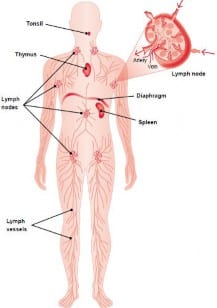
Figure 1. The lymphatic system (tissues and organs that produce, store, and carry white blood cells) and lymph nodes.

Symptoms, Staging, and Diagnostic Procedure
Symptoms: Some patients with MCL do not have any symptoms. Other patients may develop a swelling (a swollen lymph node, usually painless) in the neck, armpit, or groin.
Staging and Diagnostic Procedure Diagnosis of MCL requires careful evaluation of the cancer cells, frequently by lymph node biopsy (removing a piece of the affected lymph node) and looking at the cells under a microscope. Other tests that can be helpful include the following:
- Testing for cancer cells in the bloodstream.
- A bone marrow biopsy (removing a small piece of the bone marrow) or an endoscopy (a procedure to examine the upper part of the digestive system) to look for lymphoma that is not detected on scans.
- Imaging with a computed tomography (CT) scan or positron emission tomography/CT (PET/CT) scan. These tests help monitor disease progression (how cancer grows and spreads). PET scans use a special dye that accumulates inside cancer cells and lets the doctors know where the cancer is.

Specific testing can be helpful in establishing a diagnosis and/or prognosis (how well the patient will do) of a patient with MCL. This type of lymphoma can have the following characteristics:
- Excessive amounts of protein called cyclin D1 (found in over 90% of patients with MCL).
- A genetic mutation (permanent change) in the DNA (deoxyribonucleic acid, the molecule that carries the genetic information) named t (11;14) (q13; q32) translocation (Figure 2). This translocation is the reason behind the abnormal presence of the cyclin D1 protein.
- A high proportion of cells with Ki67, a protein associated with cell multiplication (in MCL that multiply quickly).
- A high proportion of cells expressing p53 protein (due to a mutation in the TP53 gene). Alternatively, a genetic test showing loss of the TP53 gene can also provide information. A gene is a small piece of DNA that contains information for making specific proteins.
- Excessive levels of lactate dehydrogenase (LDH) in the blood, which can occur in larger tumors that grow rapidly.
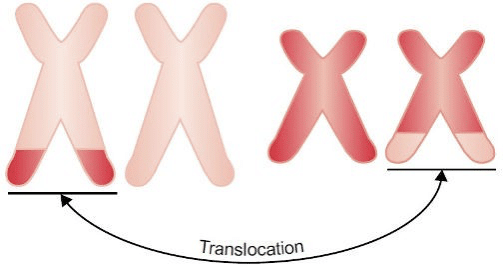
Figure 2. The t (11;14) (q13; q32) translocation, where a chromosome (a structure made of DNA and proteins found inside the cell) breaks and part of it reattaches to another chromosome.
Measuring these and other markers can help physicians determine how aggressive the MCL is and may guide therapy decisions.
Subtypes
Classical MCL
The most common subtype of MCL. It affects the lymph nodes but can spread to other organs such as bone marrow, liver and spleen
Leukemic non-nodal MCL
Leukemic non-nodal MCL is less common than the classical subtype, occurring in 10-20% of the patients with MCL. Typically, it affects the blood, bone marrow, and spleen, with lesser involvement of the lymph nodes or gastrointestinal tract.
In situ mantle cell neoplasm
In situ MCL is a rare indolent disease with a low risk of progressing (growing). It is commonly found in lymph nodes but can also be found in other parts of the body such as gallbladder, lung, small intestine and spleen.

Treatment Options
For patients who do not yet have symptoms and who have a limited amount of slowgrowing disease, observation without immediate treatment may be an option. This approach is called active surveillance, also known as watchful waiting. In this case, patients’ overall health and disease are monitored through regular checkup visits that may include physical examination (like checking for any swelling) and other tests (like bloodwork and imaging). To know more about active surveillance, view Active Surveillance fact sheet on the Lymphoma Research Foundation’s (The Foundation’s) website at lymphoma.org/publication.
Treatment is started if the patient begins to develop MCL-related symptoms or there are signs that the disease is progressing. The majority of patients will ultimately require treatment. The type of treatment selected for a patient with MCL depends on multiple factors, including how fast the cancer is growing, problems with the TP53 gene, and the patient’s overall health.
First Treatment after Diagnosis
First-line (initial) treatment approaches for MCL can vary significantly and can change when new treatment information becomes available. Types of initial treatment for MCL can include any of the approaches listed below, alone or in combination:
Chemotherapy, drugs that stop the growth of or kill cancer cells.
Immunotherapy, including:
- Monoclonal antibodies (a protein made in the laboratory that binds to proteins on the surface of cancer cells and helps the body fight cancer).
Targeted therapy, drugs that target specific molecules that cancer cells use to survive and spread.
Autologous stem cell transplantation (ASCT, the patient is treated with high-dose chemotherapy to remove their blood-forming cells and then receives their own healthy stem cells to restore the immune system and the bone marrow’s ability to make new blood cells).

A common option in younger patients is the combination of the monoclonal antibody rituximab (Rituxan) or a rituximab biosimilar (a molecule made inside a living cell that is modeled after rituximab), with a cytarabine (Cytosar)-containing combination chemotherapy regimen. Sometimes, the monoclonal antibody obinutuzumab (Gazyva) may be used off-label (not approved by the FDA) instead of rituximab (Rituxan). In some cases, this may be followed by an autologous SCT (patient’s own stem cells are infused after high-dose chemotherapy). This treatment may be followed by an extended course (prolonged treatment) of a rituximab product known as maintenance therapy. This can be done with rituximab (Rituxan), obinutuzumab (Gazyva), or a rituximab biosimilar. The goal is to achieve durable remission (no signs of cancer for a long period of time). New data suggest that the addition of Bruton’s tyrosine kinase (BTK) inhibitors (a type of targeted therapy that inhibits the signaling protein BTK to block the growth and survival of cancer cells) may be beneficial.

Patients who are older or less fit can receive other types of first-line therapy, like less-intensive (using lower doses) chemotherapy with or without rituximab (Rituxan). An example is the BR regimen, which consists of bendamustine (Treanda) in combination with rituximab (Rituxan). Some patients may benefit from maintenance therapy (additional treatment after the cancer has responded to initial treatment) with rituximab (Rituxan) and/or a BTK inhibitor. Alternatively, some patients may be treated with a BTK inhibitor and rituximab without chemotherapy.
Relapsed and Refractory MCL
In patients who require treatment, MCL usually responds well to first-line therapies. However, the disease can relapse (returns after treatment) or become refractory (no longer responds to current treatment). How long each patient stays in remission may be different depending on the biology of the MCL (how aggressive it is) and the kind of treatment given. MCL is a chronic disease where most patients will need additional lines of treatment.
There is a growing number of treatment options for the management of relapsed or refractory MCL. The type of treatment recommended depends on treatments already received, when the relapse happened, the patient’s age and overall health.
The treatment types that have been approved by the U.S. Food and Drug Administration (FDA) for the treatment of relapsed or refractory MCL include:
Targeted therapies
- BTK inhibitors, such as acalabrutinib (Calquence), zanubrutinib (Brukinsa), and pirtobrutinib (Jaypirca).
- Proteasome inhibitors such as bortezomib (Velcade).
- Cereblon modulators (immunomodulatory drugs that work on the immune system directly by regulating [activating or slowing down] the activity of the protein Cereblon E3 ligase) such as lenalidomide (Revlimid).
Chimeric antigen receptor (CAR) T-cell therapies (a special type of immunotherapy that uses the patient’s immune cells to fight cancer), such as brexucabtagene autoleucel (Tecartus) and lisocabtagene maraleucel (Breyanzi). To learn more about CAR T-cell therapy, view the Understanding Cellular Therapy Guide on The Foundation website (visit lymphoma.org/ publications).
Emerging data may support off-label (not approved by the FDA) use of drugs that are approved for treatment of other lymphomas, including:
- Venetoclax, a targeted inhibitor of BCL2.
- Bispecific monoclonal antibodies (antibodies that recognize two different antigens, which can be on the same cell [a cancer cell] or two different cells [a cancer cell and a healthy immune cell]), such as glofitamab (Columvi).
Many of the drugs mentioned above may be used in combination with rituximab (Rituxan) or rituximab biosimilars (like rituximab-abbs and rituximab-pvvr). Biosimilars are drugs that are modeled after a biologic therapy (a molecule produced inside a living cell) that already exists and is approved for use. To learn more, please see the Understanding Lymphoma Biosimilar Therapies fact sheet on the Foundation’s website at lymphoma.org/publications.
Additional treatment types that may be used in relapsed/refractory MCL include:
- Chemotherapy such as bendamustine (Treanda) with or without rituximab (Rituxan), and combination chemotherapy with or without rituximab (Rituxan).
- Autologous SCT (the patient’s own stem cells are used) and allogeneic SCT (patients receive stem cells from another donor).
Autologous SCT is generally given after a patient’s first therapy, but it may also work well for medically fit patients who have a good response to later therapies. Younger medically fit patients may consider allogeneic SCT as a possible cure, although it may have more risks. Patients should discuss with their doctor the benefits and risks of SCT. For more information on transplantation, see the Understanding Cellular Therapy guide (visit lymphoma.org/publications).
Treatment options may change as new treatments are discovered, and current treatments are improved. It is important that patients check with their physician or with the Foundation for any treatment updates that may have recently appeared.
Treatments Under Investigation
Many new treatments (also referred to as investigational drugs) are being studied in clinical trials for patients with newly diagnosed MCL or with relapsed or refractory MCL. Several trials include attempts to use new drugs to replace or shorten the course of chemotherapy, including stem cell transplantation. In most cases, these trials include drugs that are already commonly used for previously treated MCL. Results from these clinical trials may improve or change the current standard of care (the proper treatment that is widely used by healthcare professionals and accepted by medical experts). Table 1 (below) lists some of these investigational drugs that can be accessed through a clinical trial. For more information on clinical trials, view the Understanding Clinical Trials publication on the Foundation’s website at lymphoma.org/ publication.
Table 1. Treatments Under Investigations for Previously Untreated Mantle Cell Lymphoma and/or Relapsed/Refractory Mantle Cell Lymphoma
| Surovatamig (AZD0486) | Immunotherapy; bispecific antibody; anti-CD19 and anti-CD3 | R/R MCL |
| AZD5492 | Immunotherapy; Trispecific antibody; anti-CD20, anti-CD8, and anti-TCR | R/R MCL |
| BGB-16673 | Targeted therapy; BTK degrader | Untreated MCL |
| GLPG5101 (19CP02) | Autologous CAR T-cell; anti-CD19 | R/R MCL |
| Mesutoclax (ICP-248) | Targeted therapy; BCL-2 inhibitor | R/R MCL |
| Ixazomib (Ninlaro) | Targeted therapy; proteasome inhibitor | Untreated MCL and R/R MCL |
| Loncastuximab tesirine (Zynlonta) | Antibody-drug conjugate; anti-CD19 | R/R MCL |
| Nemtabrutinib (MK-1026) | Targeted therapy; BTK inhibitor | Untreated MCL and R/R MCL |
| Odronextamab (REGN1979) | Immunotherapy; bispecific antibody | R/R MCL |
| Orelabrutinib | Targeted therapy; BTK inhibitor | Untreated MCL |
| Palbociclib (Ibrance) | Targeted therapy; CDK inhibitor | R/R MCL |
| Pemigatinib | Targeted therapy; kinase inhibitor | R/R MCL |
| Polatuzumab vedotin (Polivy) | Immunotherapy; antibody-drug conjugate | R/R MCL |
| Relmacabtagene Autoleucel | Autologous CAR T-cell; anti-CD19 | R/R MCL |
| Sonrotoclax | Targeted therapy; BCL-2 inhibitor | MCL, R/R MCL |
| Zilovertamab vedotin (MK-2140) | Antibody-drug conjugate; anti-ROR1 | R/R MCL |
Treatment choices are increasing as new drugs are developed and current treatments are improved. Because science is always changing, it is important for patients to check in with their oncologist or hematologist specialized in MCL or with the Foundation to find out about any new treatments that become available. It is also very important that all patients with MCL consult their doctor to clear up any questions.
How to Be a Self-Advocate
Being a self-advocate and an active participant in healthcare decisions can be a positive experience. It may help patients regain a sense of control that they may have lost following the lymphoma diagnosis by making sure patients receive the best care. Patients and care partners should remember they are partners in their treatment plan.
- Do not be afraid to ask your doctors or nurses questions about your care. An educated patient asking questions is not ‘being a challenge to your physician’ (or ‘being a difficult patient’).
- Learn more about lymphoma by asking your doctor for information and visiting reliable websites, such as the Foundation’s at www.lymphoma.org.
- Take advantage of counseling, support groups, nutritional counseling, fitness classes, expressive arts, and other services offered at your doctor’s office, cancer center, or hospital.
- Consider joining the Foundation’s Lymphoma Support Network, a nationwide peer support program that matches patients and caregivers with people who have had similar experiences. For information about the program, call (800) 500-9976 or email [email protected].
- Finally, it is important that patients not be afraid to talk with the healthcare team about nonmedical issues such as transportation, finances, insurance, working through treatment or taking time off, and childcare. There are nurses, social workers, physician’s assistants that are be able to provide the support and resources to help.

Clinical Trials
Clinical trials are crucial in identifying effective drugs and optimal treatment doses for patients with lymphoma. They are not a “last resort” for patients. Every drug available today had to be tested in clinical trials before it was approved for general use, and all new and emerging treatments. There are four main types or phases of clinical trials. The phase is based on the study’s objective and the number of participants.
Phase I
- To identify a safe dose of a new drug
- To decide on a dosing schedule for the drug
- To see what side effects are related to the therapy
Phase II
- To see if a new treatment is effective against a certain type of cancer at the dose determined in Phase I
- To confirm and learn more about the side effects identified in Phase I
Phase III
- To compare the new treatment or new use of an existing treatment with the current standard treatments
- To obtain detailed information about how well the treatment works and the types and severity of side effects it causes
Phase IV
- To look at long-term safety and effectiveness that take place after a new treatment has been approved by the FDA and is available to the public.


Patients interested in participating in a clinical trial should view the Understanding Clinical Trials fact sheet , and the Clinical Trials Search Request Form, talk to their physician, or contact the Foundation’s Lymphoma Resource Center for an individualized clinical trial search by calling (800) 500-9976 or emailing [email protected].
Follow-Up
Survivorship
As a cancer survivor, it is important that you practice self-care regularly to reset your physical and emotional well-being. Adopting routines of self-care will help you recharge your batteries and stay healthy. Talk with your healthcare team about developing a wellness plan to help you stay physically and emotionally healthy and improve your mood. Consider the following suggestions:
- Watch your health. Stay up-to-date with your own medical appointments and take any medications as prescribed.
- Exercise. Stay active with short periods of daily exercise (30 minutes of power walking, jogging or biking). If not possible, take the stairs instead of the elevator or park farther away than usual.
- Eat well. Include fruits and vegetables in your meals and maintain a balanced diet.
- Cut down on risk factors. Quit smoking and reduce alcohol intake.
- Sleep. Try to get 7 hours of sleep per night, or take naps when needed.
- Rest. Meditation, deep breathing and stretching can help you relax and reduce stress.
- Write it down. Keeping a journal with thoughts and feelings may help to let go of worries and fears.
View the Foundation’s Survivorship Series factsheet on the Foundation’s website at lymphoma.org/publication for more info.
Long Term Follow-Up Care Plan
All lymphoma survivors should have a long term follow up plan (also called a “survivorship care plan”) after treatment ends. This plan is arranged by your healthcare team and includes a summary of the treatments you received, recommendations for follow-up care based on your medical history, and schedules for medical exams to check if the lymphoma has come back (recurrence). This allows your healthcare team to monitor your overall health and look out for long-term effects or other problems that may occur at any point after treatment. Your doctor will let you know how often you need to return for checkup appointments and which physical exams and blood tests are necessary. These checkups usually include a review of your medical history, physical exam and bloodwork, as well as specific exams or screenings recommended by your doctor (see Health Screenings to Consider on next page).
A follow-up care plan may also provide information to help you meet any emotional, social, legal, and/or financial needs. Your health care team can help you decide which doctor to see for your follow-up care plan (the same doctor who treated your lymphoma, a health care provider specialized in caring or cancer survivors, or your primary care provider [PCP]). Some clinics specialized in follow-up cancer plans offer comprehensive support to cancer survivors (called “survivorship clinics”). You can visit oncolink.org/clinics/ search to check for survivorship clinics in your area.
View the Foundation’s Survivorship Series fact sheet on the Foundation’s website at lymphoma.org/publication for more info.
Health Screenings To Consider
As a survivor, there are specific health screenings and exams that you may do at an earlier age than the general population. These will be adapted to the type of lymphoma you had and the treatment you received. For instance, due to the increased risk of secondary breast cancer from radiation therapy, women who received radiation therapy to the chest area during childhood, adolescence, or young adulthood should have clinical breast examinations yearly until age 25, then every six months thereafter. In addition, these women should receive yearly mammograms and breast magnetic resonance imaging (MRI) beginning at age 25 or eight years after completion of the radiation therapy, whichever comes last.
Other health screenings the physician may suggest include:
- Bone density scans
- Cardiovascular monitoring •
- Chest or whole body imaging
- Screening for other cancers (e.g. colorectal or skin)
- Dental screenings
- Eye exams
- Lipid blood tests
- Thyroid function tests
Because everyone is different, survivors should talk with their physicians about which screenings are most appropriate and when they should be started.
Care Partners
There are many ways you can help a loved one with lymphoma, as follows:
- Be present. The most important thing that a care partner can do is to “just show up.”
- Be prepared. Talk with the healthcare team so that you know what to expect throughout the treatment, how to manage symptoms and when to ask for help.
- Listen. Each person asks for help in different ways, verbally (through words) and nonverbally, and some may require more comfort while others are more action oriented.
- Avoid “cheerleading”. Do not disregard your love one’s negative feelings (sadness, anger or worry).
- Organize the help. A rush of sudden help upon diagnosis can make the situation harder to manage and create unproductive tension.
- Set up remote access with computer and/or phone access. This is helpful for regular communication with your loved one.
- Offer rides. This is important for people with decreased mobility or limited resources.
- Take notes. If you go into the appointments, write down notes with the doctor’s plan, medications, potential side effects and other relevant information.
Patients and their care partner are encouraged to keep copies of all medical records. This includes test results as well as information on the types, amounts, and duration of all treatments received. Medical records are important for keeping track of any side effects resulting from treatment or potential disease recurrences. The Foundation can help patients manage this documentation.
View the Care Partners factsheet on the Foundation’s website atl ymphoma.org/publication for more info.
Questions to Ask Your Healthcare Team
- What is my exact diagnosis? What subtype of lymphoma do I have? May I have a copy of the report from the pathologist?
- What is the stage of my disease? In what area of the body is it specifically located?
- What are my treatment choices? Which do you recommend for me and why? Would choosing one treatment prevent me from getting a different kind of treatment later on? How are the different treatments administered?
- Do I need more than one type of treatment?
- What is the goal of treatment? What are the expected benefits of each type of treatment?
- How will we know if the treatment is working? What tests will I need to determine if treatment is working, and how often will I need to be tested?
- How long will the treatment last?
- What are the chances the treatment will be successful?
- What is a clinical trial? Are clinical trials available that are studying new treatments for my type of lymphoma? Would a clinical trial be appropriate for me? How would I benefit? Are there any drawbacks of participating in a clinical trial?
- Will I be able to work during treatment? Will I be able to drive or take public transportation during my treatment?
- Should I take care of other medical or dental issues before I start treatment?
- How much will the treatment cost? Will my insurance cover some or all of it? What will my out-of-pocket costs be?

The Foundation’s Programs and Services

Lymphoma Care Plan
Keeping your information in one location can help you feel more organized and in control. This also makes it easier to find information pertaining to your care and saves valuable time. The Foundation’s Lymphoma Care Plan document organizes information on your health care team, treatment regimen, and follow-up care. You can also keep track of health screenings and any symptoms you experience to discuss with your health care provider during future appointments. The Lymphoma Care Plan document can be accessed by visiting lymphoma.org/publications.

Patient Education Programs
The Foundation also offers a variety of educational activities, including live meetings and webinars for individuals looking to learn directly from lymphoma experts. These programs provide the lymphoma community with important information about the diagnosis and treatment of lymphoma, as well as information about clinical trials, research advances and how to manage/cope with the disease. These programs are designed to meet the needs of a lymphoma patient from the point of diagnosis through long-term survivorship. To view our schedule of upcoming programs, please visit lymphoma.org/programs.

Lymphoma Resource Center
The Lymphoma Resource Center staff are available to answer your general questions about lymphoma and treatment information, as well as provide individual support and referrals to you and your loved ones. Callers may request the services of a language interpreter. The Foundation also offers a one-to-one peer support program called the Lymphoma Support Network and clinical trials information through our Clinical Trials Information Service. For more information about any of these resources, visit our website at lymphoma.org, or contact the Foundation’s Lymphoma Resource Center at (800)500-9976 or [email protected].
Para información en español, por favor visite lymphoma.org/es(for information in Spanish please visit lymphoma.org/es).

Lymphoma Support Network
The Foundation’s one-to-one peer support program – Lymphoma Support Network – connects patients and care partners with volunteers who have experience with lymphomas, similar treatments, or challenges, for mutual emotional support and encouragement. You may find this useful whether you or a loved one is newly diagnosed, in treatment, or in remission. For more information about this program, please contact the Foundation Helpline at (800)500-9976or visit lymphoma.org/resources/supportservices/lsn.

Treatment Navigation Service
A lymphoma diagnosis can bring a lot of questions about your subtype, your treatment options, and what comes next. The Lymphoma Resource Center’s Treatment Navigation Service is here to help you find answers. Through a one-on-one consultation with the Resource Center team, you’ll receive personalized educational materials, a comprehensive overview of standard and emerging treatments, and a customized clinical trials search list tailored to your diagnosis. You’ll walk into your next appointment feeling prepared and empowered to ask the right questions and take the next step in your journey. This free service is available to every member of our community, patients, survivors, and care partners alike. Reach out to the Lymphoma Resource Center to take your next step with confidence.
© 2025 Lymphoma Research Foundation
Disclaimer: The Lymphoma Research Foundation is a national nonprofit organization based in the United States (U.S.) with educational programs and resources which are intended for a U.S. based audience. These programs and resources are intended for educational purposes only and are not a substitute for medical advice. Individuals who use Foundation programs and services are advised to consult a medical professional for medical advice, diagnoses, or treatment. Foundation programs and resources address available lymphoma/CLL treatments in the United States and information on drug approvals by the U.S. Food and Drug Administration (FDA).
The Foundation does not endorse any treatments, products, or services mentioned in its resources. The information provided is for informational purposes only and should not be considered as an endorsement. The Foundation shall not be liable for any direct, indirect, incidental, special, consequential, or punitive damages arising out of the use of its programs and resources, to the extent permitted by law. You assume full responsibility for any actions taken based on the information provided.
For individuals outside of the U.S. seeking information, the Foundation recommends the Lymphoma Coalition. The Lymphoma Coalition is a global network of worldwide nonprofit/NGO lymphoma patient organizations with information appropriate for non-U.S.-based audiences. Additional information can be found by visiting their website at https://lymphomacoalition.org/.
All content provided by the Foundation is protected by intellectual property laws. You may not reproduce, distribute, or otherwise use the content without the Foundation’s prior written consent.
The Lymphoma Research Foundation appreciates the expertise and review of our Editorial Committee:
Co-Chair: Leo I. Gordon, MD, FACP
Robert H. Lurie Comprehensive Cancer Center of Northwestern University
Co-Chair: Kristie A. Blum, MD
Emory University School of Medicine
Jennifer E. Amengual, MD
Columbia University
Carla Casulo, MD
James P. Wilmot Cancer Institute
Shana Jacobs, MD
Children’s National Hospital
Patrick Conner Johnson, MD
Massachusetts General Hospital
Manali Kamdar, MD
University of Colorado
Ryan Lynch, MD
University of Washington
Peter Martin, MD
Weill Cornell Medicine
Lia Palomba, MD
Memorial Sloan Kettering Cancer Center
Tycel Phillips, MD
City of Hope
Pierluigi Porcu, MD
Thomas Jefferson University
Neha Mehta-Shah, MD, MSCI
Washington University School of Medicine St. Louis
Sarah Rutherford, MD
Weill Cornell Medicine
Supported through grants from: