Side Effect Management
Understanding Lymphoma and Chronic Lymphocytic Leukemia (CLL)
Introduction
Lymphoma is the most common blood cancer. The two main forms of lymphoma are Hodgkin lymphoma (HL) and non-Hodgkin lymphoma (NHL).
Lymphoma occurs when cells of the immune system called lymphocytes (a type of white blood cell) grow and multiply uncontrollably (Figure 1). The body has two main types of lymphocytes: B lymphocytes (B-cells) and T lymphocytes (T-cells). Cancerous lymphocytes can travel to many parts of the body, including the lymph nodes (small bean-shaped structures that help the body fight disease), spleen, bone marrow (the spongy tissue inside the bones), blood, or other organs, and may form a mass called a tumor.
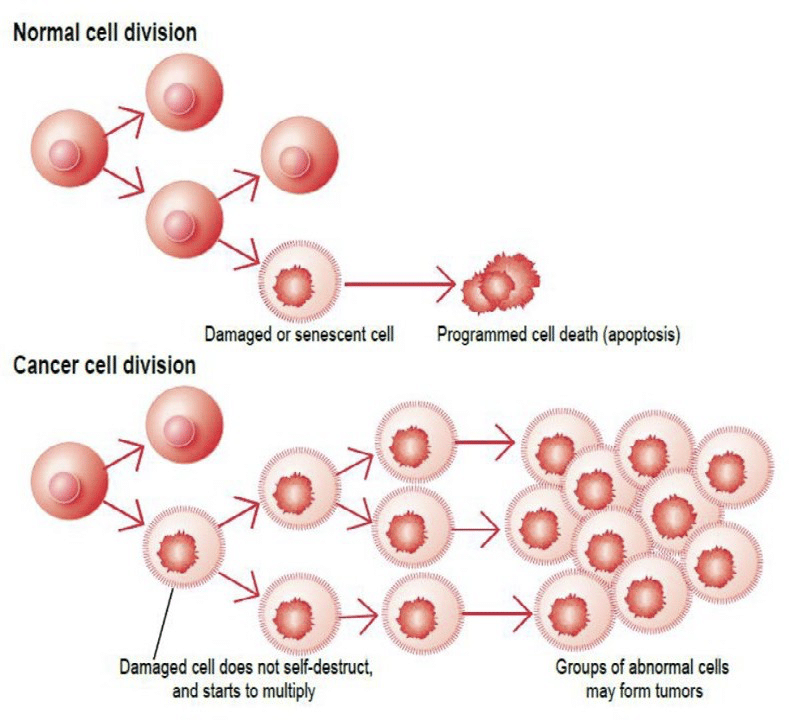
Figure 1: Normal and cancer cell division. In normal cell division, damaged (with permanent changes in the genetic material that lead to cancer) or senescent (old) cells are destroyed by apoptosis (a type of cell death the body uses to get rid of abnormal cells). In cancer, abnormal cells multiply uncontrollably.
Lymphoma is often painless and asymptomatic early on, but it can cause swollen lymph nodes (for example, in the neck, armpits, or groin), an enlarged spleen, and symptoms including fever, drenching night sweats, drastic and unexplained weight loss, fatigue, and discomfort, among other symptoms.
Treating Lymphoma
Treatments for lymphoma include:
- Chemotherapy (drugs that stop the growth of or kill cancer cells).
- Immunotherapy (drugs that use the body’s immune system to fight cancer).
- Monoclonal antibodies (proteins made in the laboratory that bind to cancer cells and help the immune system destroy them).
- Checkpoint inhibitors (monoclonal antibodies that recognize special proteins called immune checkpoints, which activate or slow down the immune responses against the body’s own cells).
- Antibody-drug conjugates (ADC, monoclonal antibodies attached to a chemotherapy drug).
- Radioimmunotherapy (RIT, an antibody attached to a radioisotope, a particle that emits radiation).
- Cytokines (proteins that coordinate cell-to-cell communication and help regulate the body’s immune response).
- Immunomodulatory drugs (IMiD, drugs that regulated the immune system by activating or slowing down the activity of specific proteins).
- Chimeric antigen receptor (CAR) T-cell therapy (a special type of immunotherapy, that uses patients’ T cells to treat their cancer).
- Bispecific Antibodies (BsAbs; antibodies that recognize two different antigens, which can be on the same cell or two different cells). BsAbs used to treat lymphoma are called
- T-cell engagers and work by linking cancer cells to healthy immune cells.
- Radiation (treatment that uses high-energy radiation to kill cancer cells)
- Steroids (drugs that treat cancer and help to relieve signs of inflammation such as redness, swelling, pain, and/or a feeling of heat in an area of the body).
Side Effects of Treatments
The treatments mentioned above often have side effects. Each patient is different, so the side effects that occur and how severe they are may be different for each individual. Some patients experience many side effects and others have very few, but nearly all patients will experience some. Side effects may vary based on treatment, lymphoma type and stage, the patient’s age, presence of other medical conditions (called co-morbidities), and overall health status. Although most side effects are temporary, they can cause a great deal of distress.
Chemotherapy side effects
Chemotherapy drugs kill cancer cells, but these drugs may also kill healthy cells. When healthy cells in the bone marrow are killed, it can cause side effects such as anemia (low red blood cell counts that may lead to symptoms of fatigue, shortness of breath, or dizziness), thrombocytopenia (low platelet counts), and leukopenia (low white blood cell counts). Thrombocytopenia may increase the risk of bleeding. Leukopenia decreases the ability of the immune system to fight infection, making patients more prone to infection.
Chemotherapy can be physically demanding and may cause:
- Changes in smell and taste
- Mouth sores
- Diarrhea
- Nausea and vomiting
- Fatigue
- Weight loss
- Hair loss
- Constipation
- Neuropathy
- Nerve pain
- Swelling
- Skin rashes
Immunotherapy side effects
Monoclonal antibodies commonly have fewer side effects than most cancer treatments, but they can affect normal cells as well as cancer cells. This can lead to an increased risk of infection, infusion reactions, fever, chills, weakness, headache, nausea/vomiting, diarrhea, low blood pressure, chest tightness, and rashes.
Other types of immunotherapies, including ADCs, RIT, cytokines, IMiDs, CAR-T therapy, checkpoint inhibitors, and BsAbs are also associated with various side effects. These may include anemia, arrhythmias, constipation, cough, diarrhea, fatigue, fever/chills, flu-like symptoms, itching, low blood cell counts, lung inflammation, neuropathy, nausea, pneumonia, rashes, shortness of breath, swelling, thinning hair, and upper respiratory tract infection.
Patients undergoing CAR-T therapy or BsAbs therapy may receive their treatment in the hospital where they can be closely monitored for potential serious side effects, such as cytokine release syndrome (CRS, a group of symptoms including fever and hypotension [low blood pressure], caused by cytokines released by the infused CAR T-cells) and neurologic complications (damage to the nervous system). CRS causes fever, rash, headache, body fluid shifts, and changes in blood pressure. Neurologic toxic effects can range from headaches to confusion, delirium, and seizures. The symptoms of CRS and neurological complications can occur within minutes or hours of beginning treatment or may occur days to weeks later.
Other common side effects include temporarily low blood cell counts, feeling tired (fatigue), and an increased risk of infection. In some patients, B cells are destroyed by the treatment in addition to the cancer cells, causing a condition called B-cell aplasia. B cells make antibodies that protect people from infections so when this happens, patients may need to periodically receive antibodies. The antibodies are given through a vein by intravenous infusion.
Radiation side effects
Most side effects of radiation are related to the part of the body being treated, but radiation can also result in a general sense of fatigue. Skin changes, such as pain, itching, or redness, almost always go away after radiation therapy is completed.
Steroids side effects
Steroids can cause a specific set of side effects including insomnia (not being able to fall asleep or stay asleep), increased appetite, mood/personality changes (feeling more irritable, angry, sad, or anxious than usual), weight gain, increased blood pressure, and increased blood sugar. Another side effect of steroids is hypothalamic-pituitary adrenal (HPA) axis suppression resulting in a reduced level of the hormone cortisol (a chemical messenger produced by the body and carried by the blood to tissues and organs). This impacts the body’s natural response to stressors (such as trauma, surgery or inflammation) and infections.
Strategies to maintain wellness during treatment
Communicating with your health care team
It is important to report side effects to your health care team. There are many strategies to prevent or reduce the severity of side effects. Ask about when and who you should contact if you are experiencing side effects and how you can reach your health care team between visits. Most health care systems include a patient portal that can be accessed on a computer, tablet, or smart phone. Patient portals can offer a good way to communicate with your team if symptoms are not severe. Keeping notes about your symptoms and taking these notes to your provider visit will allow your team to discuss strategies to reduce or prevent side effects that you may experience.
Diet
Diet is a key part of managing both lymphoma and the side effects of lymphoma treatment, as it provides the body with the nutrients and energy it needs to function. A balanced diet of fresh fruits and vegetables, protein, carbohydrates, and dairy products can help increase and maintain strength and energy and improve the body’s healing ability. Staying hydrated is important to maintain kidney function and flush the byproducts of treatment from the body. Drinking fluids without caffeine is important for preventing dehydration, which may result from nausea, vomiting, and diarrhea. If drinking fluid is difficult, you can try sucking on ice chips.
Many side effects can affect how patients feel about food and eating. Eating smaller meals more often rather than a few large meals each day may help patients feel less nauseous and make it easier to eat when appetite is diminished. Foods rich in carbohydrates such as starches can also help decrease nausea, whereas fatty foods may make nausea worse. Liquid nutritional drinks are a good way of getting enough vitamins and calories when patients have loss of appetite, nausea, or mouth sores.
It is important to experiment with different foods and find out what tastes good during treatment for lymphoma. Certain foods may cause discomfort if patients have mouth sores from chemotherapy or radiation. Foods that are crunchy, salty, acidic (like citrus fruits), or spicy should be avoided. Soft or blended foods such as puddings, ice cream, soup or soft fruits may be better tolerated. If a patient’s sense of taste and smell changes, some foods that were pleasurable before beginning cancer treatment may cause nausea or other symptoms. Liquids or soft foods can make eating less painful if the patient has a dry mouth or difficulty swallowing solid foods.
Dietary considerations are also important when white blood cell counts are low, which can result in the body having a harder time fighting infection. Avoid soft cheeses and cheeses with mold (such as brie, feta, or blue), and avoid raw or undercooked meat, fish, poultry, eggs, or tofu to reduce the risk of getting an infection. Wash fresh fruits and vegetables with soap to kill germs and avoid fruits and vegetables that cannot be properly scrubbed and washed.
Some treatments can cause thinning of the bones and increase the risk of osteoporosis and fracture. It is important to reduce alcohol intake and eat foods rich in calcium and vitamin D. In addition, lifestyle changes like quitting smoking and engaging in weight-bearing exercises (like jogging or walking, if possible) are also important to reduce these risks.
Vitamins and dietary supplements may affect lymphoma treatment. Patients should let their doctor know if they are taking any vitamins, minerals, or herbal supplements. In addition, alcohol may be very irritating if the mouth is sore during cancer treatment. It may also affect the body differently during treatment or even interact with the chemotherapy drugs. It is important for patients to discuss with their doctor whether drinking alcohol is safe during treatment. For more information, please view the Nutrition and the Integrative Oncology fact sheets on the Lymphoma Research Foundation’s website at www.lymphoma.org/publications.
Lifestyle
Lymphoma and its treatments can cause fatigue. Changing routines may help accomplish daily tasks more easily. Prioritize the most important activities and let people who want to help do so. Planning chores or breaking down big tasks into smaller ones can help decrease fatigue. Exercise is essential to maintaining strength and stamina. Talk to your health care team about what type of exercise is best for you. Try and keep regular sleeping habits, taking the time to fit in short naps (20 to 30 minutes) to help recharge the body and mind during the day. Enjoy what you do but do it in small increments with breaks for rest.
Intimate relationships may be affected following a diagnosis of and during treatment for lymphoma. Intimacy can be impacted by psychological factors (such as changes in body image and increased emotional strain) as well as physical changes (such as fatigue, pain, vaginal dryness, erectile dysfunction). Patients may experience changes in all, some, or none of the phases of sexual response (desire, arousal, orgasm, resolution). Open communication, time, and patience are important while finding the most helpful remedy. Patients should discuss with their healthcare team what sexual changes patients tend to experience during and after treatment and what can be done to prepare for and manage these changes if they occur.
Patients with lymphoma are at increased risk of infection, particularly during treatment. Avoiding people who are coughing, sneezing, or known to be ill can help reduce the risk of infection. Avoid crowds during outbreaks of flu and other communicable diseases. Washing hands or using a hand sanitizer after visiting public places or touching items used by others is important. Patients should let their doctor know if they develop a fever during chemotherapy, as this may be a sign of an infection. Vaccination during chemotherapy or radiation therapy should avoid live virus and patients should discuss with their health care team. Talk with your doctor and healthcare team to receive specific recommendations for vaccination and timing, particularly for the flu and COVID-19 vaccines.
Cancer and cancer therapy may also affect thinking, memory, concentration, and attention. This is sometimes referred to as “chemo brain” or “brain fog”. Keeping simple notes in a notebook, setting up reminder lists, following structured routines, and, if necessary, delaying important decisions or tasks that require intense concentration may be helpful. Physical exercise, sufficient sleep, and exercising the mind with puzzles and brain teasers may also be helpful.
Some treatments may also cause problems with nerve function (neuropathy), which commonly start as numbness and/or tingling in the hands or feet. If this is the case, be careful while handling cutting objects and hot liquids to reduce the risk of injury. Walking slowly and hanging on to handrails, putting no-slip mats in the bathtub and wearing footwear with rubber soles can also help to reduce the risk of falls.
Medications and Products to Manage Side Effects
Gastrointestinal Side Effects
Nausea and vomiting are well-known side effects of chemotherapy and can sometimes be severe. Nausea and vomiting can prevent patients from doing the things they want to do, and they can even interfere with or halt treatment. For chemotherapy regimens that commonly cause nausea, antinausea medications (antiemetics) are administered prior to each chemotherapy cycle. Examples of antiemetic drugs used prior to chemotherapy include:
- 5-hydroxytryptamine type 3 receptor antagonists, like granisetron (Kytril), ondansetron (Zofran) and palonosetron (Aloxi)
- Dexamethasone (or equivalent)
- Neurokinin 1 (NK1)-receptor antagonists, like aprepitant and fosaprepitant (Emend)
The goal is to prevent nausea from occurring in the first place. If nausea or vomiting does occur, it is important to take the antinausea medications soon after symptoms start to prevent them from becoming severe.
Both diarrhea and constipation can also be side effects of chemotherapy or radiation. These symptoms may be prevented or treated with medications. Report these symptoms to your health care team as additional or different medications can be used to relieve and prevent nausea, vomiting, diarrhea or constipation.
Mouth Sores
Certain cancer treatments can result in mouth sores or ulcers in the lining of the mouth, gums, tongue, or lips. Dehydration, poor mouth care, oxygen therapy, alcohol or tobacco use, and insufficient nutrients may also cause sores. They can be painful and distressing and range from mild to severe. Mouth sores can interfere with eating and drinking, and they can potentially become infected. Healing can take two to four weeks, which may interfere with the temporary continuation of treatment.
Although there is no guaranteed way to prevent mouth sores, there are ways to reduce the risk of getting them and mitigating their effects. Resolve any dental issues with a dentist before beginning chemotherapy, as these can worsen once treatment begins. After starting treatment, please notify your physician prior to having any dental procedures. Frequent mouth sores may be caused by a herpes simplex virus, which can be treated with antiviral medications. Staying hydrated by drinking two to three liters (quarts, 64-96 ounces/ day) of water or non-caffeinated beverages each day can help prevent sores. Sucking on ice chips during treatment and for the first half hour following treatment can help reduce the risk of mouth sores following some types of chemotherapy. If you develop mouth sores, drinking with a straw can help shield sensitive areas of the mouth. If it becomes difficult to use a soft bristle toothbrush due to sores and sensitivity, foam swabs are available to limit the irritation.
Avoid alcohol-containing mouthwashes, as this may dry out your mouth. Saltwater rinses or a combination of baking soda and warm water can be used instead. Whitening toothpastes should be avoided, as they contain abrasives that can irritate sores.
Rinsing with magnesium-based liquid medications (such as Maalox or milk of magnesia) can help promote healing of sores. Some medications such as palifermin (Kepivance) stimulate the growth of cells on the surface of the mouth and may help the sores recover more quickly. There are also medications that coat the entire lining of the mouth to form a film, protecting against sores and minimizing pain during eating and drinking. Topical painkillers containing benzocaine (such as Anbesol or Orajel) can also help to numb sore areas. Other medications are available to decrease the pain or discomfort caused by mouth sores. There are also products that can help ease dry mouth to prevent mouth sores that may result from activities like tooth brushing and flossing. Patients should discuss their oral health with their doctor, dentist, and healthcare team prior to and during treatment to help prevent and manage any mouth sores that develop.
Insomnia
Insufficient sleep can impact energy levels, attention, cognitive function, and mood. Persistent insomnia has been associated with anxiety and depression. Insufficient sleep may also affect the immune system. Adequate sleep may even increase a person’s pain tolerance. Many people with cancer experience sleep disturbances that can impact their quality of life. This can be due to pain, hospitalization, treatments, and/or the psychological impact of their disease. Difficulties with sleeping should be discussed with a doctor, as there are multiple approaches to improving sleep depending on the cause and the patient’s preferences. Meditation, guided imagery, deep breathing, reading, yoga, and listening to music can provide distraction from symptoms and help patients overcome insomnia.
Not every medicine will work for everyone, but it is important to remember that there are many options, and it may take some time to find the right drug or treatment.
Protective Clothes and Accessories
Chemotherapy can make the skin more sensitive to sunlight and increase the risk of sunburn or rashes. Hats, scarves, and wigs reduce sun exposure and can lessen the distress associated with hair loss, which can negatively impact self-image. It is important to wear sunscreen on sun-exposed areas when planning to spend time in direct sunlight. During and after radiation treatment, carefully protect the radiation site from exposure to sunlight.
Relaxation Techniques
Mindfulness and relaxation techniques, such as meditation and yoga, are often helpful for accessing inner energy and directing thoughts toward healing and health. Guided imagery works to lessen tension in the body caused by worry and replace it with positive images that might reduce pain and other side effects. These methods have also been shown to aid the recovery process by reducing pain, improving mood, attitude, self-image, and outlook. For more information, please view the Integrative Oncology fact sheet on the Foundation’s website at www.lymphoma.org/publications.
Follow-up
Patients with lymphoma should have regular visits with a physician who is familiar with their medical history and the treatments they have received. During these visits, medical tests (such as blood tests, computed tomography [CT] scans and positron emission tomography [PET] scans) may be recommended to evaluate the need for additional treatment.
Some treatments can cause long-term side effects (occur during treatment and continue for months or years) or late side effects (appear only months, years or decades after treatment has ended).
These can vary for each patient depending on the following factors:
- duration of treatment (how long the treatment lasted)
- frequency of treatment (how often was the treatment was administered)
- type of treatment given
- age and gender
- overall health at the time of treatment.
A physician will check for these side effects during follow-up care. Visits may become less frequent the longer the disease remains in remission (disappearance of signs and symptoms of lymphoma).
Patients and their care partners are encouraged to keep copies of all medical records. This includes test results as well as information on the types, amounts, and duration of all treatments received. Medical records are important for keeping track of any side effects resulting from treatment or potential disease recurrences.
Lymphoma Care Plan
Keeping your information in one location can help you feel more organized and in control. This also makes it easier to find information pertaining to your care and saves valuable time. The Foundation’s Lymphoma Care Plan document organizes information on your health care team, treatment regimen, and follow-up care. You can also keep track of health screenings and any symptoms you experience to discuss with your health care provider during future appointments. The Lymphoma Care Plan document can be accessed by visiting lymphoma.org/publications.
Patient Education Programs
The Foundation also offers a variety of educational activities, including live meetings and webinars for individuals looking to learn directly from lymphoma experts. These programs provide the lymphoma community with important information about the diagnosis and treatment of lymphoma, as well as information about clinical trials, research advances and how to manage/cope with the disease. These programs are designed to meet the needs of a lymphoma patient from the point of diagnosis through long-term survivorship. To view our schedule of upcoming programs, please visit lymphoma.org/programs.
Lymphoma Resource Center
The Foundation’s Lymphoma Resource Center staff are available to answer your general questions about lymphoma and treatment information, as well as provide individual support and referrals to you and your loved ones. Callers may request the services of a language interpreter. The Foundation also offers a one-to-one peer support program called the Lymphoma Support Network and clinical trials information through our Clinical Trials Information Service. For more information about any of these resources, visit our website at lymphoma.org, or contact the Lymphoma Resource Center at (800) 500-9976 or [email protected].
Para información en Español, por favor visite lymphoma.org/es. (For Information in Spanish please visit lymphoma.org/es).
© 2024 Lymphoma Research Foundation Last updated May 2024
Understanding Lymphoma and Chronic Lymphocytic Leukemia (CLL) is published by the Lymphoma Research Foundation for the purpose of informing and educating readers. Facts and statistics were obtained using published information, including data from the Surveillance, Epidemiology, and End Results (SEER) Program. Because each person’s body and response to treatment is different, no individual should self-diagnose or embark upon any course of medical treatment without first consulting with his or her physician. The medical reviewer, the medical reviewer’s institution, and the Foundation are not responsible for the medical care or treatment of any individual.
The Lymphoma Research Foundation appreciates the expertise and review of our Editorial Committee:
Co-Chair: Leo I. Gordon, MD, FACP
Robert H. Lurie Comprehensive Cancer Center of Northwestern University
Co-Chair: Kristie A. Blum, MD
Emory University School of Medicine
Jennifer E. Amengual, MD
Columbia University
Carla Casulo, MD
James P. Wilmot Cancer Institute
Shana Jacobs, MD
Children’s National Hospital
Patrick Conner Johnson, MD
Massachusetts General Hospital
Manali Kamdar, MD
University of Colorado
Ryan Lynch, MD
University of Washington
Peter Martin, MD
Weill Cornell Medicine
Lia Palomba, MD
Memorial Sloan Kettering Cancer Center
Tycel Phillips, MD
City of Hope
Pierluigi Porcu, MD
Thomas Jefferson University
Neha Mehta-Shah, MD, MSCI
Washington University School of Medicine St. Louis
Sarah Rutherford, MD
Weill Cornell Medicine
Supported through grants from: