Eileen, Diffuse Large B-cell Lymphoma
Eileen, Diffuse Large B-cell Lymphoma
I was diagnosed with diffuse large B-cell lymphoma in 2018. Looking back, I realize I had known for some time that something wasn’t right, but I never imagined that it was cancer.
I had started feeling unlike myself as early as the year before my diagnosis. I was having trouble eating, experiencing pain in my back, and dealing with muscle aches and fatigue. Because the tumor was in my intestine, much of what was happening was hidden. I knew something was wrong, but cancer wasn’t on my radar.
In August 2018, I had a colonoscopy. Then, on the Friday of Labor Day weekend, my doctor called and told me that what they had found looked like it could be cancer. I was shocked. I knew I hadn’t been feeling well, but I didn’t think I was going to hear those words. After a biopsy and further testing, I was diagnosed with diffuse large B-cell lymphoma (DLBCL).
At first, I saw a local oncologist who recommended watchful waiting (also known as active surveillance). But I was getting sicker and sicker. As fall went on, I became incredibly ill. I couldn’t really walk or sit, and I couldn’t work. At one point, I had lost about 30 pounds and was physically debilitated.
I knew I needed help. I started talking to other people who had been through cancer, and they encouraged me to be more assertive about my care. A friend of mine, who has multiple myeloma, went to Mass General Brigham and offered to help me find a doctor there. Through her, I was connected with Dr. Jeffery Barnes at Massachusetts General Hospital.
After meeting with my new doctor in December 2018, everything changed. He immediately recognized how sick I was and wanted to begin treatment. Sick enough that I was admitted into the hospital that same day.
For me, finding the right doctor made an enormous difference. I was fortunate to get to a major cancer center where my doctors had experience treating lymphoma and access to treatments that I needed.
At this point, my treatment became my life. I received chemotherapy, including R-CHOP, and ultimately went through about 12 rounds of treatment. At first, most of my chemotherapy was in-patient. I would travel to Boston and stay in the hospital for four or five days at a time.
When I first started chemotherapy, I actually felt better within a day of treatment. But eventually, the treatment stopped having the same effect. I felt better for a while, but it wasn’t getting rid of everything. I needed additional chemotherapy, and ultimately, I went through several different treatments.
After those treatments failed, I needed a stem cell transplant. The transplant was a life-changing experience. At Mass General, I spent about three weeks in the hospital. I received intensive chemotherapy that essentially wiped out my immune system, leaving me extremely vulnerable. I was isolated, and everything about the experience felt unfamiliar. You know that a treatment is supposed to help you, but you don’t know what is going to happen. What works for one person doesn’t necessarily work for another. For me, the stem cell transplant didn’t work.
After that, I was approved for immunotherapy. At the time, immunotherapy was still relatively new, and my oncologist was one of the researchers working on it in Boston. I feel very fortunate that I was in the right place at the right time.
I received about six rounds of immunotherapy. When I finished, my doctor told me that we needed to wait about three months before testing me again. When we finally tested, I was told that I was cured.
I was shocked. By then, cancer had completely taken over my life, and I didn’t know what to do with myself anymore. When you start going through treatment, it becomes your job. Your life becomes schedules and appointments, and I became very accustomed to the hospital. But I lost my sense of who I was before cancer.
I’m a designer, photographer, and illustrator, and I work as a freelance artist. There were months when I couldn’t really work, and I had to give away jobs because I simply couldn’t do them. I was also in a master’s program when I was diagnosed, and I had to drop out.
One of the hardest parts of my experience wasn’t actually the treatment, it was the recovery afterward. For the first several years after treatment, I felt like a fish out of water. I didn’t know what to do with myself anymore. I had spent so long being a patient that when my doctors finally told me I was cured, I was lost. I had become so used to being told where to go and what to do. Suddenly, I had nothing to do.
I also experienced long-term effects from treatment. I now had neurological issues, and my sense of taste and smell changed. Some of those things have never completely returned. My executive functioning was also affected; things like decision-making and organizing haven’t been the same.
This made me realize that survivorship wasn’t simply about finishing treatment and going back to the way things were before. You don’t necessarily get your old life back. You have to figure out who you are now. For me, that became a process of evolution and adaptation. One of the things that helped me was art.
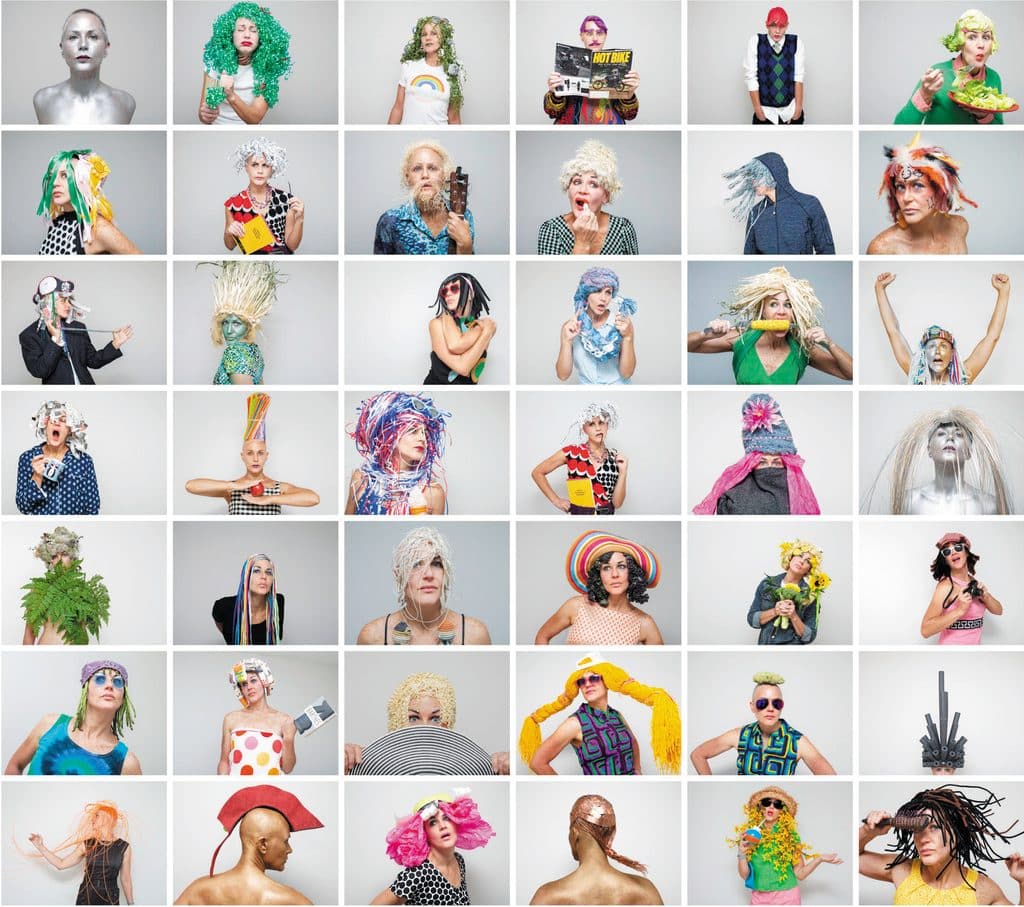
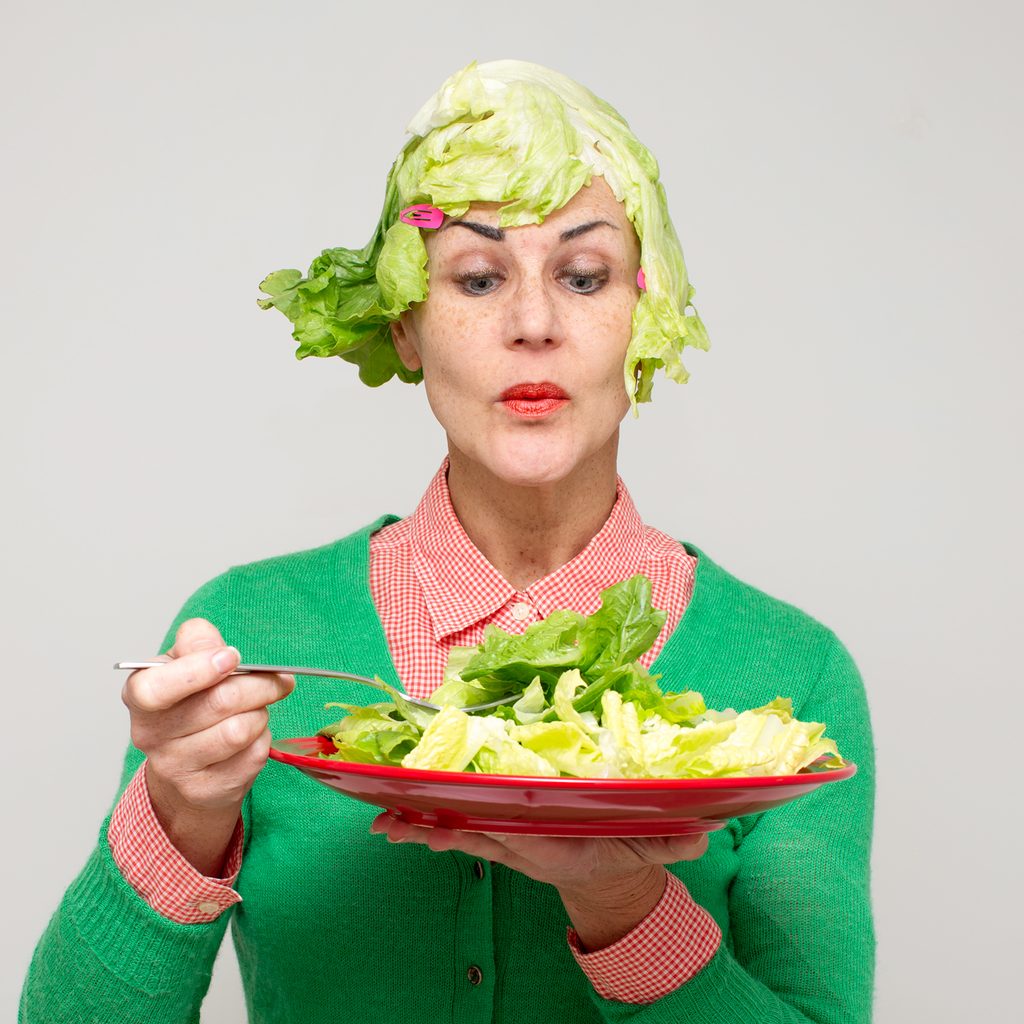
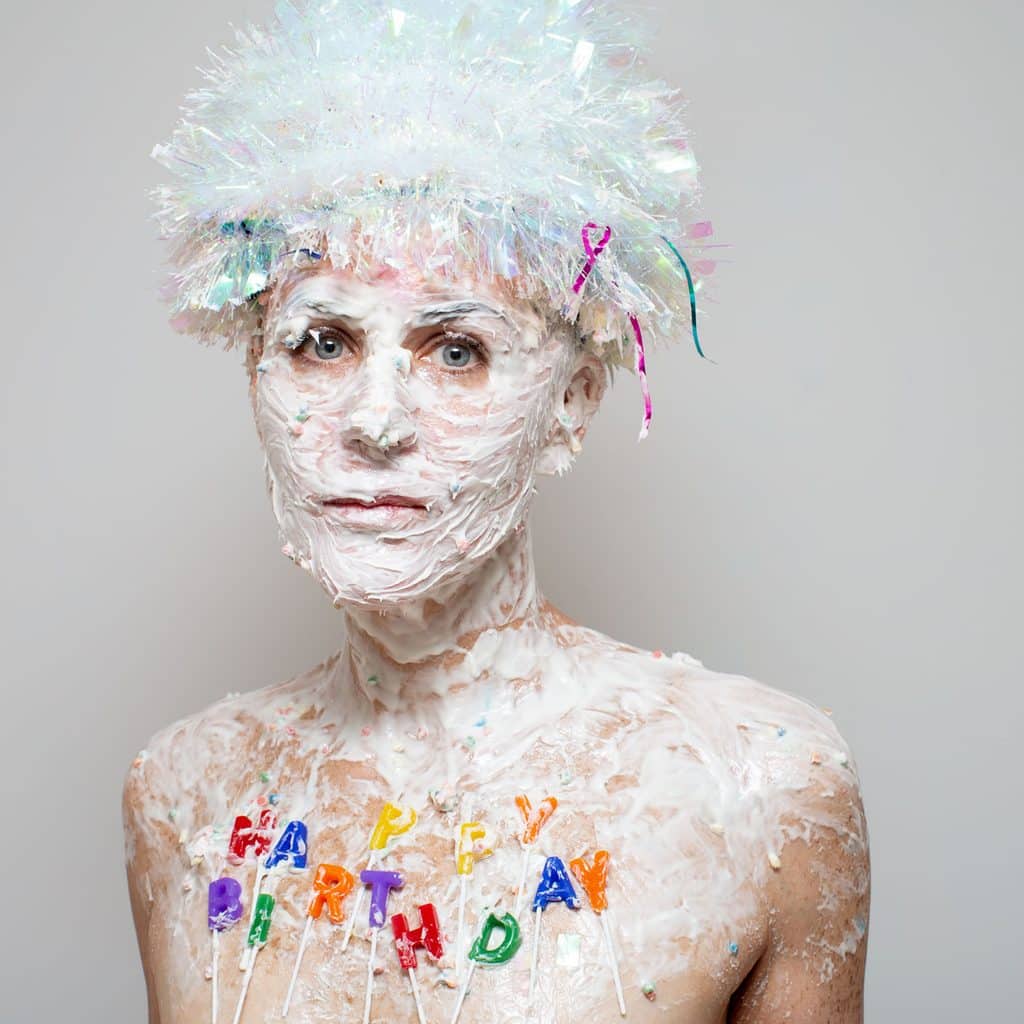
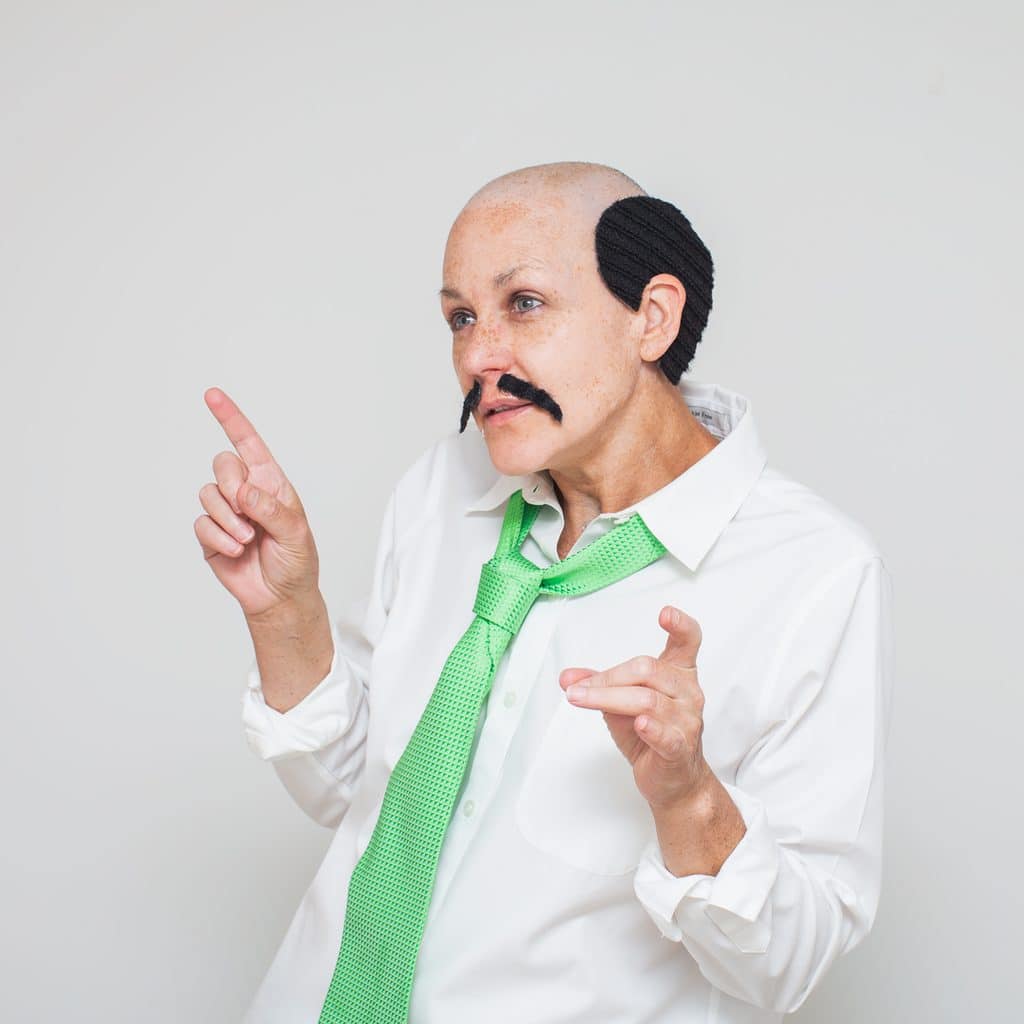
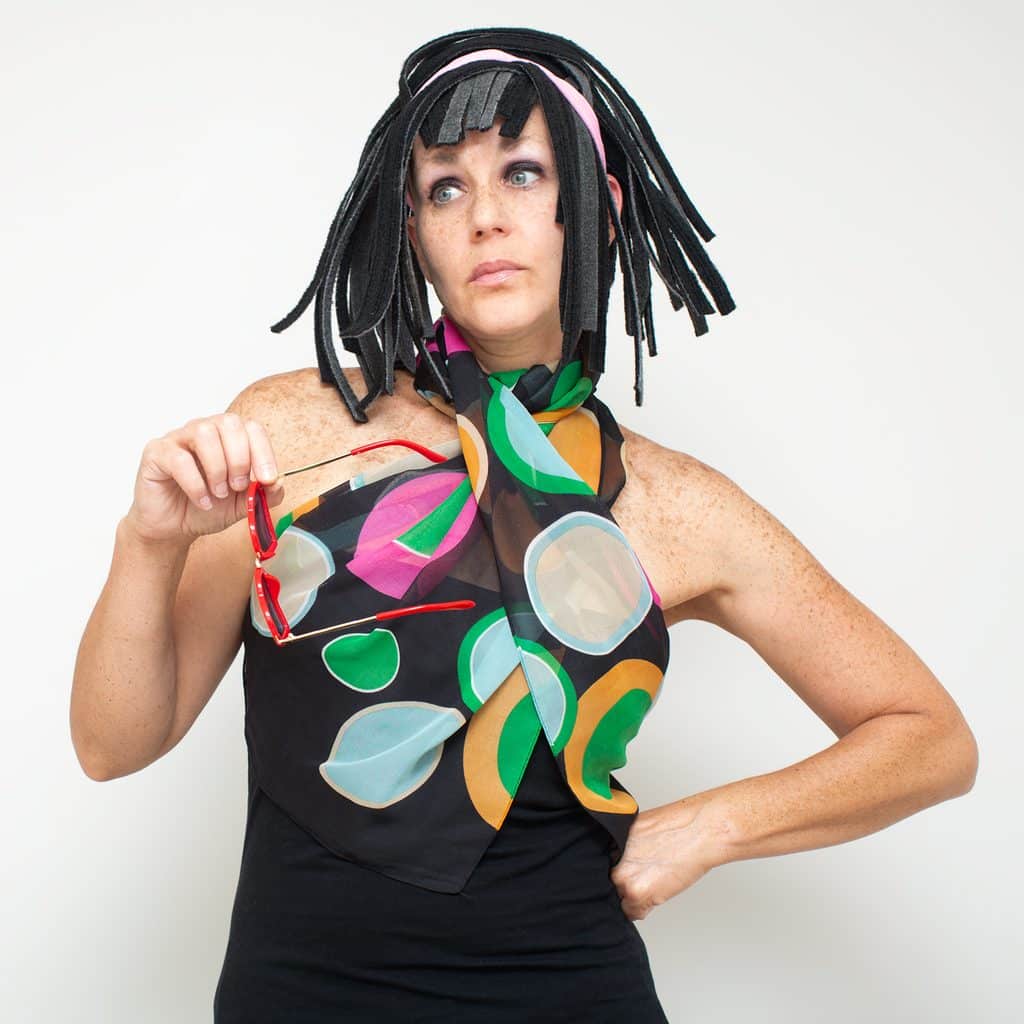
I had always been an artist, but during treatment, I began thinking about creativity differently. When I lost my hair, it took me about a month before I could really look at myself in the mirror. At first, it was frightening. Then I became fascinated by it. I started taking self-portraits and eventually, I wondered what I could put on my head to replace the hair that wasn’t there anymore. That question became an art project.
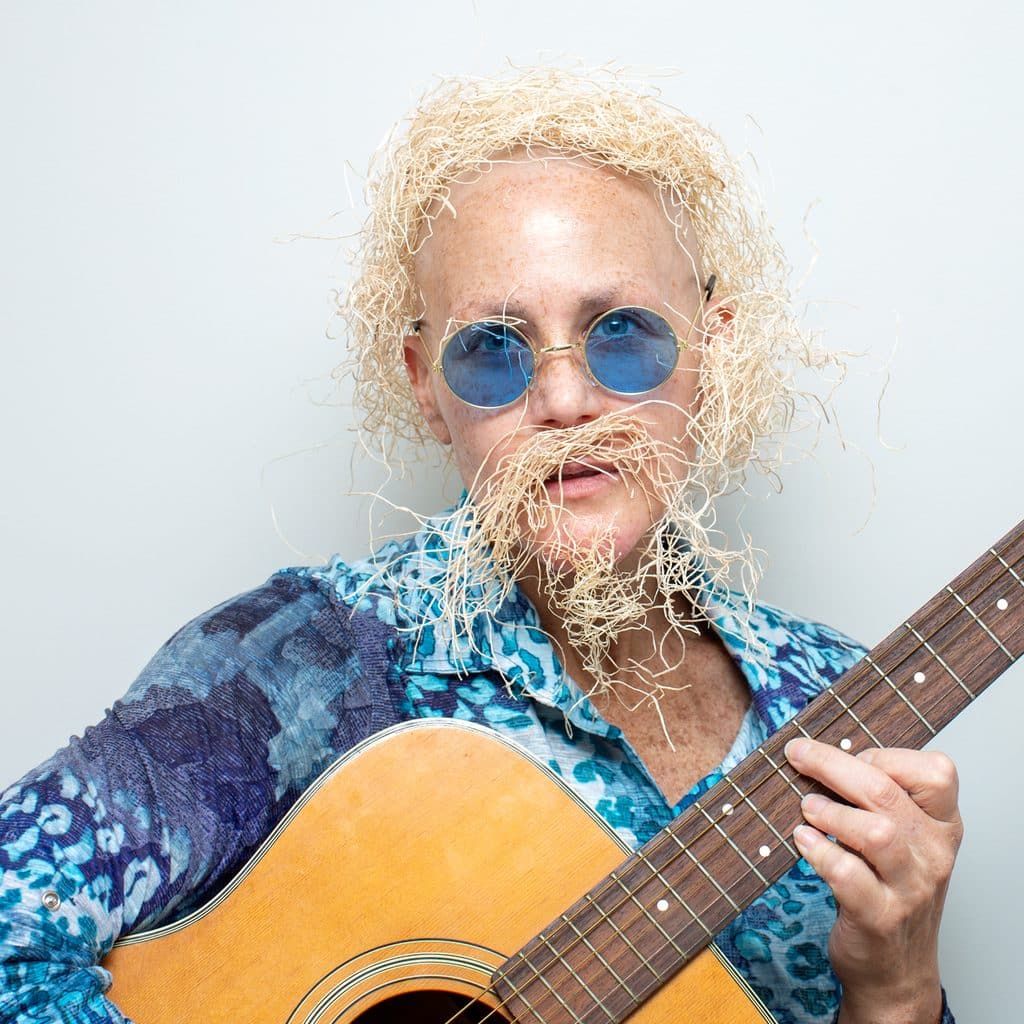
I began asking people to make things for me that I could wear on my head. Some people created entire wigs, while others sent me materials that I could turn into something myself.
At first, most of the people participating were friends and people I knew. But eventually, complete strangers began sending me things. People I had never met—and probably never will—would take the time to create something and send it to me. I ended up with nearly 100 different pieces.
My husband helped me photograph them. I would come up with a character and a look, find clothes at thrift stores to go with it, and we would create the photographs together. It became something completely separate from cancer. It gave me something else to concentrate on. It gave me something to talk to people about. Most importantly, it gave me a sense of empowerment at a time when I didn’t feel very empowered.
We continued the project for about a year. People would respond to the photographs, and then I would find other people who wanted to participate. It became a community.
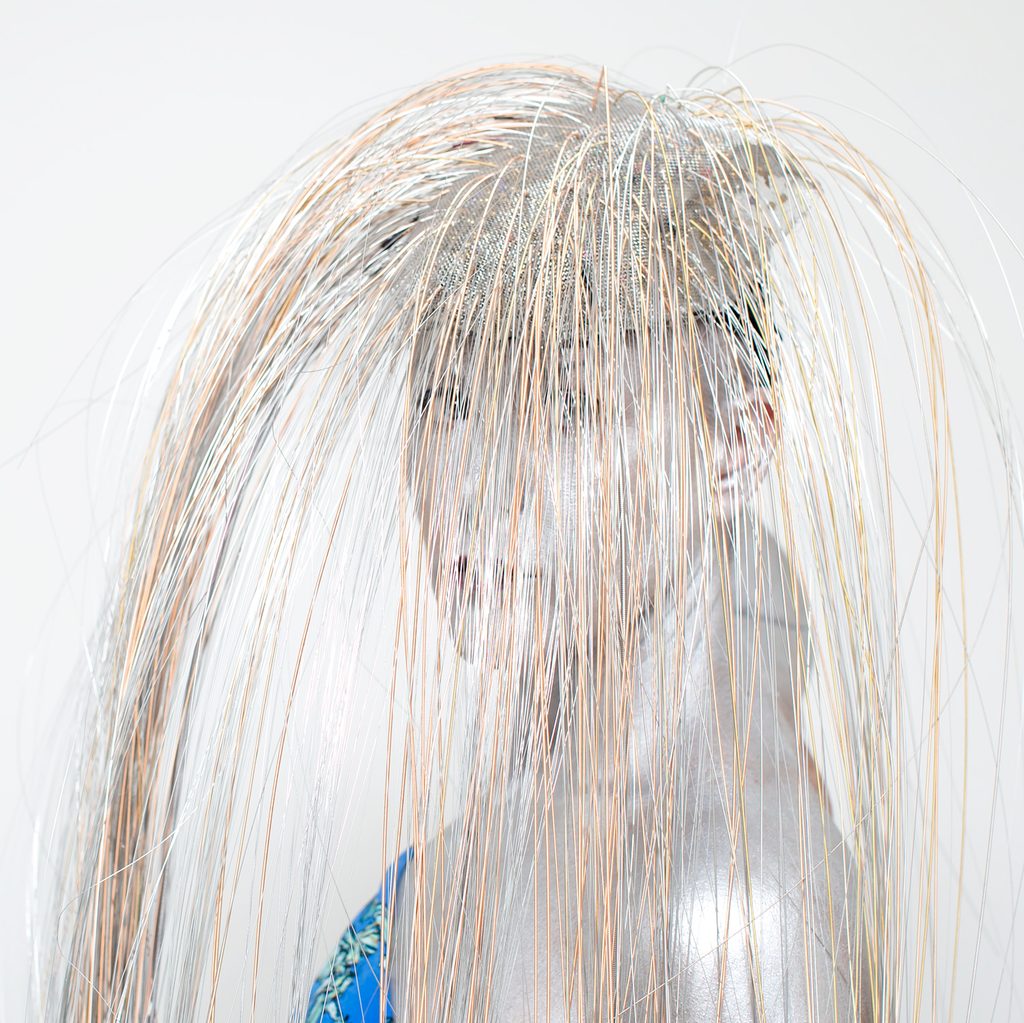
One of my favorite pieces came from a friend in Kentucky who is an artist and guitarist. He and his wife used strings from old musical instruments, including a mandolin, to create something for me. It was completely unexpected and bizarre—and one of my favorite photographs came from it. The project started with something that had frightened me: losing my hair. But it became something joyful.
During treatment, I spent a lot of time in infusion rooms surrounded by people who were also sick. I remember looking around and thinking about how unhappy so many people seemed. I wasn’t happy either, but I felt a strong desire to connect with people and find some way to make the experience feel different.
I believe that expressive activities can help with that.
You don’t have to be an artist. You can do anything that allows you to focus your energy on something that brings you joy. Cancer can become incredibly consuming. If you can find something that lets you go somewhere else for a while, I think that can be incredibly important
When I finished treatment, I had to learn how to live without cancer being the center of my life. That wasn’t easy. I went through periods of isolation because I didn’t feel like I had anyone I could really connect with. Eventually, I started reaching out. I went to support groups and participated in cancer-related events. I talked to other people who had experienced cancer, and I found that community was very important for me.
I realized that survivorship is different for everyone. What works for me may not work for someone else. There are common experiences, but there is no single way to move forward after cancer. For me, moving forward has meant figuring out my identity again.
I eventually returned to school, finished my master’s degree, and wrote a book called “Can You Make Hair for Me”. Now, I’m pursuing a PhD in aesthetics, philosophy and critical theory, a program designed for artists with advanced degrees. In some ways, the program became another form of diversion. It gave me something to concentrate on and something that was completely separate from cancer. It also allowed me to explore being an artist in a deeper way.
I sometimes think that if I hadn’t entered the PhD program, I might have wanted to become an art therapist. Going through cancer made me realize how important expressive activities can be for people.
I don’t think my life will ever be exactly what it was before lymphoma. But I feel very blessed to be here. I know people who didn’t survive, and I know that I was fortunate to have access to the care I needed. I was fortunate to have my husband, friends, and a community of people who helped me when I couldn’t help myself. That’s one of the reasons I decided to share my story.
I’ve spoken on podcasts, taught workshops at colleges, and talked with other cancer survivors. I’ve also worked with children on projects exploring hair and identity. When I talk to people now, I hope that I’m giving them a place where they can talk about what they’re experiencing without judgment.
I’ve learned that there are things about cancer that you can’t control. But I’ve also learned that there are ways to find moments of joy, connection and expression in the middle of something incredibly difficult. For me, that was art. For someone else, it might be gardening, cooking, music, exercise, or something completely different. The important thing is finding something that reminds you that you are still a person outside of cancer.
I lost a lot during my experience with lymphoma, including a sense of who I was. But I also found parts of myself that I didn’t know were there.
I’m still figuring out who I am.
And I think that’s okay.