
Chris, T-Cell Lymphoma
Chris, T-Cell Lymphoma
When I was seventeen years old, I heard the words that no one ever expects to hear: “You have cancer.” At that age, I wasn’t even sure where I wanted to go to college or what I wanted to do with my life. And yet a doctor sat across from me and told me that I might only have six months to live.
I was shocked. I was scared. And I was confused. Like everyone who receives a cancer diagnosis, I felt a very acute disbelief…I couldn’t understand how cancer could happen to me.
My parents were hippies in the truest sense of the word. They believed, as Hippocrates famously said: “Let food be thy medicine and medicine be thy food”. We grew our own vegetables, shopped at local farms, and prioritized organic produce before “organic” was even a common label in grocery stores.
In addition to eating a healthy diet, I also lived a very healthy, active lifestyle as a teenager. I played organized sports like running track, wrestling, and playing tennis in school. I also spent countless hours helping my parents transform our modest quarter-acre lot into a thriving urban farm. My “workouts” weren’t just at practice; they were in our backyard, digging ditches, hauling dirt, irrigating rows of vegetables, tilling the soil, and building garden beds.
There was always something to be done. In the fall, we picked apples and pressed them into cider. We spent weekends with older Italian friends and relatives, learning how to make wine. My parents never really let us rest as there was always a project, always a way to contribute. And they raised us to believe that work was love made visible.
It was labor-intensive, but it fed our family of four hungry teenagers and two parents nearly year-round. Looking back, that lifestyle was a crash course in hard work, endurance, and the connection between food and health.
So when a doctor told me that I had T-cell lymphoma, a disease more commonly diagnosed in people nearly four decades older than me, it didn’t make sense to me. I thought I was doing everything right to stay healthy.
I learned an important lesson very early in life: cancer doesn’t play by rules. Cancer can happen to anyone. The doctor who delivered the news also gave me his prognosis. He told me that I probably had six months to live.
It’s surreal hearing something like that when you’re still a teenager. I was supposed to be figuring out which colleges to apply to, not what to do with the time I had left. But as it turns out, his prediction was wrong. I’m here today, 28 years later.
That experience taught me something profound. I realized that doctors are “practicing medicine.” While at first I was disappointed as I wanted answers, it also helped me understand that human bodies are unimaginably complex, and no one has all the answers. Prognoses are educated guesses, not certainties. That realization gave me hope then, and it still gives me hope today because if medicine is being practiced, then there is always room for progress.
Once the shock wore off, I focused on what I could control. I wanted to give my body every possible tool to fight the cancer and recover from treatment. Thankfully, I didn’t need chemotherapy, but I did undergo radiation. At the same time, I was living what felt like three lives at once:
- I was a full-time college student, taking part in a “Running Start” program instead of finishing high school traditionally.
- I was working full-time in retail sales to support myself.
- And I was commuting about an hour each way between my home in Olympia, Washington, and school and work in Tacoma.
It was exhausting, but it was my reality.
To keep myself strong, I doubled down on my nutritious diet, leaning into nutrient-dense, whole foods. I went vegan, incorporated macrobiotic principles, and tried everything I could to reduce inflammation and help my body recover. Food wasn’t a cure, but it was a source of strength both physically and mentally.
And in a strange way, all those years of yard work and farm labor prepared me for that moment. I had grown up learning not to shy away from long days, from exhaustion, from physical strain. My parents had taught me that hard work wasn’t a punishment, it was a gift, a form of love. That ethic gave me the grit I needed to push through radiation, college, and full-time work all at once.
Even though I survived, cancer has never really left me.
Every time I feel a strange bump under my skin, or notice a swollen lymph node when I catch a cold, fear creeps back in. It’s like an echo of my seventeen-year-old self sitting in that doctor’s office. The truth is, I still live with the worry that cancer might return. That’s part of being a survivor. While you’re grateful for every healthy day, you also know how fragile health can be.
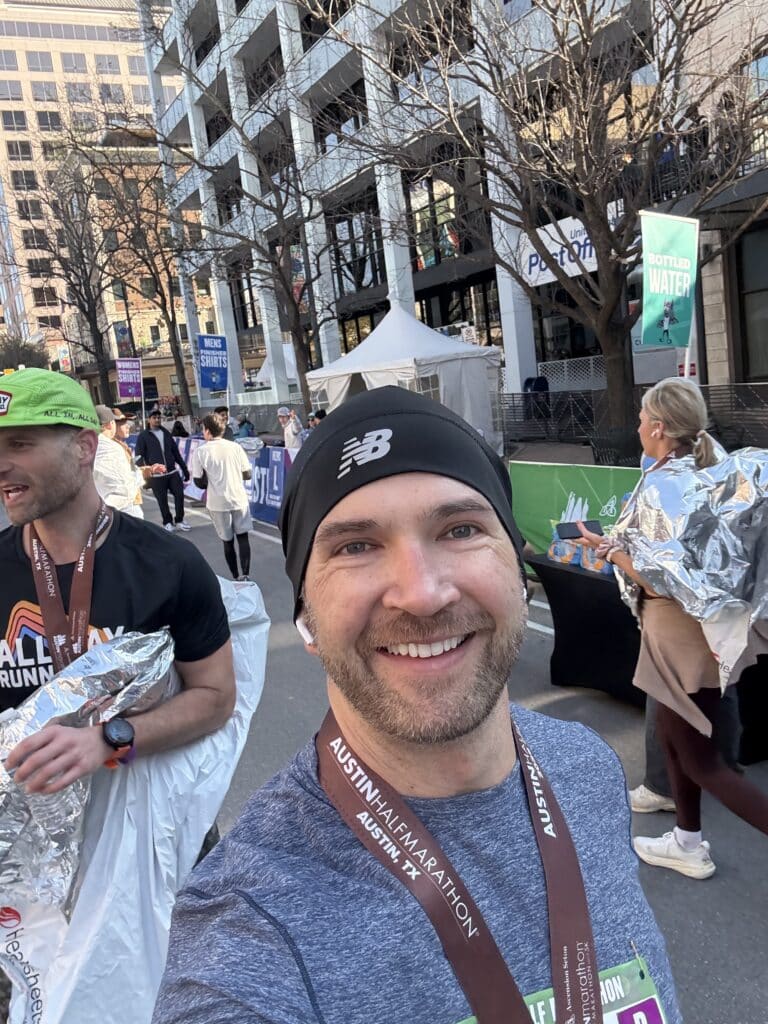
Because of that, I keep doing what I can to protect myself. I eat well. I exercise. And most importantly, I run. Running isn’t just physical activity for me, it’s my way of processing stress, of clearing my mind, of reminding myself that my body is capable of carrying me forward.
I’ve been lucky. I not only survived, but I’ve been able to thrive. I built a career. I built a family. I built a life that seventeen-year-old me never thought would be possible after hearing “six months to live.”
But not everyone is so lucky.
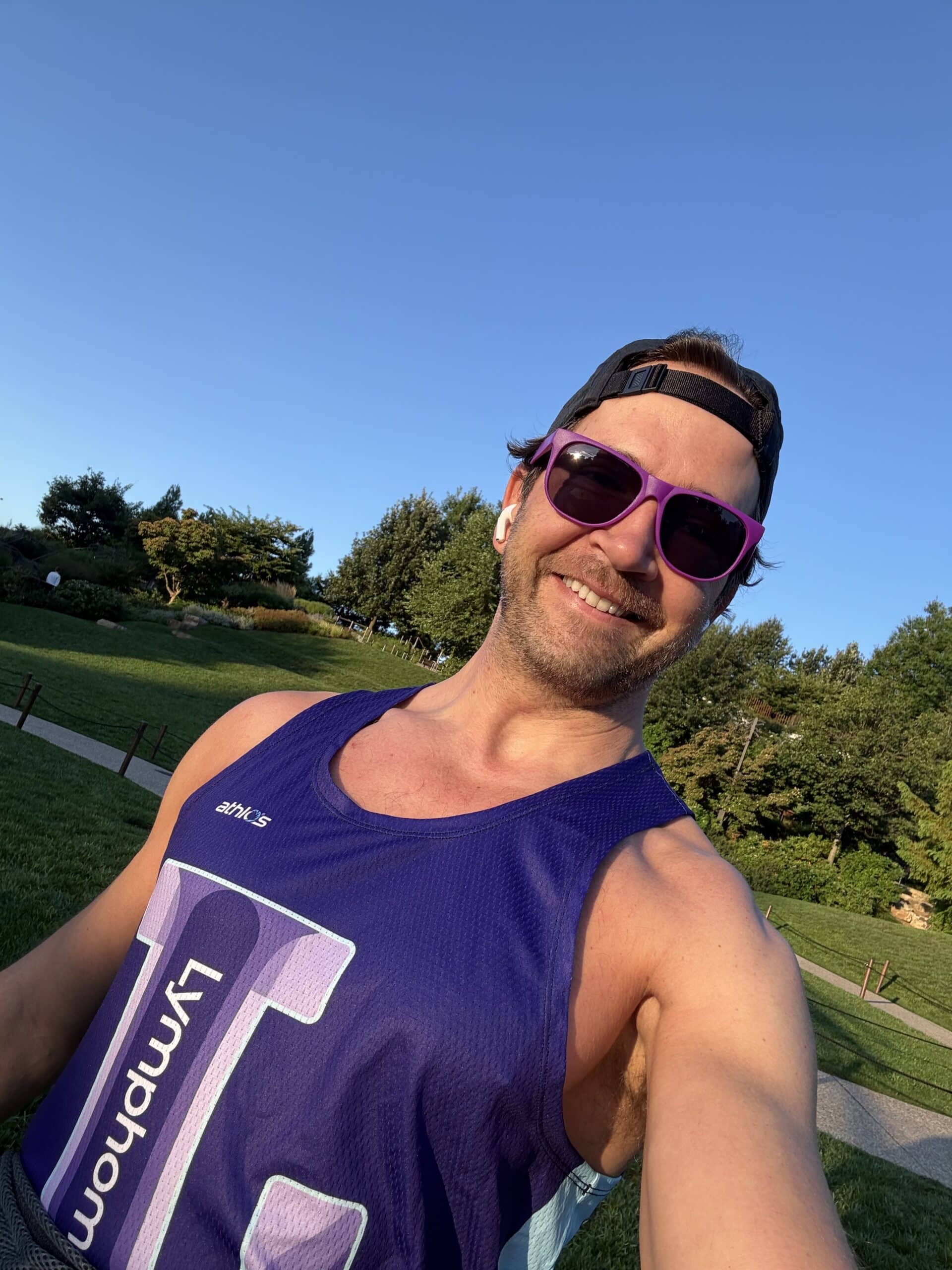
Some people diagnosed with lymphoma don’t have the same outcome that I did. Some families don’t get decades more with their loved ones. And that’s why I’m running the New York City Marathon to raise awareness and money to change that.
This won’t be my first marathon. Nearly 15 years ago, I trained for and completed my first one. It was exhausting, and at the finish line I swore I would stick to half marathons from then on. I’ve run several half marathons since and they’ve been my sweet spot.
But life has a way of calling us back to challenges. I recently moved to New York City and got engaged, and running is one of my favorite ways to explore new places. Step by step, block by block, I’ve come to see the city differently, to appreciate its energy and diversity on foot.
So now, I’m ready to take on a full marathon again with my fiancée and see all five boroughs. This time, it’s not just for me, but it’s for a cause that matters deeply. It’s for those still fighting, for those we’ve lost, and for the families who shoulder the weight of this disease.
I survived because medicine continues to evolve, because doctors continue to practice, and because people before me believed in funding research that made my treatment possible. Now I want to pay that forward.
And in many ways, this marathon feels like a continuation of the lessons I learned in my parents’ backyard. Just as I once dug ditches, tilled soil, and pressed apples late into the night, I’ll put in the miles, the sweat, and the discipline it takes to train. Work is love made visible—and for me, this work of running is a way of showing love to the lymphoma community.
The Lymphoma Research Foundation plays a critical role in advancing research, funding clinical trials, and supporting patients and families facing this disease. When I was diagnosed, treatment options were far more limited than they are today. Research has changed that. Progress has changed that.
And yet, there is still so much work to be done. Too many people still face the uncertainty I faced at seventeen. Too many families still hear the words “you have lymphoma” and are immediately afraid for their future in ways that nobody ever should be.
That’s why I’m asking for your support. Together, we can fuel the research that will bring better treatments, fewer side effects, and ultimately a cure.
When I run through the streets of New York, I’ll be carrying my own story with me. The fear of diagnosis, the fight through treatment, the resilience of recovery, and the constant shadow that still lingers. But I’ll also be carrying the stories of so many others who are in this fight today.
Hope is what carried me through at seventeen. Hope is what research delivers to every newly diagnosed patient. And hope is what your support can provide to someone who right now feels the same shock, fear, and confusion that I felt nearly three decades ago.
I survived because medicine continues to evolve, because doctors continue to practice, and because people before me believed in funding research that made my treatment possible. Now I want to pay that forward.
Thank you for supporting me, the Lymphoma Research Foundation, and most importantly, the patients and families whose futures depend on it. Together, we can turn stories of survival into stories of cures.
Please help me fight lymphoma by donating at https://giving.lymphoma.org/fundraiser/6202286.