

News
Where Science Meets Compassion: How Allison Rosenthal, DO, Is Rewriting the Story of Lymphoma Care – One Patient at a Time
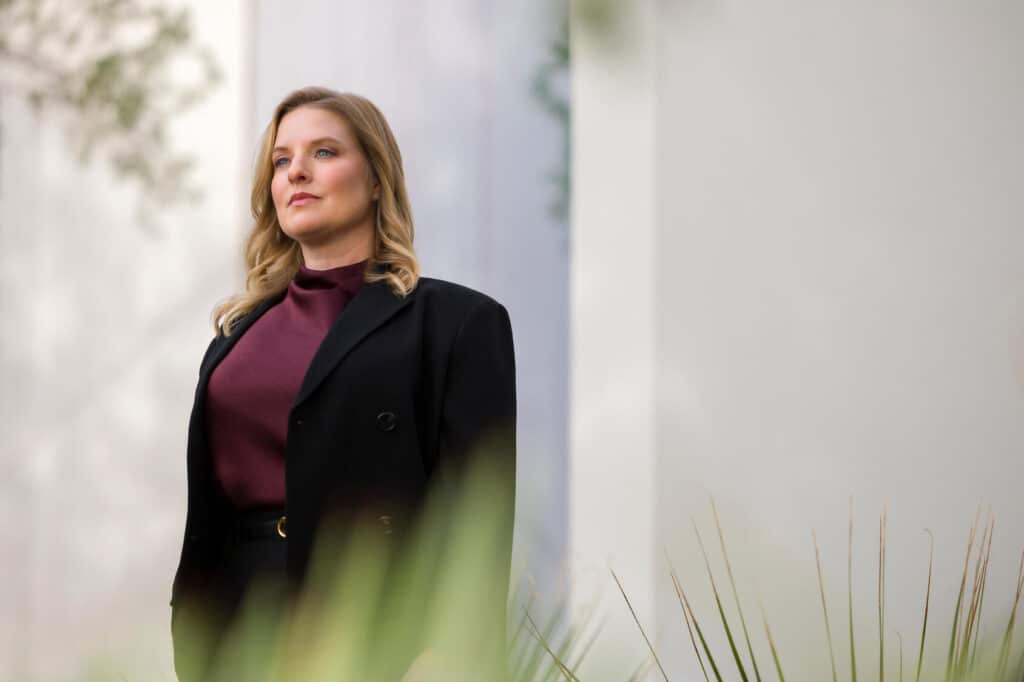
When Allison Rosenthal, DO, walks into a patient’s room, she brings with her more than medical expertise. She brings lived experience — a life marked by grit, reinvention, and an unwavering belief that people facing cancer deserve not only the right treatment but also the right kind of care.
A renowned lymphoma specialist at Mayo Clinic, Arizona, Dr. Rosenthal is powered by the institution’s primary value: “The needs of the patient come first.” For many physicians, that phrase is a mantra. For Rosenthal, it’s autobiographical. Rosenthal is a survivor herself of acute promyelocytic leukemia.
She understands better than most how a cancer diagnosis can change the course of a person’s life. It is the unspoken engine behind everything she does now. Her story is not only one of medical achievement but also of perspective — her work is reshaping the future of lymphoma research, challenging outdated norms, and offering a new model of care that honors both science and humanity.
From Gymnastics to Medicine: The First Leap
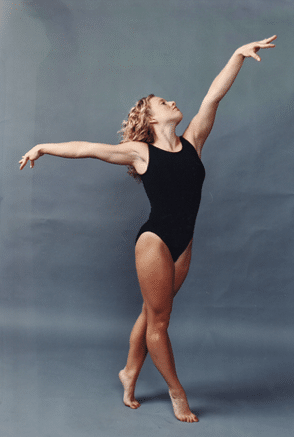
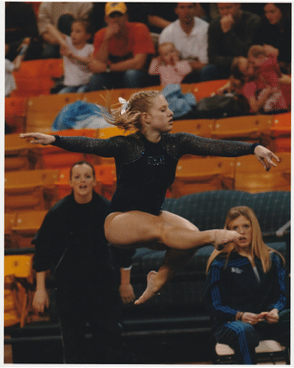
Long before she became a lymphoma specialist, Rosenthal’s world revolved around uneven bars and balance beams. Growing up in a suburb of Chicago as the eldest of three sisters, she was a competitive gymnast whose discipline and drive shaped her ambitions early.
“I was one of those kids who just knew what I wanted to do — I wanted to be a doctor,” she says.
Her road to medical school started with a full athletic scholarship to Utah State University for undergrad. She attended medical school at Midwestern University in Arizona, with a plan to pursue orthopedic surgery — a natural extension of her years being cared for by orthopedists who, in her words, “pieced me back together time and time again.”
But life doesn’t always stick the landing you planned for.
Halfway through her second year of medical school, she was diagnosed with acute promyelocytic leukemia. She took a year off from school to receive the more intensive part of her treatment, then returned determined to resume her surgical plans.
“My oncologist kept planting the seed: ‘Maybe you’re meant to do something else,’” she recalls. “I ignored him — at first.”
Then, when she didn’t match into orthopedic surgery, she decided the universe maybe had a different plan for her.
“It was a panic moment for me because I had spent all of my primary care rotations doing sports medicine, but I decided that I was supposed to do something different with my life.”
She went on to complete her internal medicine residency at Saint Joseph’s Hospital and then her fellowship at Mayo Clinic, Arizona, ultimately earning a coveted Mayo Clinic Scholar designation that allowed advanced specialty training at Mayo Clinic, Rochester, and Memorial Sloan Kettering Cancer Center.
The Many Lives Within Lymphoma
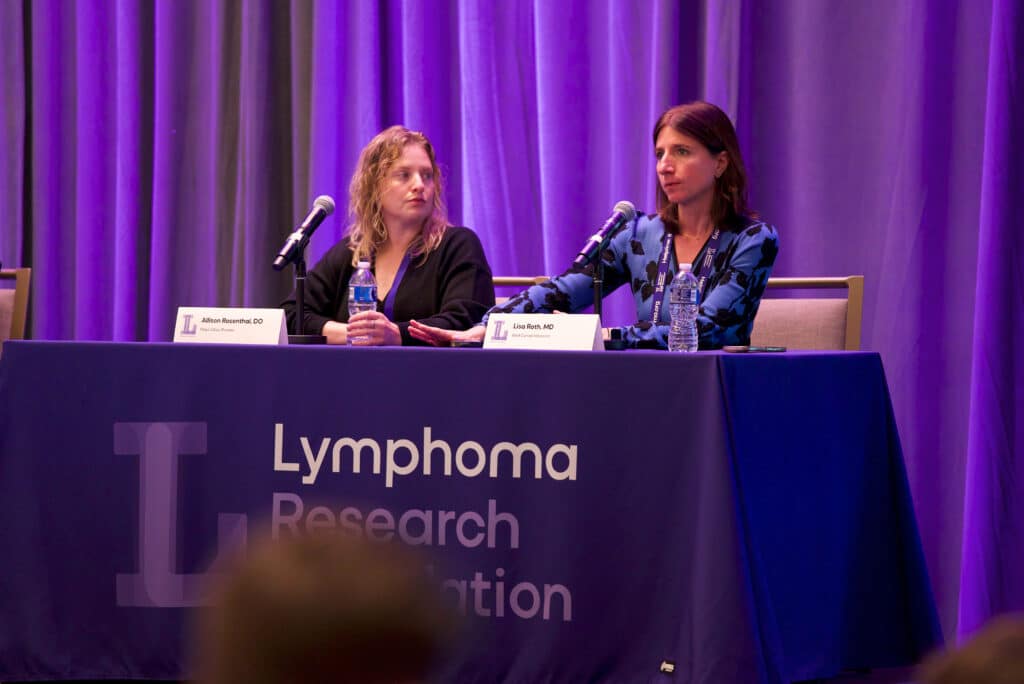
Lymphoma appealed to Rosenthal because it offered everything she loved about medicine — complexity, continuity, and the chance to think deeply and creatively. Lymphoma wasn’t just a good fit for Rosenthal — it was a revelation.
“There’s so much variety. I care for patients aged 18 to 100 navigating several different subtypes of lymphoma,” she says. “Some patients are acutely ill, and some are in need of long-term care. But all in all, there’s just so much opportunity to make things better.”
Through her work, she realized lymphoma wasn’t one disease but a landscape — diverse, challenging, and rich with unanswered questions.
“I take care of my patients the way I want to be taken care of. Or the way I’d care for a family member.”
Whole-person care isn’t a slogan for her — it’s an imperative. She gently dismisses the notion that suffering in silence is noble.
“You don’t get bonus points for not telling me you feel terrible,” she tells patients. “If I don’t know, I can’t help.”
She wants to know what her patients do for joy, what matters to them, what dreams and milestones are on hold while they navigate a diagnosis. She helps her patients live a life with lymphoma, not around it.
Sometimes, she even shares pieces of her own story — when it will help a patient feel less alone.
Adolescent and Young Adult Care: A Passion Project
The aspect of Dr. Rosenthal’s work that fuels her greatest passion is her research and care for adolescent and young adult (AYA) cancer patients. A passion born directly from her own experience.
“Technically, my care was excellent,” she says. “But once I was in remission, after a long two-and-a-half years of therapy, everyone just expected I was fine — but emotionally, how could anyone in their 20s facing a cancer diagnosis just move on and be fine?”
Adolescents and young adults (AYA) are defined by the NIH as patients aged 15 to 39 years. Every year, nearly 70,000 AYAs in the U.S. are diagnosed with cancer, and lymphomas are responsible for nearly 1 in 5 cancer diagnoses among them.
Dr. Rosenthal knows firsthand that a cancer diagnosis can disrupt and derail myriad milestones, including school, career building, financial independence, relationships, dating, fertility, identity, and more.
“If you’re 24 and bald, walking back into the dating world is no small thing,” she says.
Dr. Rosenthal recognizes that AYAs present unique medical and psychosocial challenges, and there is much work to be done in identifying research aps, optimizing outcomes, and supporting young patients from diagnosis through survivorship.
“We still do too much extrapolating from data in children or older adults. There’s a huge gap in true age-appropriate care,” she says. “It’s not good enough. And we can fix that.”
After seven years of persistent advocacy, Rosenthal helped establish a formal AYA cancer program at her own institution — a program she now co-leads across all Mayo sites. She hopes fewer young people will fall through the cracks the way she once did.
Research That Starts in the Clinic
Unlike some researchers who begin with a hypothesis, Dr. Rosenthal begins with people.
“The things I’m interested in doing from a research point of view are related to the patients I’m seeing in my clinic,” she explains. Her work isn’t just about publishing papers — it’s about tackling the real-world challenges she encounters every day.
Her research spans a wide range of topics: long-term outcomes and survivorship, the challenge of ensuring every patient can be cured, care delivery, and, of course, adolescents and young adults with lymphoma. She also brings unique expertise in cutaneous lymphomas, a rare form of the disease. This area has become a personal
interest, and she hopes to develop it into a focus of her research in the future.
Dr. Rosenthal is candid about the limits of current understanding:
“Most people don’t know why they have lymphoma. And we don’t either — not yet. We need more preventive research. We need more data. We need more answers.”
That’s why she emphasizes the importance of patient participation in clinical research — whether through trials or surveys that inform the design of future studies.
“Research isn’t just about treatment,” she says. “It’s about understanding the human experience of lymphoma.”
For Rosenthal, the most exciting advances in lymphoma research lie beyond traditional chemotherapy.
“For years, we have treated patients with chemotherapy, but chemo is rough and unintelligent, and we can do better,” she says bluntly. “The future is targeted therapies, treatments based on biology, and reducing toxicity wherever we can.”
A Professional Home With the Lymphoma Research Foundation
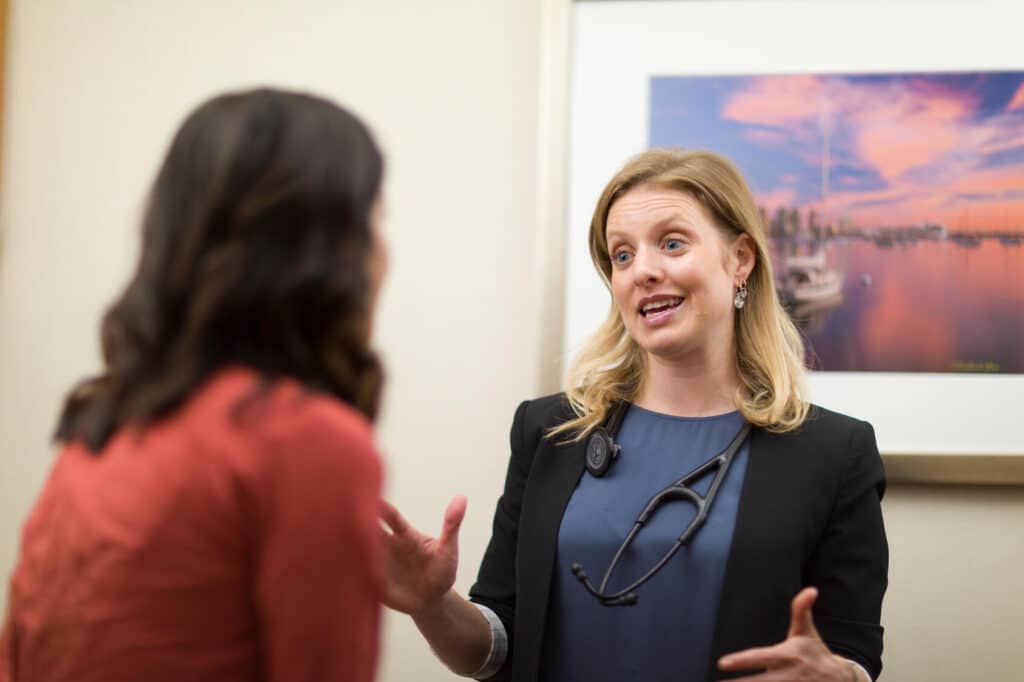
Dr. Rosenthal’s relationship with the Lymphoma Research Foundation began with the Foundation’s Lymphoma Scientific Research Mentoring Program (LSRMP) — an experience she describes as “career-launching.”
Highlighting its commitment to young investigators, the Foundation launched the LSRMP in 2014. Program participants, known as Foundation Scholars, attend and participate in an intensive week-long workshop in which they learn from and network with the Foundation’s renowned Scientific Advisory Board members and world-leading lymphoma experts. Over the course of the two-year program, Scholars gain the skills needed to successfully design and administer clinical, translational, and/or laboratory research studies; apply for future grant funding; and establish themselves as independent researchers.
The LSRMP workshop connected her with mentors and cohort members with whom she still collaborates a decade later.
“We still email and text,” she said. “Just this morning, someone from my cohort reached out about a project. These are lifelong relationships.”
Now she serves as faculty for the program, helping the next generation of early-career investigators navigate opportunities that are best for them.
“My career growth has been a bit non-traditional,” she says. “I have always focused on my strengths, and when I speak as faculty for LSRMP, I get to talk about my experience, some of the things I did, and how I learned how to say no to opportunities that were serving someone else and not serving me and my goals.” “The Lymphoma Research Foundation invests in people,” she says. “And people are what move this field forward.”
For Dr. Rosenthal, the Lymphoma Research Foundation represents the epicenter of community, momentum, and shared purpose. She says the Foundation is “integral” to the lymphoma community — both by funding lymphoma research and advancing cures and by providing patient education and support.
“Whether it’s providing grants and funding to early-career scientists; providing resources, education, and support to lymphoma patients and their loved ones; or building a sense of community among all of us, the Foundation is at the heart of it all.”
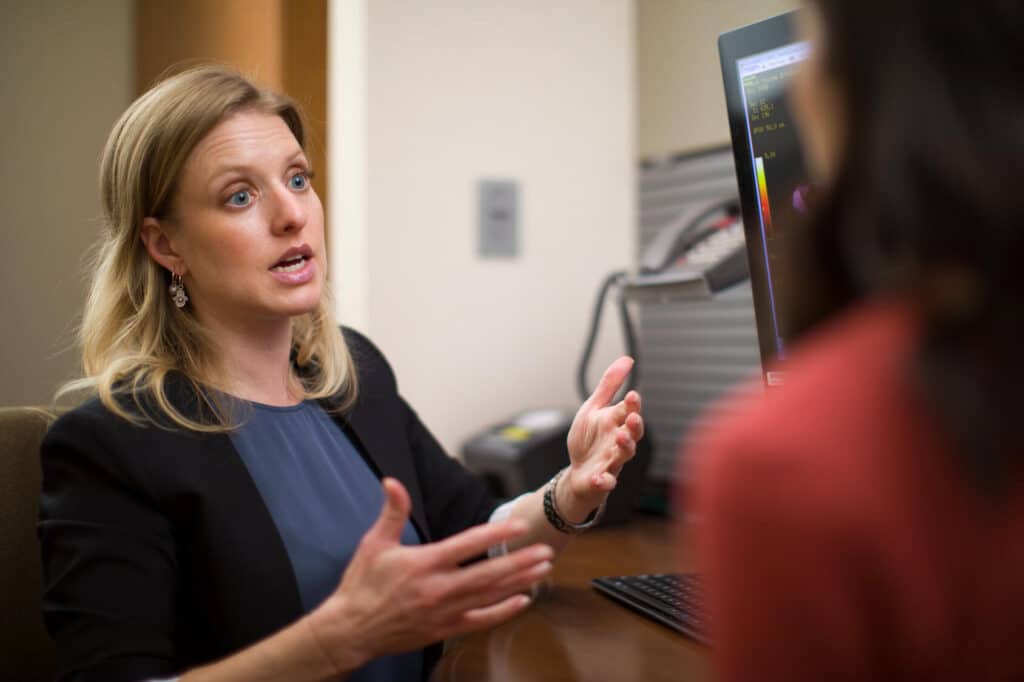
Moments Worth Celebrating
When asked about the highlights of her career, Rosenthal doesn’t reference awards or titles. Instead, she talks about the people and moments that have shaped her along the way.
“The highlights of my career are the milestones my patients celebrate,” she says. “It is so cool that after everything they have been through and faced, their lives move forward, past lymphoma, and I get to share in that with them.”
The stories she carries span generations — from young adults returning to college to a 92-year-old patient celebrating his 75th wedding anniversary, to patients welcoming children into the world.
“Just recently we said it was ‘baby palooza,’” she says, chuckling. “We had so many AYA patients become pregnant after treatment, and I kept a list of all of them and sent them onesies that said tiny blessings.”
This is the heart of her work — not the accolades, the programs, the publications, or even the breakthroughs. It’s human connection. The belief that medicine, at its best, is personal.
“I tell my patients, ‘Let me do the worrying,’” she says. “And I mean it. Because someone once did that for me.”
Her life is proof that even the most unexpected detours can shape a calling. And her work is shaping a future where every patient has someone in their corner who truly understands.
Read More Articles from Pulse
Pulse is a publication of the Lymphoma Research Foundation, providing the latest updates on the Foundation and its focus on lymphoma and chronic lymphocytic leukemia (CLL) research, awareness, and education