Three Generations. One Mission. A Legacy That Will Last.
Home » News » Three Generations. One Mission. A Legacy That Will Last.
News
Home » News » Three Generations. One Mission. A Legacy That Will Last.
Three Generations. One Mission. A Legacy That Will Last.
Twenty years ago, Michael Werner received news that would forever change his family’s life.
Diagnosed with follicular lymphoma (FL) and initially given a devastating prognosis, Michael was told he might have only four years to live. The diagnosis arrived in stages. First came the shock of learning he had lymphoma. Then, six months later, a genetic test suggested his disease was far more aggressive than originally believed, dramatically altering his outlook. For many, that news would have been paralyzing.
For Michael, it became a challenge to solve.
Rather than accepting the prognosis as the final word, Michael immersed himself in research. He met with leading lymphoma specialists across the United States and Europe, studied emerging therapies, and searched tirelessly for the treatment approach that would give him the greatest chance at a long, healthy life. Along the way, he discovered the Lymphoma Research Foundation, an organization that provided not only trusted education but also access to physicians, researchers, and a community that would ultimately help shape his future.
It also sparked something much bigger than a patient’s journey.
It ignited a family legacy.
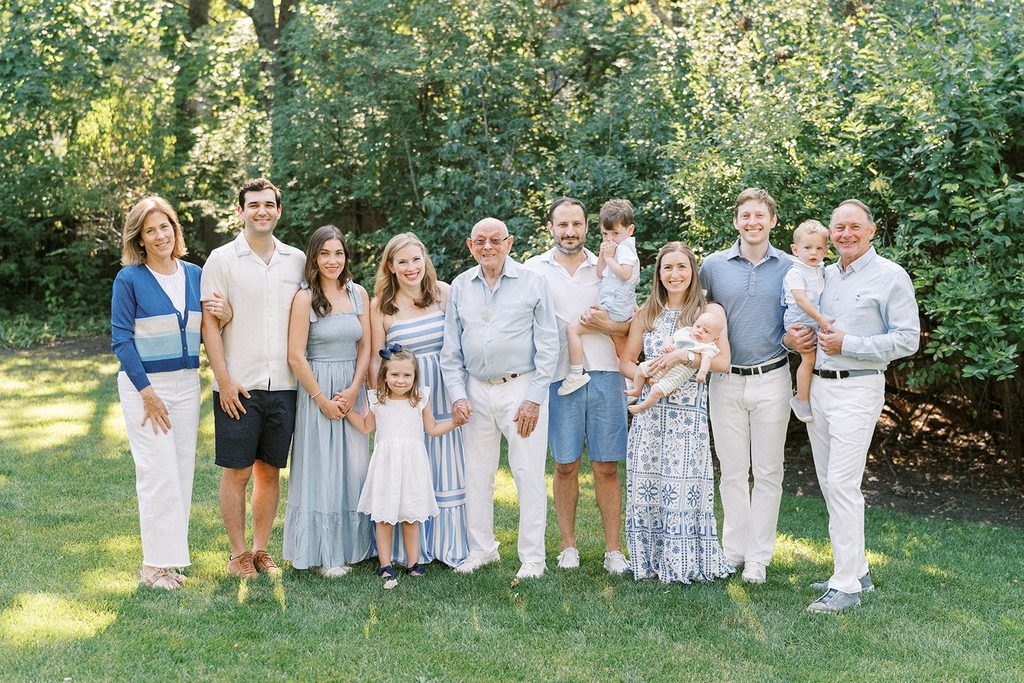
Together, the Werner family represents what can happen when gratitude becomes action—and when one family’s experience creates lasting change for countless others.
From Patient to Leader
For Michael Werner, surviving lymphoma was never the end of the story. It was the beginning of a lifelong commitment to ensuring others would have the same opportunity.
When Michael was diagnosed, his entire family rallied around him. His father, an engineer with a lifelong passion for science, dove into medical literature alongside Michael and his wife, Laura, determined to understand every possible treatment option.
Michael approached his diagnosis the same way he had approached building successful companies throughout his career, with relentless curiosity and an unwavering determination to solve difficult problems.
Over the next 18 months, he traveled extensively, consulting many of the world’s foremost lymphoma experts. He evaluated clinical trials, compared treatment strategies, and even designed what he believed would be the ideal treatment sequence for his disease. Although he ultimately couldn’t pursue that exact protocol, the education and connections he gained through the Foundation helped him identify a clinical trial that would prove life-changing.
“When I think about why I’m a survivor,” he says, “I am here for one really simple reason—because of the Lymphoma Research Foundation.”
Rather than stepping away after treatment, Michael chose to give back.
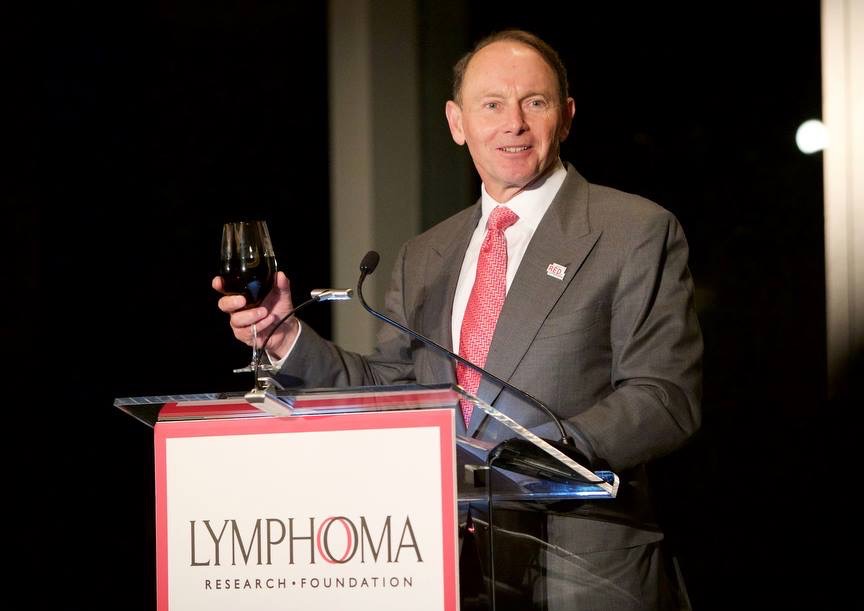
He joined the Lymphoma Research Foundation’s Board of Directors in 2007, ultimately serving as vice chair and then chair of the board from 2016 through 2020. Throughout nearly two decades of leadership, he helped strengthen governance, sharpen long-term strategy, expand fundraising, recruit exceptional board leadership, and deepen relationships throughout the scientific, medical, and philanthropic communities.
His goal was never simply to grow the organization. It was to help the Foundation reach its full potential so it could serve more patients, accelerate more research, and ultimately save more lives.
His impact extended well beyond the boardroom.
Whenever Michael heard someone had been diagnosed with lymphoma, he’d ask to speak with them personally.
“I know how scary this is,” he would tell them. “Let me walk you through it.”
Over the years, he has become a trusted mentor to countless newly diagnosed patients.
He often returns to a favorite quote from Warren Buffett: “Someone is sitting in the shade today because someone planted a tree a long time ago.”
For Michael, every patient benefiting from today’s breakthroughs is living proof of that idea.
For his daughter, Margot, watching those conversations became one of the defining memories of her childhood.
“When I think about my dad and his lymphoma journey,” she says, “I think about how every time he heard someone had been diagnosed, he’d ask to speak with them. He wanted them to know they weren’t alone and that they were going to be okay.”
Twenty years after a diagnosis that once came with a devastating prognosis, Michael’s life stands as proof of what’s possible through scientific progress, expert care, and the power of community. Every anniversary is celebrated by the Werner family—not simply because of another cancer-free year but because every milestone represents memories they might never have had.
Building More Than a Foundation
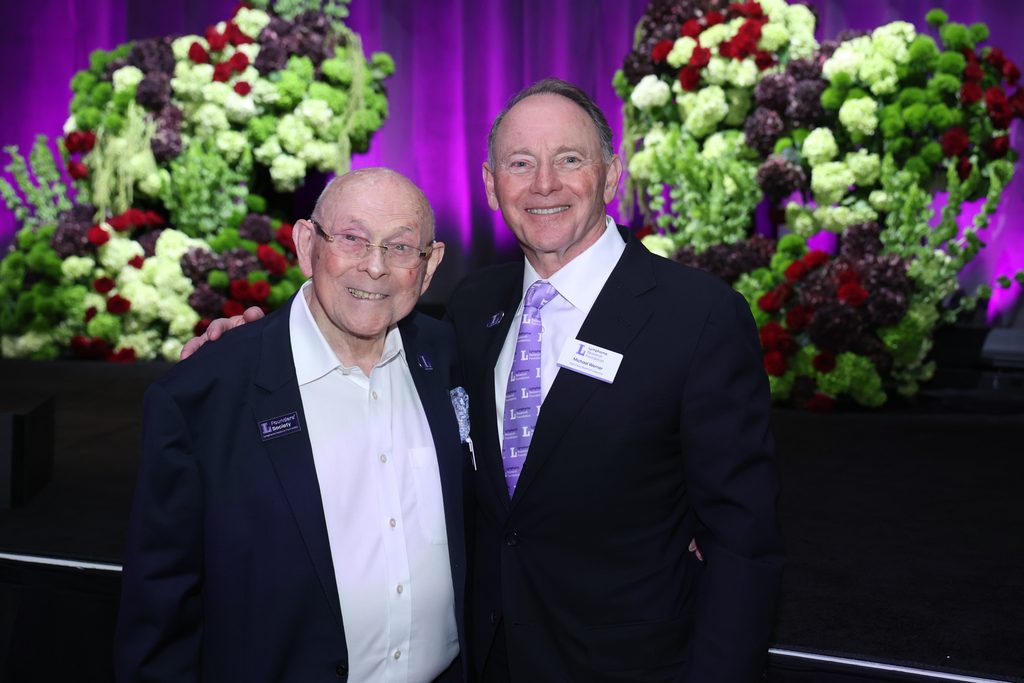
Recognizing his father’s deep experience leading nonprofit organizations and building successful fundraising programs, Michael made a simple request.
“Dad,” he said, “please come help.”
Bob answered without hesitation.
For Michael, that invitation represented more than recruiting another volunteer. It was an opportunity to build something meaningful alongside the person who had shaped his understanding of leadership, service, and philanthropy from the very beginning.
Growing up, Michael often heard his father repeat a simple principle: “Leaders lead.”
It wasn’t just a saying. It was how Bob lived.
If you have something, it’s important to share whatever you have with others.
Long before philanthropy became a significant part of the Werner family’s story, Bob believed that if you could help— even in small ways—you had a responsibility to do so. Michael remembers watching his father support hundreds of charitable organizations each year. Some gifts were substantial. Others were only a few dollars. The amount never mattered.
What mattered was showing up whenever there was a need.
“It was just his mentality,” Michael recalls. “If you have something, it’s important to share whatever you have with others.”
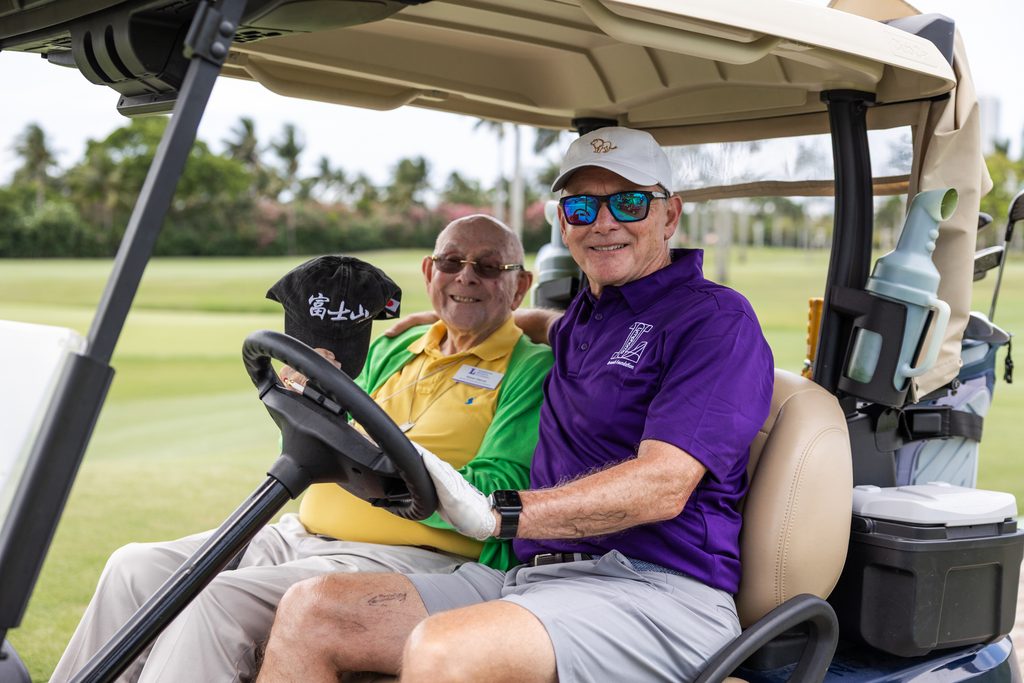
After retiring from the family’s business, Bob devoted himself full-time to philanthropy. True to form, he approached nonprofit leadership with the same rigor he had brought to engineering and business. He immersed himself in fundraising strategy, governance, development systems, and nonprofit management, eventually serving on more than a dozen nonprofit boards and becoming a trusted mentor to executive directors across the country.
Over the years, Bob helped professionalize the Foundation’s development efforts, strengthen board governance, mentor staff leadership, and champion investments that transformed fundraising into a strategic engine for growth. He also played a pivotal role in establishing the Foundation’s planned giving program, recognizing early on that legacy gifts would provide lasting support for lymphoma research, patient education, and critical services.
He often describes fundraising using a single analogy.
“Fundraising puts gas in the car’s tank,” he says. “That
gas enables the entire organization to function at the highest level.”
For Bob, every improvement ultimately came back to one goal: giving researchers, physicians, patients, and caregivers the resources they needed to move closer to eliminating lymphoma.
For Michael, working alongside his father at the Foundation became one of the greatest gifts of the experience.
Having spent years together in the family business, the Foundation gave them another opportunity to build something together—this time with a mission that reached far beyond business.
When Michael served as Board Chair, Bob became his trusted sounding board.
“He’d never tell me what to do,” Michael says. “But he would help me think through how to approach a problem.”
Those conversations helped shape countless leadership decisions over the years and deepened a father-son partnership already rooted in mutual respect.
Growing Up With Hope
For Margot Werner, lymphoma has always been part of her family’s story.
She vividly remembers the evening her father came home with his diagnosis. She was just 8 years old.
“I remember swinging open the door after hockey practice,” she recalls. “My dad was usually this bubbly, smiley guy, and his face was just white.”
The family still went to the Chicago Blackhawks game that evening. They quietly shared french fries, unsure what the future would hold.
Those early memories remain vivid—not because of fear alone but because of what came afterward.
One particular memory from another Blackhawks game has stayed with Michael ever since. Shortly after his diagnosis, he stopped to speak with a friend about it during the game’s intermission. Trying to reassure him, Michael casually said, “I should be fine.”
As the conversation ended, young Margot tugged on his hockey jersey.
“Dad,” she said, “do you know what you said?”
“No,” he answered.
“You said you should be fine.”
Then she paused.
“You will be fine.”
Those four words profoundly changed something.
From that day forward, Michael consciously changed his language—and his mindset. Instead of speaking in terms of uncertainty, he committed himself completely to finding every possible path toward a cure, not only for himself but for others facing lymphoma.
Sometimes, the greatest perspective comes from the smallest voices.
Over the years, Margot watched her father attend Foundation conferences, connect newly diagnosed patients with resources, and devote countless hours to helping others navigate the uncertainty he had once faced himself. She also watched him surpass every expectation.
“He always says he’s not a survivor—he’s a thriver,” Margot says. “Every passing year we don’t take it for granted. We celebrate it.”
Carrying the Legacy Forward
As an adult, Margot began asking herself a simple question.
If lymphoma is one of the most common cancers among young adults, where were the young adults at the Foundation’s events?
That question led to action.
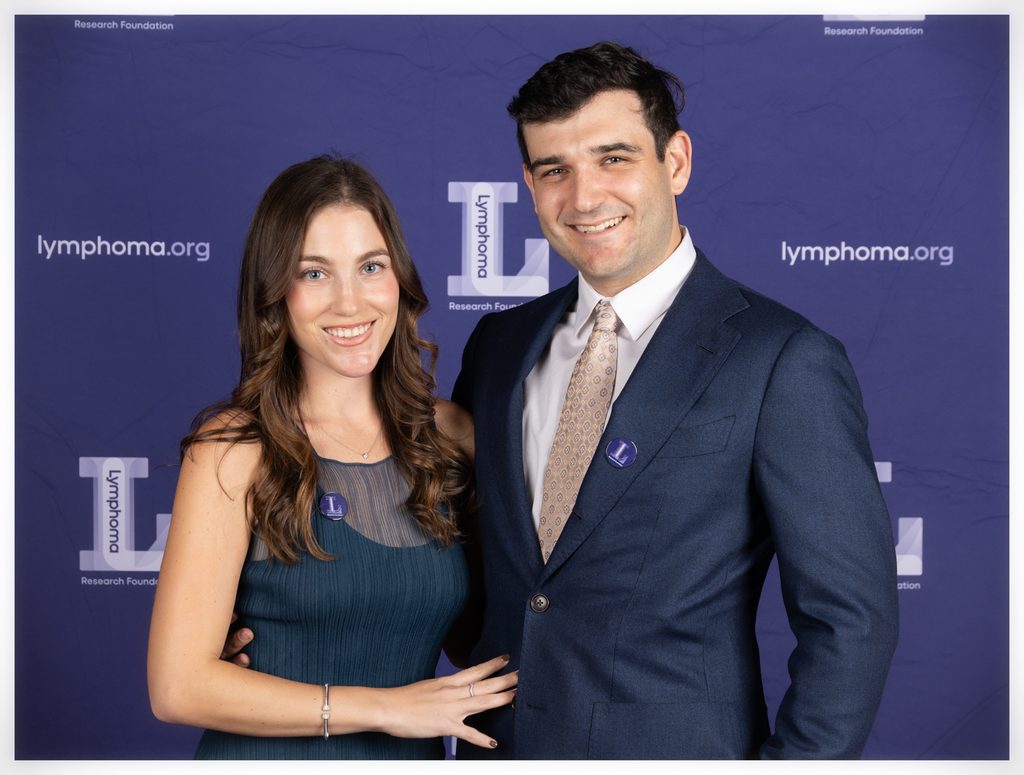
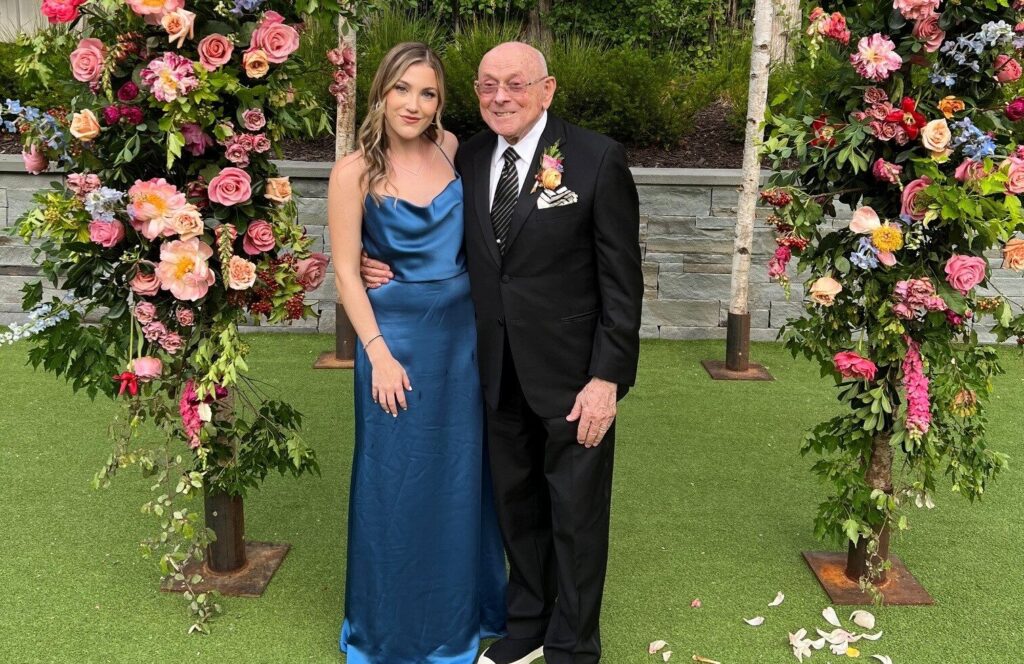
Working alongside the Foundation and her friends Isabel Sessions and Alexandra Rose, Margot helped launch what has become the Emerging Philanthropists Gala, creating a vibrant community of young professionals committed to raising both awareness and funding for lymphoma research.
What began as a small gathering has grown into a thriving annual event welcoming hundreds of attendees while raising hundreds of thousands of dollars to advance the Foundation’s mission. Just as importantly, it has introduced an entirely new generation to lymphoma advocacy and philanthropy.
For Margot, philanthropy isn’t simply about giving back. It’s about carrying forward values that have been passed down through generations.
She points to the Jewish principle of tikkun olam— repairing the world—as a philosophy her grandfather instilled in her father and her father instilled in her.
“I feel like I’ve been dealt such a lucky hand,” she says. “It’s important that I contribute to society and help make other people’s lives better.”
Today, the Foundation has become a true family mission, and together, they have created something extraordinary.
A Legacy That Lives On
This fall, the Werner family will receive the Lymphoma Research Foundation’s Legacy Award at the Annual Gala in recognition of their extraordinary commitment to advancing the Foundation’s mission.
The honor extends beyond a single award. The Foundation’s planned giving society will also be renamed the Werner Legacy Society, recognizing not only decades of leadership and generosity but also the enduring example their family has set.
For Michael, the Legacy Society represents something much larger than estate planning. It is an opportunity to invest in people he will never meet.
The research that ultimately saved his life existed because previous generations believed in funding science long before they would ever see the results. Today’s legacy gifts ensure that future patients will benefit from breakthroughs still waiting to be discovered.
“What is important is that the Foundation has enabled a multi-generational family to make a difference,” Bob says. “Our story of commitment to the Foundation’s mission will encourage others to join us.”
What is important is that the Foundation has enabled a multi-generational family to make a difference, our story of commitment to the Foundation’s mission will encourage others to join us.
Looking ahead, Michael remains deeply optimistic.
He believes exciting advancements are on the horizon. But those breakthroughs won’t happen on their own. They will require continued investment in researchers, physicians, education, and patients.
“The Foundation,” he says, “is trying to train the next generation of scientists and researchers and get people the same kind of outcome that I’ve had.”
Margot hopes that legacy extends far beyond her own family.
“The Foundation has meant the world to my family,” she says. “We truly credit it with my dad being here today. The work they do every day is saving lives. My dad is the purest example of that.”
Twenty years after one diagnosis changed everything, three generations of the Werner family continue to prove that a legacy isn’t measured simply by years of service or dollars raised.
It is measured by lives transformed.
The research that saved Michael’s life was possible because someone, years earlier, chose to invest in a future they would never see. Today, the Werner family is planting those same seeds—supporting the discoveries, treatments, and hope that future generations of patients will one day depend on.
Their story is ultimately not just about one family’s commitment.
It is about what becomes possible when gratitude is transformed into action, when leadership inspires leadership, and when one life saved becomes the beginning of countless others.
Read More Articles from Pulse
Pulse is a publication of the Lymphoma Research Foundation, providing the latest updates on the Foundation and its focus on lymphoma and chronic lymphocytic leukemia (CLL) research, awareness, and education