

News
From Humble Beginnings to Healing Breakthroughs Paolo Strati’s Journey in Lymphoma Care
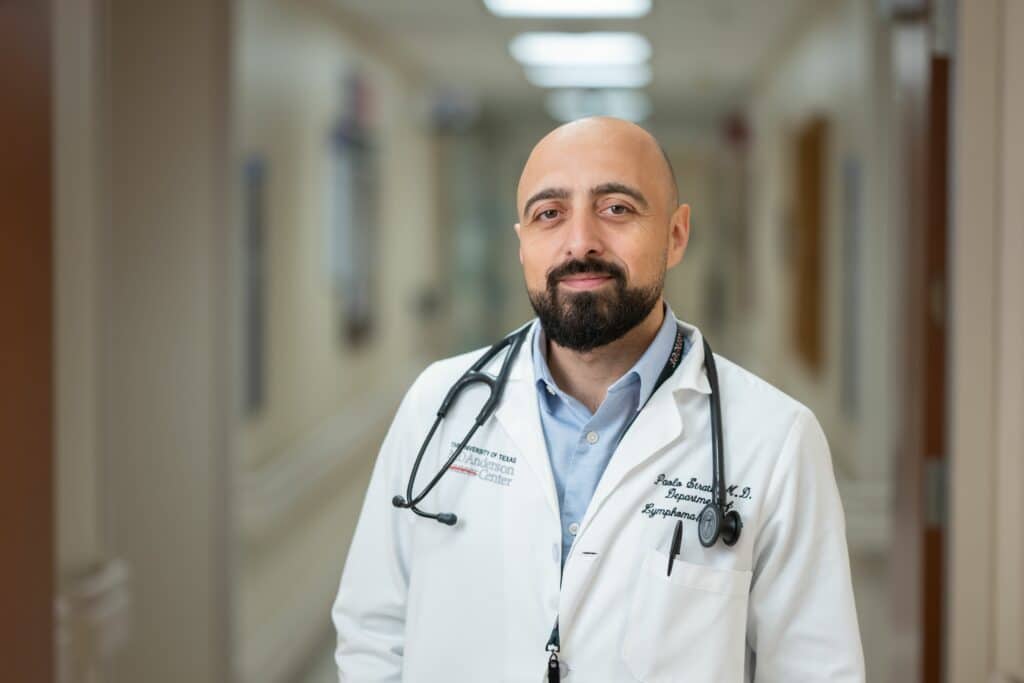
For Paolo Strati, MD, the path to becoming a leading lymphoma clinician and researcher was anything but linear. It was shaped by sacrifice, resilience, and an unwavering commitment to improving patients’ lives — not just in the moment, but for the long term.
Today, as an associate professor at The University of Texas MD Anderson Cancer Center, Strati balances an ambitious clinical and research portfolio with a passion for mentorship and patient care. But his story begins far from Houston, in southern Italy, where his journey into medicine first took root.
A Beginning Built on Resilience
“I come from a family of non-doctors — actually, a family where no one went beyond high school,” Strati says. “That’s the diversity I bring, and I’m very proud of it.”
Strati’s father worked in a coffee factory, and his mother was a housewife. Financial challenges and personal hardships shaped his worldview early, instilling both a great work ethic and sense of empathy.
“While my childhood wasn’t always easy, I realize those challenges provided me with some of my greatest strengths,” he says. “From a young age, I knew I wanted to do something meaningful and give back to my community — whether that was being a physician, a teacher, or even a police officer.”
Academics became his pathway forward. Strati excelled in school, eventually earning admission to one of Italy’s top medical institutions in Milan. There, a pivotal mentor, Dr. Federico Caligaris-Cappio, exposed him to oncology and hematology and sparked a passion that would define his career.
“I fell in love with the science,” he recalls. “But also with the clinical side — having meaningful conversations with patients, understanding and being able to cure their disease, and realizing how quickly things were evolving.”
Crossing Continents for Opportunity
Strati’s ambition eventually brought him to the United States, where he initially pursued advanced training at MD Anderson. The journey, however, came with significant hurdles — including repeating years of medical training due to international credentialing requirements.
“It was a long road,” he says. “But I believed in the power of research here — the ability to change patients’ lives not just today, but in the future.”
That belief was cemented during his early clinical experiences. He recalls treating patients in Italy with limited options, then witnessing those same diseases transformed by clinical trials in the U.S. It was these experiences that left a lasting impression.
“I saw patients who had exhausted every treatment suddenly respond to a single pill in a trial. That changes how you think about medicine forever.”
Redefining What’s Possible in Lymphoma Care
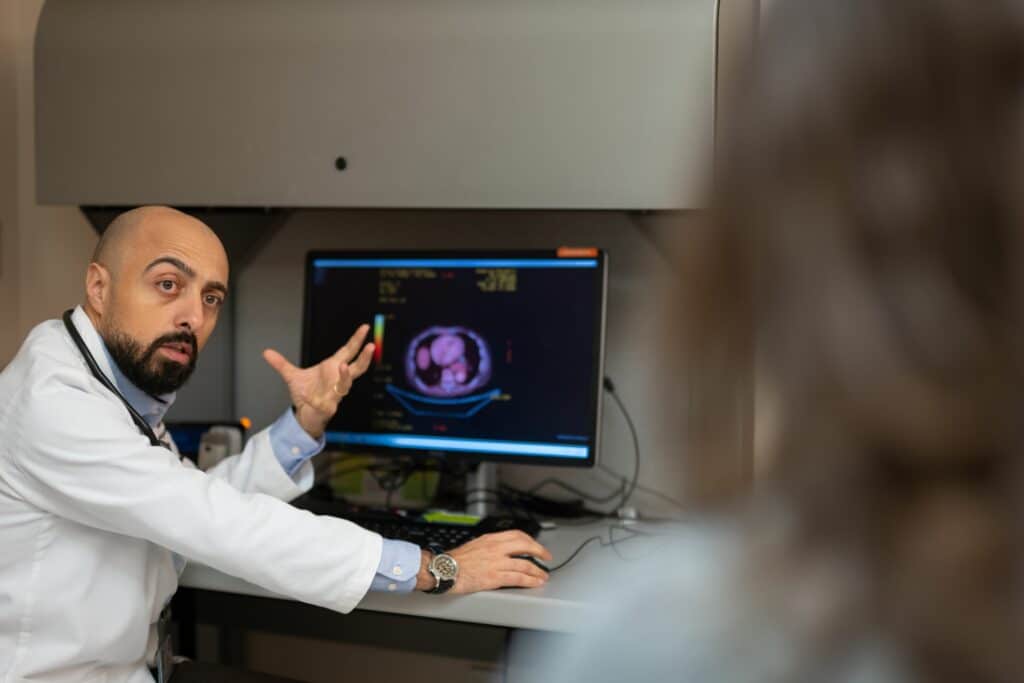
Now a leading clinical investigator, Strati focuses on immunotherapy and cellular therapies for lymphoma, including CAR T-cell therapy and emerging approaches targeting the innate immune system.
While T-cell–based therapies have revolutionized lymphoma treatment, Strati is working to expand the field further.
“My goal is to understand how we can better use the innate immune system to improve efficacy and reduce toxicity,” he explains.
His research explores novel strategies that could make treatments more accessible, less toxic, and potentially more effective — even for patients whose cancers no longer respond to existing therapies.
Perhaps most importantly, he emphasizes what these advances mean for patients.
“For the first time, we can say that some treatments at relapse offer a real chance for cure,” he says. “That’s a major shift.”
In diseases like follicular lymphoma — long considered incurable — he believes the narrative is changing.
“We’re starting to challenge that assumption,” he says. “And patients should know that. It can give them hope.”
A Life Balancing Science and Humanity
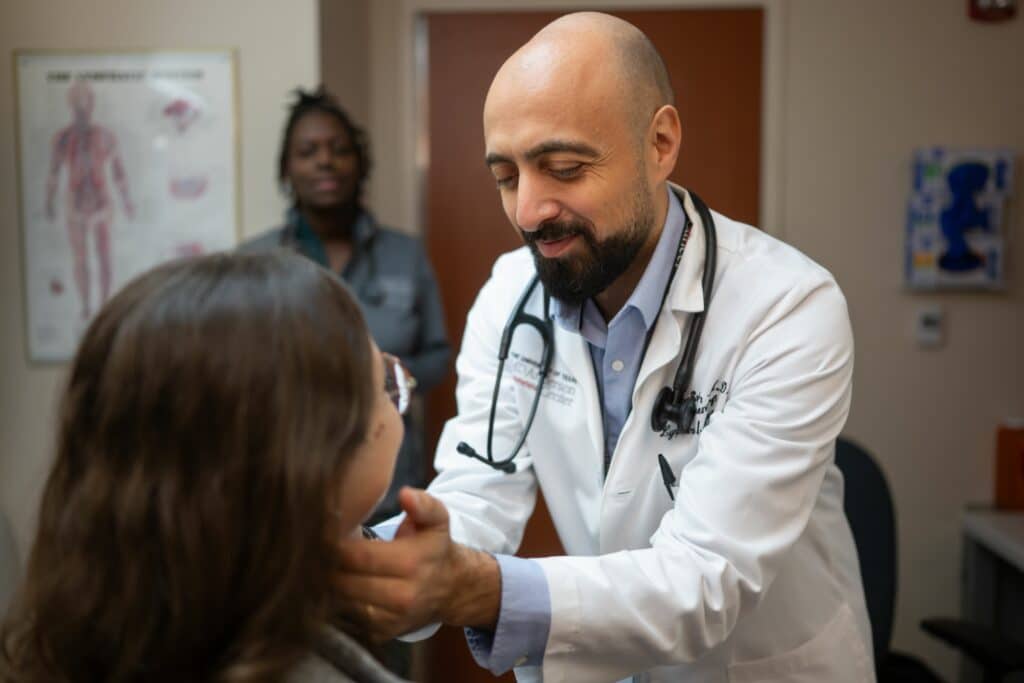
A typical day for Strati is anything but typical. He sees up to 25 patients in clinic, leads multiple clinical trials, and mentors a growing team of researchers — all while balancing administrative and educational responsibilities.
“I try to keep myself busy,” he says.
His research program includes a team of nearly 20 staff members and a large portfolio of clinical trials, many of which he has designed himself.
“These are investigator-initiated trials, which means they come from our ideas, our questions,” he explains. “That’s very rewarding.”
Despite his demanding schedule, he is also the proud father of his 12-year-old daughter and 9-year-old son, whom he shares with his wife of 15 years.
“In my spare time I joke that I am a glorified Uber driver, bringing my kids to their many activities,” he says with a laugh. “Between all those responsibilities, my days are usually pretty packed.“
But despite the demands, patient care remains central to his work.
“At the end of the day, everything we do is for the patient,” he says.
A Deep Commitment to Patients
Strati’s approach to patient care is rooted in both science and humanity.
“The first thing I try to do is educate my patients,” he says. “Many times, anxiety comes from not understanding what’s happening.”
He believes that informed patients are empowered patients.
“If they understand their disease and their options, they can make better decisions,” he says.
But beyond education, he emphasizes the importance of maintaining a sense of normalcy.
“I always tell them — you are still living your life,” he says. “You are not just a lymphoma patient.”
He often uses humor and conversation to connect with patients.
“Sometimes I make too many jokes,” he admits. “But it’s my way of reminding them that they are still themselves.”
The Power of Research
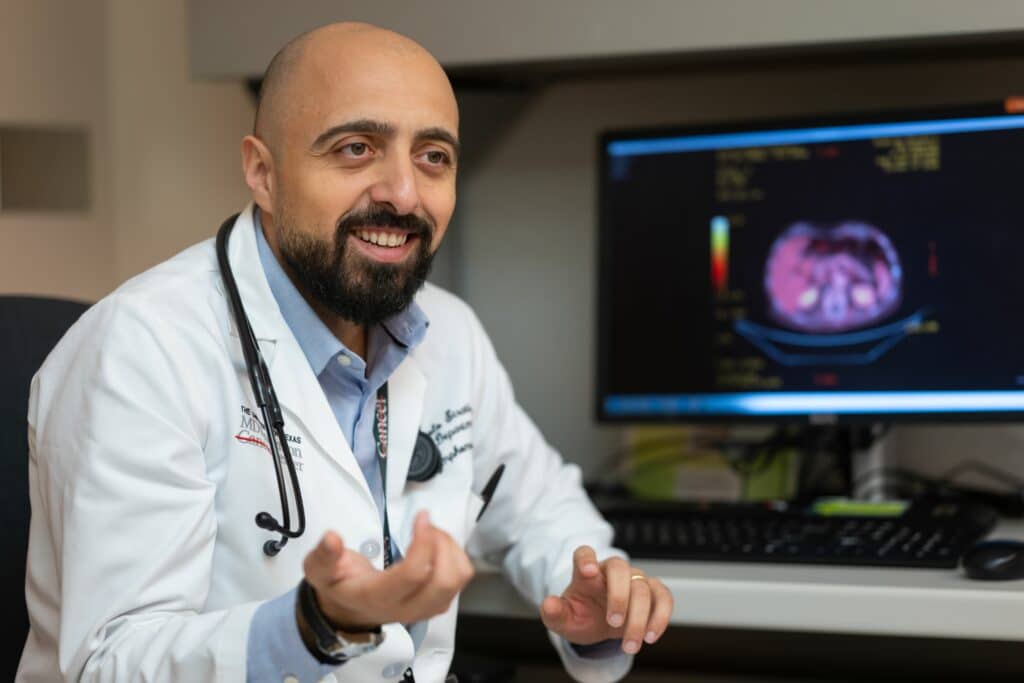
For Strati, the integration of research and clinical care is what makes his work truly meaningful.
“As a clinician, you can help a patient today,” he says. “But as a researcher, you can change what happens to patients in the future.”
He reflects on his early experiences in emergency medicine, where he saw the limitations of short-term interventions.
“I realized that I could save someone’s life overnight,” he says, “but they might still die days later because we didn’t have the right treatments.”
That realization shifted his focus.
“What I do now is try to make an impact in the long term,” he says.
The Impact of the Lymphoma Research Foundation
A defining force in Strati’s career has been the Lymphoma Research Foundation, which he credits with accelerating his transition into lymphoma research and shaping his professional trajectory.
“Without the Foundation, I would not have been able to succeed in the lymphoma space,” he says.
Through the Foundation’s mentorship and research grant programs, he found not only funding — but also a community.
“They gave me guidance, visibility, and connections,” he says. “But more than that, they gave me a family.”
Strati has received two grants from the Foundation throughout his career. The first was in 2018 when he received a Lymphoma Scientific Research Mentoring Program (LSRMP) Award. One year later, he went on to receive a Foundation Career Development Award (CDA).
As part of his first grant, he worked on a project aimed at targeting macrophages to improve the efficacy of frontline immunotherapy for the treatment of patients with indolent B-cell lymphoma. With the guidance of
his mentors, he generated novel translational data to support this project, which was published in Nature Communications. As part of his CDA, his project aimed at manipulating macrophage biology to mitigate toxicities associated with the use of CAR T-cell therapy in patients with aggressive B-cell lymphoma.
“Eight years later, I still have a standing monthly meeting with one of my mentors from the LSRMP, Ann LaCasce, MD,” he says. “That tells you everything about the kind of community this is.”
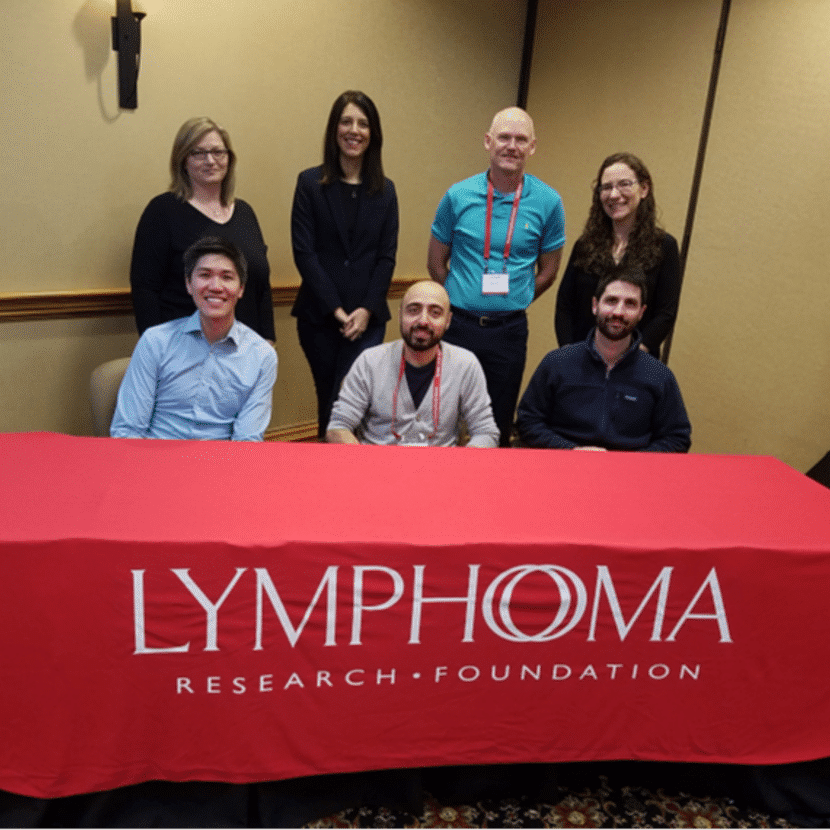
Today, Strati has come full circle, serving as a mentor and faculty member within the same program that once supported him, the Lymphoma Scientific Research Mentoring Program.
“You become part of a community where you stop focusing on yourself,” he says. “You start focusing on others — your patients, your mentees, your peers.”
Looking Toward the Future
Strati is optimistic about the future of lymphoma research — and ambitious in his vision.
“I think we are getting very close to eliminating chemotherapy,” he says.
Ongoing trials, including some he is involved in, may soon establish immunotherapy as a frontline treatment for certain lymphomas.
“That would be a huge milestone,” he says. “Because chemotherapy, while effective, comes with significant short- and long-term side effects.”
At the same time, new therapies are expanding the possibilities even further.
“We’re developing off-the-shelf cellular therapies, therapies based on NK cells and macrophages,” he says. “We’re even thinking about how to engineer these treatments directly in the body.”
For patients, these advances could mean more options — and more hope.
“We are curing more and more patients,” he says. “And that’s what matters.”
A Career Defined by Impact
For Strati, the most meaningful moments in his career aren’t defined by titles or publications, but by impact.
That dual mission — immediate care and long-term progress — continues to guide his work.
And while his journey has taken him far from where he began, the values that shaped him remain constant.
“I’m still that person,” he says. “I just found a way to make a difference.”
Read More Articles from Pulse
Pulse is a publication of the Lymphoma Research Foundation, providing the latest updates on the Foundation and its focus on lymphoma and chronic lymphocytic leukemia (CLL) research, awareness, and education