

News
Generations of Impact: How Tom Condon and His Daughter, Emily, Are Shaping the Future of Lymphoma Research
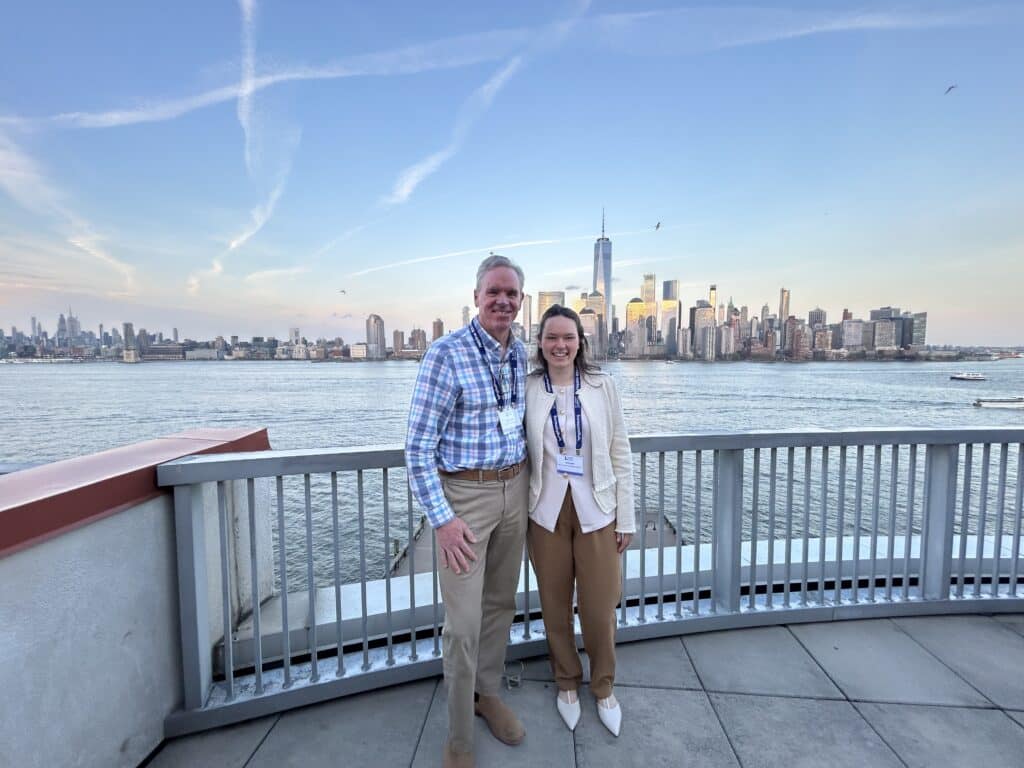
For Tom Condon, a lymphoma diagnosis at age 31 was not just a life-altering moment — it was the beginning of a lifelong commitment to changing the future of the disease. More than two decades later, that commitment has grown into a family legacy, one now shared with his daughter, Emily Dyer, whose own path in
medicine and philanthropy reflects both gratitude and purpose.
Together, Emily and Tom represent something powerful: the intersection of lived experience, scientific progress, and a belief that investing in people — especially the next generation — can transform outcomes for patients everywhere.
A Diagnosis That Sparked a Mission
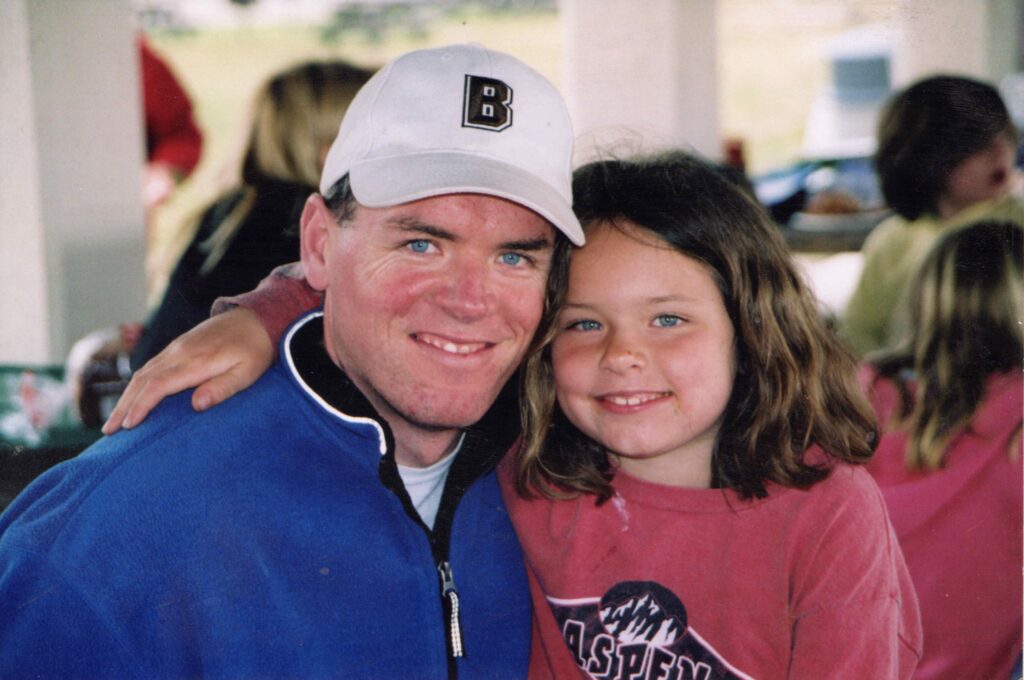
When Tom was diagnosed with follicular lymphoma in 2001, his future was uncertain. With a toddler and a newborn at home, he faced a reality many patients know all too well: limited information, daunting statistics, and an urgent need to find answers.
Rather than retreat, Tom leaned in. At the time, much of the available data was already years out of date, and promising new therapies — like monoclonal antibodies — were only just beginning to change the treatment landscape. He immersed himself in research, traveled the country to meet leading physicians, and, ultimately, found his way to the Lymphoma Research Foundation.
What began as a search for clarity quickly became something more. At his first Foundation Educational Forum on Lymphoma, Tom had a realization that would shape the next 20+ years of his life: The very scientists leading lymphoma research across the country were all connected through one organization.
“That was the lightbulb moment,” he recalls. “If you want to invest in the future of this disease, this is where you do it.”
If you want to invest in the future of this disease, this is where you do it.
From Patient to Philanthropist
Tom’s involvement with the Foundation quickly deepened. Tom soon joined the Foundation’s Board of Directors, a role he served in for over a decade. Alongside his family and their Foundation, the Condon Family Foundation, he began supporting the Foundation in increasingly meaningful ways— from major research initiatives to long-term strategic investments.
While his approach to giving has evolved over time, what has remained constant is a clear guiding principle: Progress in lymphoma depends on people.
Tom and his family have long been driven to support early career investigators and the transformative impact they can have on the future of lymphoma research and care. By investing in fellows, scholars, and emerging scientists, they hope to empower the next generation of innovators who will shape what comes next.
“It’s simple,” Tom says. “If you believe lymphoma will one day be cured, then you have to ask: Who is going to do it? The answer is the people we’re training right now.”
Tom compared this approach to a “farm system” in sports — cultivating talent early, nurturing it over time, and ensuring that the next generation is ready to lead when the time comes. Without that intentional investment, he notes, even the most promising fields can stagnate.
For Tom, the impact of research is not theoretical — it is deeply personal.
When he was first diagnosed, he was told that the average life expectancy for someone with his disease was between 7 and 12 years. Today, nearly 25 years later, he reflects on a life that has far exceeded those expectations.
That extended time has been filled with milestones that once felt uncertain: raising his children, growing his career, and even expanding his family years after his diagnosis.
“We weren’t sure there would be a long-term future,” he says. “But as new treatments became available, that hope started to come back.”
Those treatments — many of which emerged from the very research efforts he now supports — have not only prolonged his life but also improved its quality. It’s a powerful reminder of what sustained investment in science can achieve.
A Family Shaped by Giving
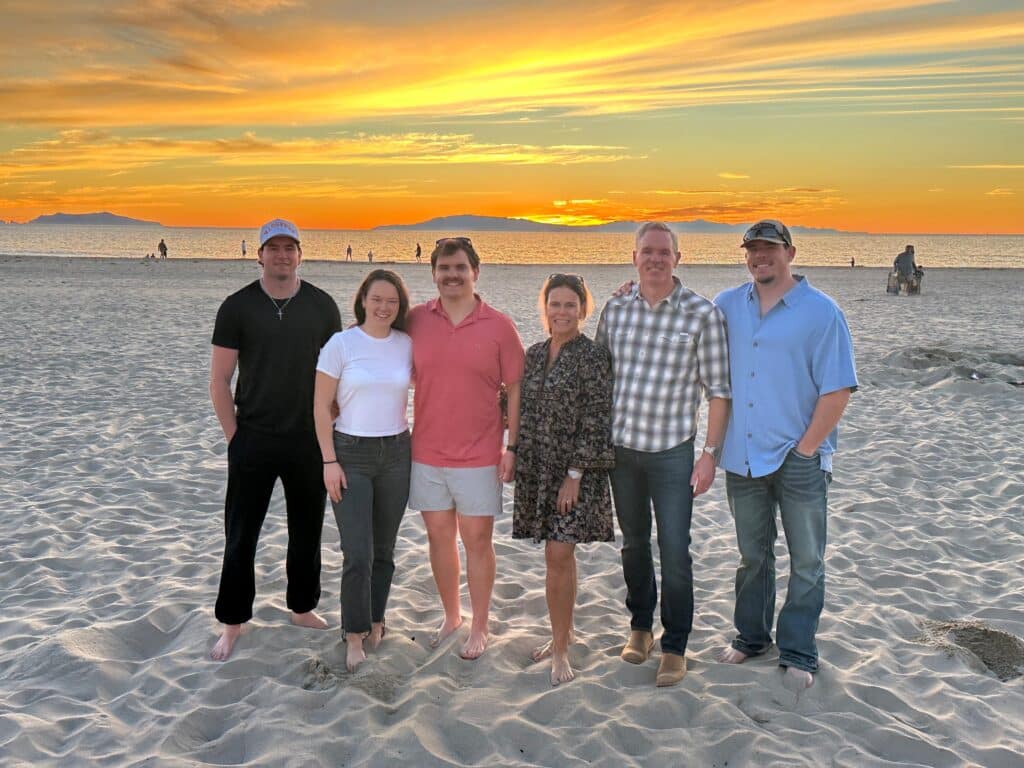
For Emily, philanthropy has never been an abstract concept — it’s been a constant presence and defining influence in her life.
That ethos traces back to her grandparents, Tom and Julie Condon, who established the Condon Family Foundation in the 1990s with a vision of creating an enduring legacy of community service and giving — one that would span generations. Today, Tom remains actively involved in the Foundation’s work, continuing to guide its mission and values.
She was just 3 years old when her father was diagnosed, but the experience shaped her upbringing in profound ways. The Foundation was not just an organization her family supported — it was woven into the fabric of her childhood.
Some of her earliest memories involve the Foundation. She remembers volunteering at a golf fundraiser as a young child, retrieving golf balls and helping monitor a hole-in-one contest.
“I didn’t fully understand it at the time,” she says. “But I always knew my help mattered.”
As the years went by, Emily attended more fundraisers, such as the Foundation’s Annual Gala, and even got to watch her father receive an award for his several contributions to the community.
Those early experiences instilled a sense of purpose that has stayed with her ever since.
Today, Emily is a medical student and former emergency room nurse, driven by a deep appreciation for the human side of healthcare — an outlook shaped in large part by her father’s experience.
“His journey gave me an understanding of the humanism behind disease,” she explains. “It’s not just about treatment — it’s about connection, compassion, and walking with patients through what they’re facing.”
Read More Articles from Pulse
Pulse is a publication of the Lymphoma Research Foundation, providing the latest updates on the Foundation and its focus on lymphoma and chronic lymphocytic leukemia (CLL) research, awareness, and education