

News
New Research Brings a Powerful Shift in How We Understand Follicular Lymphoma

For many people diagnosed with follicular lymphoma (FL), one message has long defined the experience: This is a cancer you can live with but not cure.
A new study published in JAMA Oncology, Treatment of Follicular Lymphoma With CHOP and Anti-CD20 Therapy: 15-Year Follow-Up of the SWOG S0016 Trial, is beginning to challenge that message — and for patients and families, that shift is both meaningful and deeply personal.
What is Follicular Lymphoma?
FL is the most common indolent, or slow-growing, form of non-Hodgkin Lymphoma (NHL), accounting for 1 out of 5 lymphomas in the U.S. Due to its slow-growing nature, many people may not notice symptoms right away. In some cases, it is discovered during routine bloodwork or imaging for another issue.
Follicular lymphoma most commonly affects lymph nodes but can also involve the bone marrow and other parts of the body.
For years, it has been described as a chronic condition — one that can be managed over time, often with multiple rounds of treatment. Patients may go through periods of remission followed by relapse. However, more often than not, it is a disease that patients live with for many years.
Implications of This Study
This study followed patients enrolled in the landmark SWOG S0016 clinical trial, who received standard first-line treatment for FL and tracked their outcomes more than 15 years after receiving initial treatment with chemoimmunotherapy. What makes this study so important is not just how long patients lived — but what their long-term outcomes suggest.
Approximately 70% of patients were still alive at 15 years, and around 42% of patients never saw their lymphoma return.
That introduces something many patients have rarely heard in this context: the possibility of cure.
Since FL has historically been characterized by cycles of remission and relapse, often spanning many years, this study introduces an interesting new narrative. Even as therapies have improved, the expectation remained that the disease would eventually return. But this study showed that a meaningful proportion of patients treated with standard first-line therapy may never relapse at all.
This doesn’t mean FL is universally curable today. But it does mean that for some patients, the disease may truly go away for good — and that reality is reshaping how doctors think, talk, and plan treatment.
Why This Study Matters
What makes this study so powerful is not just science but the time behind it. By following patients for more than 15 years, researchers found that the risk of relapse fades over time and, for some patients, may disappear altogether.
That idea — once out of reach in follicular lymphoma — introduces a new and deeply hopeful question: Could some patients already be cured? The answer is still evolving. But this research suggests that for a meaningful number of people, long-term remission may not just be a pause between treatments but a lasting endpoint.
Just as important, these findings are rooted in treatments that many patients already receive today. This is not a distant promise tied to future therapies, it is insight drawn from real experiences, from people who have already received these treatments.
And perhaps the most immediate impact is the clinical implications, starting at diagnosis. Early conversations with patients who are newly diagnosed with follicular lymphoma may now include the idea that some individuals can be cured, which could help ease some of the emotional burden that often comes with the diagnosis.
In addition, while follicular lymphoma has traditionally meant ongoing, long-term follow-up with a lymphoma specialist — including clinic visits and sometimes imaging — these findings suggest that may not always be necessary. For patients who remain in remission for many years, it may be reasonable to scale back specialized care and transition follow-up to a primary care team after about a decade.
New Questions, New Possibilities
This study exemplifies the power of collaboration across institutions and disciplines. Investigators including John Leonard, MD; Sonali Smith, MD; Lisa Rimsza, MD; and Jonathon Friedberg, MD, MMSc — all members of the Foundation’s Scientific Advisory Board — played key roles in advancing this work.
To better understand what these findings mean for patients — and what comes next — we asked each of them to share their perspective.

John Leonard, MD
Dr. Leonard is the director of the Center for Blood Cancers and chief of the Division of Hematology and Medical Oncology in NYU Grossman School of Medicine’s Department of Medicine.
What should people understand about this study when thinking about their own prognosis?
Many people have considered follicular lymphoma to be “incurable,” though a chronic condition that most patients die with rather than from. The idea that a patient with FL could be “cured,” and what that really means, is complicated — particularly when it is hard to define for an individual when a cure actually has been achieved until decades later. That said, this study gives reasons for optimism that a meaningful number of patients treated with a standard initial treatment approach might expect to be “cured” and not have a disease relapse.
What should patients consider when choosing initial treatment for FL?
One has to consider goals of therapy — to feel better, to avoid toxicities or problems due to the disease, and issues around pros and cons of various options that have tradeoffs. This requires careful discussions around these issues and understanding of the choices available — what is known and what is uncertain.
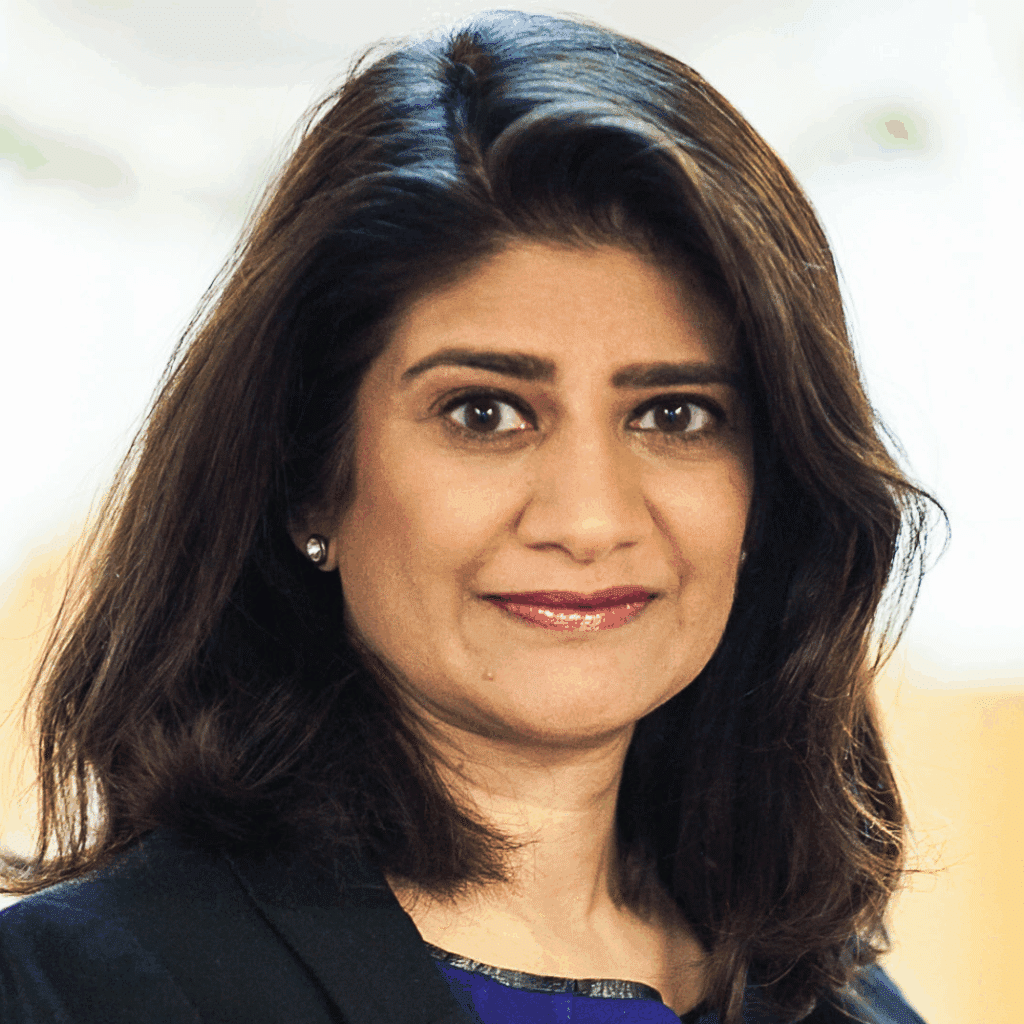
Sonali Smith, MD
Dr. Smith is the Elwood V. Jensen Professor of Medicine, section chief of Hematology/Oncology, co-leader of the
Cancer Service Line, and co-director of the Lymphoma Program at the University of Chicago in the Department of Medicine.
How do you talk with patients about the possibility of cure while still setting realistic expectations?
Perhaps the most exciting part about this publication is that it starts to change the dialog. I used to caution everyone with FL that, although this is generally a cancer that people can live with for decades, it is not technically curable and is managed as a chronic disease for many people. Now, however, I can introduce the concept that there are a portion of people who can be cured. We don’t always know who will be cured right at the time of diagnosis, but cure is a possibility. I find this very hopeful to share.
What questions should patients be asking their care team right now?
An important question is whether or not treatment is needed at the time of diagnosis and what that treatment should be for an individual. A caveat to the published trial is that we do not use this treatment very often (i.e., R-CHOP-like treatments), and we do not yet know how other more modern treatments will affect the chances for cure. I always suggest a clinical trial such as S2308, which is comparing rituximab to a bispecific antibody and is very exciting.
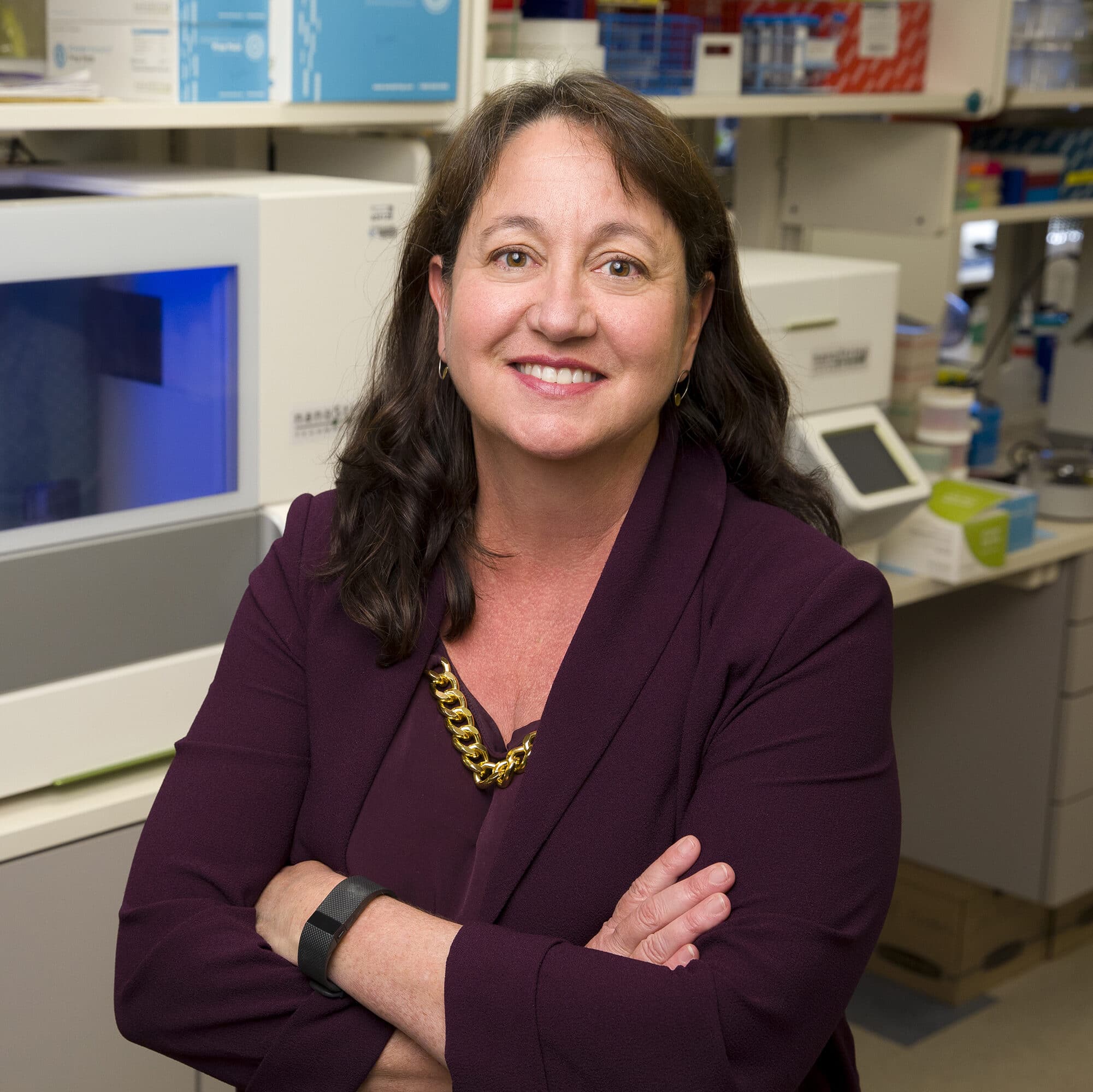
Lisa Rimsza, MD
Dr. Rimsza is chair of the Department of Pathology and Laboratory Medicine, College of Medicine, at the University of Arizona, Tucson.
Are there biological differences in tumors that might explain why some patients do better long term?
The genetic predictors in follicular lymphoma are still poorly characterized. The M7-FLIPI has been introduced for risk prognostication in a setting of first-line chemoimmunotherapy in FL and relies on identifying mutations in seven genes that have been identified as recurrent abnormalities in FL (PMID: 26256760). In our recent work, we introduced a FL24Cx algorithm based on a 45-target gene expression profiling assay that was developed and trained using FFPE tissue samples to predict whether a patient would have FL recurrence within the first 24 months (PMID: 40966421). Thus, it is clear that certain genetic mutations and activation of oncogenic pathways determine inferior outcomes in FL. However, thus far there are no genetic tests that reliably predict outcomes for an individual patient with FL. Furthermore, genetic testing still does not occur on a regular basis in the community. We need larger studies to understand the predictive power of genomic and transcriptomic aberrations in FL.
How might future testing help personalize treatment?
Ongoing studies will help us understand the exact role of mutations, epigenetic events, and transcriptional programs in FL outcomes and identify new tractable targets in this disease. Furthermore, studies of tumor microenvironment may identify patients best suited for cellular and T-cell engager therapies. We have also shown that achievement of minimal residual disease is predictive of outcomes in FL (PMID: 40605713), and, thus, use of early MRD endpoints will help guide therapy duration and intensity in the future.
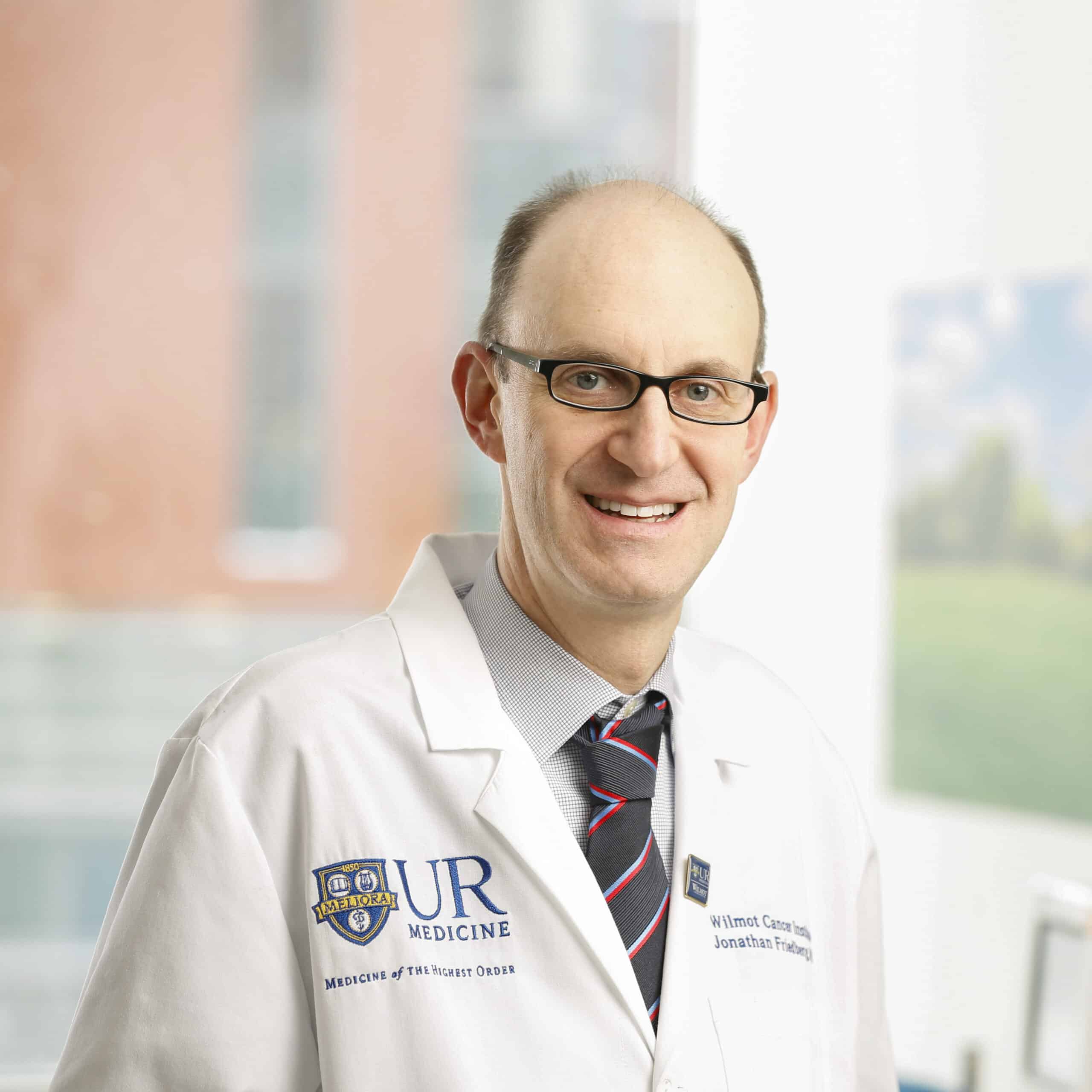
Jonathon Friedberg, MD, MMSc
Dr. Friedberg is the director of the Wilmot Cancer Institute and Samuel Durand Professor of Medicine at the University of Rochester Medical Center.
What excites you most about these findings from a patient perspective?
For my entire career, the teaching has been that advanced-stage follicular lymphoma is incurable with standard approaches. We saw some cures with highly aggressive options such as stem cell transplantation, but most patients were told to expect disease progression at some point. These long-term follow-up data indicate that approximately one-third of patients treated with standard chemotherapy and antibody treatment are cured. After 10 years, there are very few relapses observed, and patients no longer require follow-up in cancer clinics and can go back to their primary care team. I also expect this information is helpful psychologically for patients, knowing that there is real potential for cure.
How will this study influence the next generation of follicular lymphoma care?
From a clinical trial standpoint, in my opinion, these data define what is expected from current standards of care with long-term follow-up. We are in a very exciting time of discovery for patients with follicular lymphoma. Novel therapies, including bispecific T-cell-engaging antibodies, are demonstrating very high durable response rates in patients with relapsed disease. We are optimistic that these agents will have a role as part of upfront therapy, and there are exciting ongoing studies. It will be important for these new studies to include long-term follow-up to ensure we are not compromising the group of patients who are cured from current standard approaches. One last note: We need to better understand the group of patients who are cured and see if that can be defined
at diagnosis. Extensive ongoing studies are examining this question.
The Only Thing Constant Is Change
The concept of “cure” in lymphoma has long been far more nuanced and complicated than it seems. Each type of lymphoma has a different biology, prognosis, and clinical course and, therefore, different treatment, monitoring strategies, and outcomes. Therefore, it makes it difficult to utilize and define the word “cure” for lymphoma broadly. However, thanks to advancements in research and treatment options, many lymphomas that were once considered difficult to treat now have much better outcomes, and studies like these present a paradigm shift in our understanding and approach to lymphoma.
While uncertainty is still part of the journey, so is progress. And increasingly, that progress is opening the door to something more than long-term control.
It is opening the door to lasting remission — and, for some, the possibility of cure.
Read More Articles from Pulse
Pulse is a publication of the Lymphoma Research Foundation, providing the latest updates on the Foundation and its focus on lymphoma and chronic lymphocytic leukemia (CLL) research, awareness, and education