

News
Where Are They Now? Caitlin Gribbin, MD
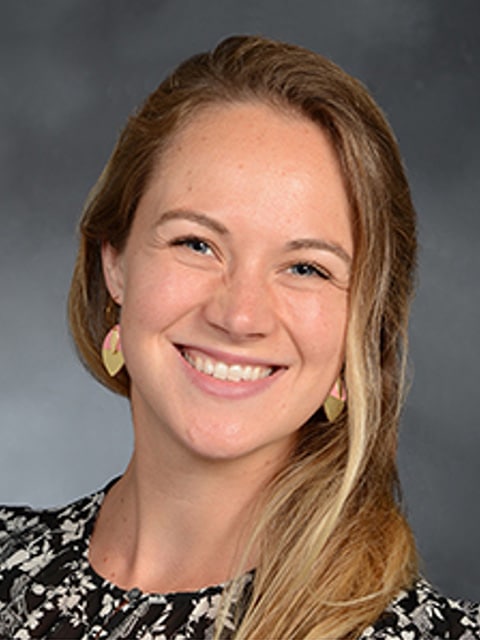
Caitlin Gribbin, MD, is an assistant professor of medicine within the division of Hematology and Oncology at Weill Cornell Medical Center.
When did you become interested in the study of medicine? In lymphoma specifically?
I became interested in medicine when I was in college at Cornell University and in oncology and lymphoma specifically in medical school at Weill Cornell Medical College.
At what point in your career did you receive funding from the Lymphoma
Research Foundation? What kind of grant(s) did you receive?
I received a grant from the Lymphoma Research Foundation through their Lymphoma Scientific Research Mentoring Program (LSRMP) as a hematology/
oncology fellow.
What scientific project did you pursue as part of your Foundation research grant and how did the Foundation support your interest in follicular lymphoma (FL)?
I worked on a project with my mentors, Drs. Wendy Beguelin and Ari Melnick, focused on better understanding the follicular lymphoma immune microenvironment, specifically in terms of whether other immune cells can
be leveraged therapeutically against follicular lymphoma cells. The support of the Foundation significantly contributed to my ability to carry this work out and to learn more about the intricacies of follicular lymphoma from leaders in the field.
How has the treatment landscape for lymphoma/CLL changed since you first started conducting your research?
We continue to learn more about what differentiates lymphoma subtypes from one another and how we can treat patients effectively while minimizing toxicity.
Novel cell therapies and T cell engagers have are one particularly interesting and promising area of research for engaging the immune system against lymphoma;
these therapies continue to improve both alone and in combination with other treatment strategies and are moving up into earlier lines of therapy.
Was the support and grant funding you received from the Foundation vital to advancing/dedicating your career to studying lymphoma?
Yes, the support from the Foundation has been such an important part of my career development, specifically in terms of my ability to meet leaders and colleagues in the field and to learn about the advances in lymphoma through excellent disease-specific workshops.
How have treatments and care for lymphoma patients evolved since you started your career in this field?
We continue to integrate scientific advancements into clinical management for our patients. This has translated into the increased use of circulating tumor DNA (ctDNA) as an additional diagnostic tool, earlier adaptation of cell therapy into treatment schemas, and improved prognostication based on disease-specific lymphoma features, among other advancements.
How has your involvement with the Foundation continued since being a Foundation LSRMP Scholar?
I have enjoyed attending workshops and keeping in touch with colleagues and mentors who I have met through the Foundation’s LSRMP.
Why is the Foundation’s mission and focus on lymphoma-specific research and programming important? Put another way: How would the lymphoma community be impacted if there was no Lymphoma Research Foundation?
I think that it is so valuable to have a lymphoma-specific foundation focused on educating patients and sharing helpful resources. Given the diversity of lymphoma itself, specialized knowledge in the field is so key to helping patients and families make the right decisions about workup and treatment; the ability to connect with experts and fellow patients and advocates makes a huge difference.
What research or projects are you currently pursuing that you would like to share with our readers?
I am working on a bench-to-bedside investigator-initiated clinical trial that I am hoping to share results from in the next few years!
What are you most excited about in the field of lymphoma research today? Why?
As we learn more about the biology of lymphoma, especially with respect to its immune microenvironment, we are better able to tailor treatment strategies to
individual patients and advance the field as a whole through our understanding of biology.
Read More Articles from Pulse
Pulse is a publication of the Lymphoma Research Foundation, providing the latest updates on the Foundation and its focus on lymphoma and chronic lymphocytic leukemia (CLL) research, awareness, and education