

News
Where Are They Now? Christina Poh, MD
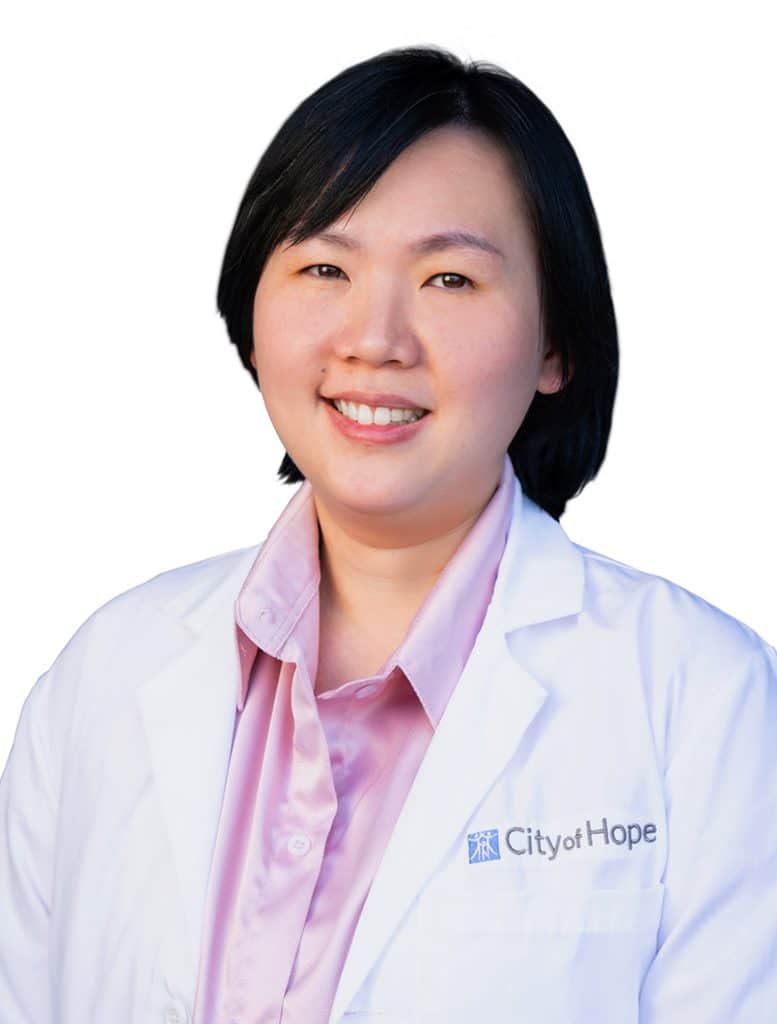
Christina Poh, MD, is an associate clinical professor in the Division of Lymphoma and the director of the T Cell Lymphoma Program at City of Hope® Cancer Center, Duarte.
When did you become interested in studying medicine? In lymphoma specifically?
I’ve had multiple family members and friends diagnosed with cancer, and the medical care available to them was not always as advanced or accessible as what we have in the United States. Witnessing that firsthand motivated me to contribute to the progress being made here, with the hope that I can one day bring that knowledge and expertise back to my community.
I was also drawn to oncology because it is a rapidly evolving field—one where scientific discovery directly translates into better outcomes and new possibilities for patients. At the same time, it offers the opportunity to build deep, meaningful relationships with the individuals and families you care for. That combination of innovation, impact, and human connection is what inspired me to pursue hematology and oncology.
You work with patients diagnosed with all types of lymphoma but specialize in the rare and aggressive subtype known as T-cell lymphoma. Why was this subtype interesting to you, and how have you seen treatments evolve for this patient population?
One of the things that drew me to T-cell lymphoma is that it is one of the areas of lymphoma with the greatest unmet need. While many patients with B-cell lymphomas have highly effective targeted therapies and even curative options, patients with T-cell lymphoma have historically had far fewer treatment choices and generally poorer outcomes. As a physician, it’s hard to accept that disparity, and I felt this was an area where meaningful advances could have a real impact on patients’ lives.
I also find T-cell lymphoma scientifically fascinating. It’s not a single disease but a collection of many distinct subtypes, each with unique biology and clinical behavior. Understanding those differences has opened the door to more personalized approaches to treatment, which is an exciting direction for the field.
Over the past decade, we’ve seen important progress. We’ve gone from relying almost exclusively on chemotherapy to having several targeted therapies, antibody-based treatments, and novel immunotherapies available for relapsed disease. We’re also seeing clinical trials move these newer agents into earlier lines of therapy and explore rational combinations that may improve long-term outcomes. Perhaps most exciting is that we’re beginning to tailor treatment based on the biology of each T-cell lymphoma subtype rather than using a one-size-fits-all approach.
Despite this progress, there’s still much more work to do. That’s what motivates both my clinical practice and my research—to develop more effective, less toxic treatments and ultimately improve the outlook for patients living with T-cell lymphoma.
At what point in your career did you receive funding from the Lymphoma Research Foundation? What kind of grant(s) did you receive? What scientific project did you pursue as part of your Foundation research grant, and how did the Foundation support your interest in T-cell lymphoma?
The Lymphoma Research Foundation has been instrumental in my career development at multiple stages. In 2024, I participated in the Lymphoma Scientific Research Mentoring Program (LSRMP), which provided invaluable mentorship, research training, and connections with leaders in the lymphoma field. The experience helped shape my research direction and accelerated my development as an independent investigator.
Building on that foundation, I was honored to receive a Lymphoma Research Foundation Career Development Award (CDA) in 2026. The award has enabled me to pursue research focused on improving frontline treatment strategies for T-cell lymphoma, particularly nodal T-follicular helper cell lymphoma. Beyond the funding itself, the Foundation’s investment has given me the protected time, mentorship, and collaborative network needed to develop innovative clinical trials and translational research aimed at improving outcomes for patients.
Looking back, the Foundation has supported me from early mentorship through career development, and that continuity has had a tremendous impact on my growth as a clinical investigator.
How has the treatment landscape for lymphoma/CLL changed since you first started conducting your research?
The treatment landscape for lymphoma has changed dramatically since I began my research. When I started, treatment for many lymphoma subtypes relied heavily on chemotherapy, and while it was effective for some patients, others, particularly those with rare lymphomas like T-cell lymphoma, had limited options and poor outcomes.
Today, we’re in a very different era. We’ve seen the development of targeted therapies, antibody-drug conjugates, bispecific antibodies, CAR T-cell therapy, and other immunotherapies that have transformed the care of many patients with lymphoma. For chronic lymphocytic leukemia (CLL), we’ve moved away from chemotherapy for most patients and now have highly effective targeted therapies that can produce durable remissions with fewer side effects.
We’re also becoming much more precise in how we treat lymphoma. Instead of thinking of lymphoma as a single disease, we now recognize that each subtype has distinct biology, and we’re increasingly designing treatments that target the specific pathways driving each disease. Advances in genomic sequencing and biomarkers are also helping us better predict which therapies are most likely to benefit individual patients.
For T-cell lymphoma, the progress has been slower than in B-cell lymphomas or CLL, but it has been meaningful. We now have several approved targeted therapies that didn’t exist a decade ago, and there is tremendous momentum in developing rational combination therapies, novel immunotherapies, and biomarker-driven clinical trials. I believe the next major advances will come from matching the right treatment to the right patient based on the biology of their disease rather than using the same approach for everyone.
It’s an incredibly exciting time to be in lymphoma research because the pace of discovery continues to accelerate. Most importantly, these advances are translating into longer, better-quality lives for our patients.
Was the support and grant funding you received from the Foundation vital to advancing/ dedicating your career to studying lymphoma?
Absolutely. The Lymphoma Research Foundation’s support has been instrumental in my career development. Beyond the financial support, the Foundation provided mentorship, education, and a community of investigators who are all committed to improving outcomes for patients with lymphoma. I truly believe that the Foundation’s support has accelerated my career and strengthened my commitment to studying lymphoma. I’m incredibly grateful for their investment—not just in me but in the next generation of lymphoma researchers who are working to improve the lives of patients.
How has your involvement with the Foundation continued since being a Foundation LSRMP Scholar?
The Lymphoma Research Foundation has remained an important part of my career since I participated in the LSRMP. The relationships and mentorship I developed through the program have continued well beyond the year itself, and I’ve stayed engaged with the Foundation through its educational programs, scientific meetings, and research community.
Receiving the Clinical Investigator Career Development Award has allowed me to continue building on that foundation and advance my research in T-cell lymphoma. I’m grateful for the Foundation’s continued investment in my career, and I hope to give back by mentoring future investigators and contributing to the lymphoma research community in the years ahead.
Why is the Foundation’s mission and focus on lymphoma-specific research and programming important? Put another way: How would the lymphoma community be impacted if there was no Lymphoma Research Foundation?
Without the Lymphoma Research Foundation, progress in lymphoma research would almost certainly be slower. There would be fewer opportunities for young investigators to enter the field, fewer collaborations to tackle difficult research questions, and fewer resources dedicated specifically to the unique needs of lymphoma patients. The Foundation has created a community where researchers, clinicians, patients, and advocates work together toward the same goal: improving outcomes and, ultimately, finding cures for every type of lymphoma. That kind of focused, disease-specific investment is incredibly difficult to replace and has had a lasting impact on the entire lymphoma community.
What research or projects are you currently pursuing that you would like to share with our readers?
My research focuses on improving outcomes for patients with T-cell lymphoma through clinical trials and translational research. I’m currently involved in studies evaluating novel targeted therapy combinations, with the goal of developing more effective and less toxic treatment approaches. I’m particularly interested in moving beyond a one-size-fits-all approach by identifying which patients are most likely to benefit from specific therapies and incorporating biomarkers, such as circulating tumor DNA (ctDNA), to better monitor treatment response and guide future treatment decisions.
What are you most excited about in the field of lymphoma research today? Why?
What excites me most is that we’re entering an era of precision medicine in lymphoma. We’re learning that lymphoma is not one disease but many biologically distinct diseases, and we’re increasingly able to develop treatments that target the specific pathways driving each subtype rather than relying on a one-size-fits-all approach.
I’m also excited by advances in biomarker research, particularly ctDNA, which has the potential to help us monitor treatment response, detect relapse earlier, and personalize treatment. Combined with the development of novel targeted therapies and immunotherapies, I believe these advances will continue to improve outcomes for patients with lymphoma.